Table of Contents
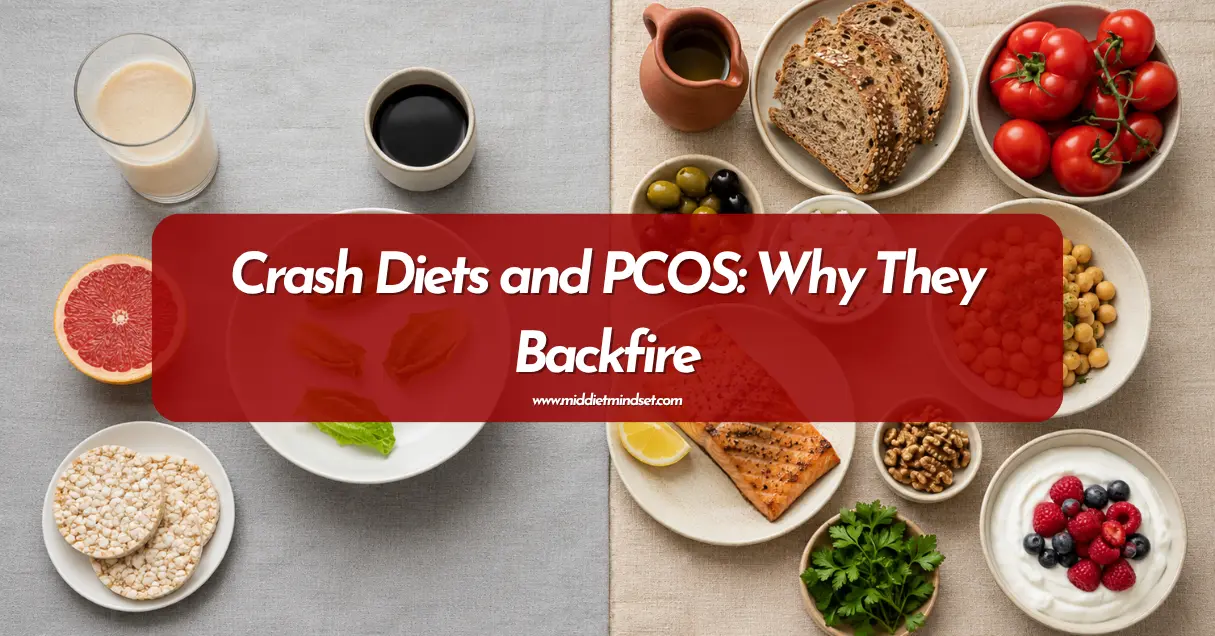
ToggleCrash diets and PCOS are a difficult combination. Cutting your food back sharply can move the scale quickly, and that part is real. But it also raises stress hormones, makes hunger much louder, and can push your cycles further off track. Most of the weight returns within a year or two, and that losing-and-regaining pattern is harder on your body than a slower approach would have been.
If you want the full picture of how to eat with this condition, start with my guide to the Mediterranean diet for PCOS. You’ll find related posts on food and specific conditions in the health conditions section.
What actually counts as a crash diet?
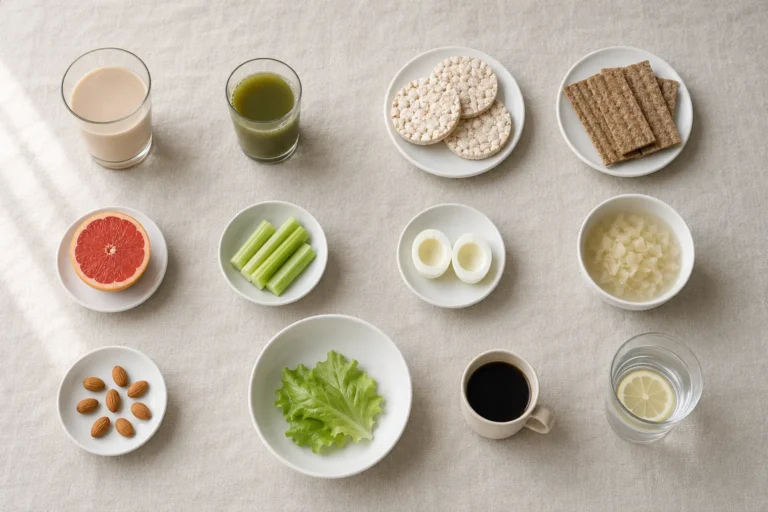
A crash diet is any plan that creates a very large gap between what you eat and what your body needs. There’s no official cut-off point. In practice it usually means eating under about 1,200 calories a day without supervision. It can also mean living on shakes or juices, or aiming to drop several pounds every week.
You can also crash diet without counting anything at all. Skipping meals until dinner, cutting out several food groups at once, or eating almost nothing on weekdays creates the same gap.
The size of that gap matters far more than the label on the plan. Here’s a simple test: if you couldn’t keep eating this way a year from now, it’s probably too aggressive to help you.
Why crash diets and PCOS are a difficult mix
Crash diets and PCOS interact in ways most plans never mention. PCOS — renamed PMOS by international consensus — already involves insulin, stress, and cycle regulation. Severe restriction puts pressure on all three at the same time.
The early insulin improvements rarely hold
Eating much less does improve blood sugar and insulin at first. That part is genuine, and it’s a big reason crash diets feel like they’re working so well. The problem is what happens next. When eating returns to normal and the weight comes back, those improvements tend to come back too.
Insulin resistance means your cells don’t respond to insulin as well as they should. Your body compensates by producing more of it. Steady changes you can repeat hold that improvement far better than a short burst of restriction.
Very low intake adds stress on top of stress
Sharp calorie cutting keeps your body in a low-level stress state. Women who restricted their eating and counted calories ended up producing more cortisol and feeling more stressed, not less. That matters here. Higher cortisol can nudge blood sugar up and make appetite harder to manage. You’re adding a stressor to a body already working harder than it should.
Periods can become less regular, not more
This is the part that catches people out. Plenty of women cut back hard hoping to bring back a regular cycle. Eating far too little can do the opposite. When energy intake drops very low, your body reads it as a poor time to ovulate. Cycles can become irregular or stop altogether, even in women without PCOS. With PCOS, your cycle may already be unpredictable. Severe restriction gives it a second reason to stay that way.
Fast loss is less efficient than it looks
Losing weight slowly gets you a better result for the same number on the scale. More of what you lose is actually fat, and your body doesn’t dial its energy use down as much. That second point shapes what happens afterwards. Lower resting energy use makes the weight easier to regain once the restriction stops.
The hunger rebound nobody warns you about
Here’s what most plans leave out. After rapid weight loss, appetite doesn’t simply return to normal when the diet ends. The hormones driving hunger stay shifted a full year later. So the hunger you feel afterwards isn’t a lack of willpower. It’s your body doing exactly what it’s built to do after a stretch of scarcity.
This matters more with PCOS than most people realise. Binge eating is more common in PCOS than in the general population, and long spells of undereating make it more likely rather than less. If cravings are the part you find hardest, I’ve written separately about managing cravings.
Why the weight usually comes back
Most people who lose weight quickly regain it within a few years. That’s the usual outcome, not the unlucky exception.
Repeating that cycle seems to carry its own cost. Going up and down repeatedly is linked with higher rates of type 2 diabetes, fatty liver, and heart problems compared with staying steady. This isn’t fully settled science, and the human evidence is genuinely mixed. But there’s no version of it where crash diets and PCOS turn out to be a helpful pairing.
The goal isn’t to lose the weight fastest. It’s to lose it in a way you won’t have to redo next year.
What works better if you have PCOS
Crash diets and PCOS work against each other, but that doesn’t mean weight changes can’t help you. It means the size and the speed need to change.
Aim for a smaller target than you think you need
Most people set the bar far too high. Around 5% of your body weight is often enough to notice a difference in your cycle, your insulin, and symptoms like acne or excess hair growth.
For someone at 180 lb, that’s roughly 9 lb. Not 40. A modest, steady deficit gets you there without triggering the whole stress response.
Build meals that actually hold you
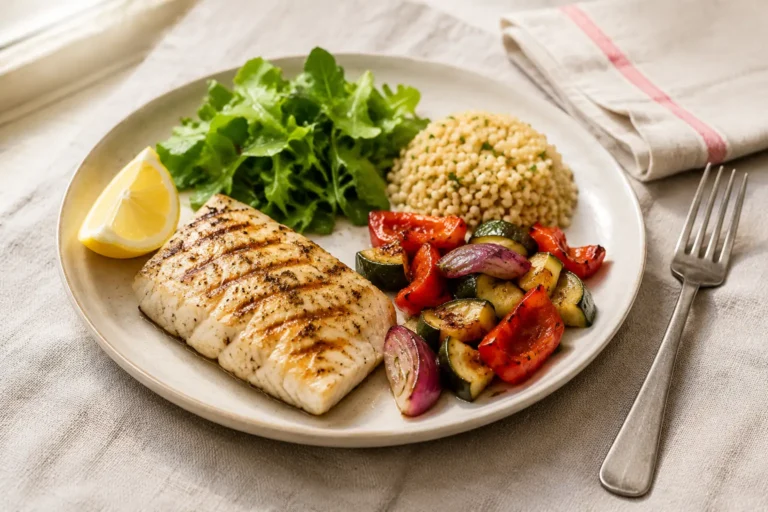
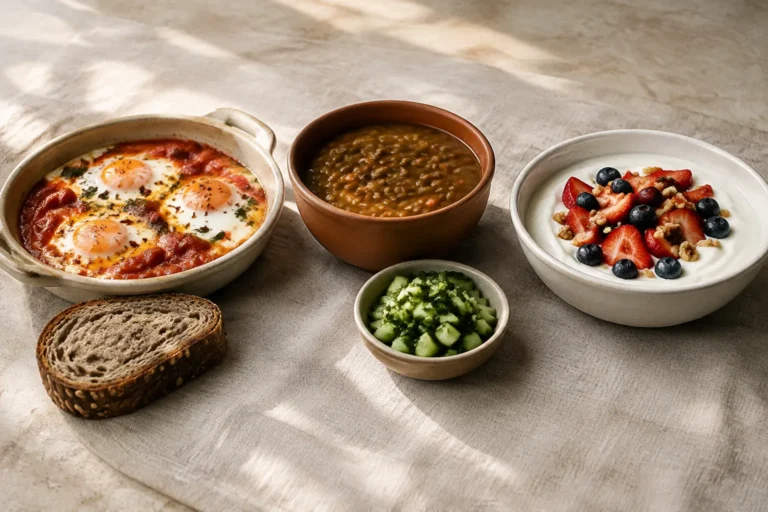
The most useful shift is usually adding rather than removing. Meals built around protein, plenty of vegetables, a satisfying carbohydrate, and some olive oil keep you full for hours.
In everyday life, that can look like eggs with tomatoes and whole-grain bread instead of coffee alone. Lentil soup with a side salad instead of crackers. Greek yogurt with fruit and walnuts instead of a cereal bar.
A client of mine adopted a Mediterranean-style eating pattern and lost approximately 15 lb over three months, without strict calorie counting. She had mild insulin resistance, and the meals themselves did most of the work.
For specifics, start with the best Mediterranean foods for PCOS and these Mediterranean breakfast ideas for PCOS.
Give it a longer runway
Three months is a fair window to start noticing changes in your cycle and energy. Not three weeks.
No single eating pattern clearly beats the others for PCOS. What decides the outcome is whether you can keep doing it. That’s why I spend more time on habits than on rules, and why I wrote a full guide on building habits that stick.
What about medically supervised rapid weight loss?
There’s a real distinction worth drawing here. Supervised very low calorie programmes do exist, and they can improve blood sugar and insulin in PCOS. They run with medical monitoring, planned nutrition, and a structured plan for what happens once the programme ends.
That’s not the same as a plan you found online. The supervision and the exit plan are what make the difference.
Current PCOS guidance also asks clinicians to look out for disordered eating during any weight management. It asks them to be mindful of weight stigma too. If restriction has been a difficult area for you before, raise it with your own clinician before starting anything.
Where to go from here
If you want the case for a gentler approach in more detail, read why the Mediterranean diet works so well for PCOS weight loss.
For the individual foods, I’ve covered olive oil for PCOS, chickpeas for PCOS, and Greek yogurt for PCOS.
And if you’ve already made the switch but aren’t seeing much change, it’s worth checking the common Mediterranean diet mistakes with PCOS before you assume you need to eat less.
F.A.Q.
No. Crash diets and PCOS tend to work against each other. You may see quick movement on the scale, but the symptoms usually return alongside the weight.
Slowly enough that you’re not miserable. Around half a pound to a pound a week suits most people. Losing about 5% of your body weight is often enough to notice a real difference.
It can. Eating far too little signals to your body that this isn’t a good time to ovulate, so cycles can become irregular or stop. This is one of the main reasons crash diets and PCOS are such a poor match.
Not necessarily. Lower-carb eating suits some people with PCOS and isn’t automatically restrictive. It becomes a crash diet when it’s paired with very low calories or cuts out most of the foods you actually enjoy. I’ve compared the two approaches side by side in Mediterranean diet vs. low-carb for PCOS.
Almost certainly not permanently. Appetite and energy use do shift after rapid weight loss, and that can last a while. Eating enough again and building steady habits is how things settle. Crash diets and PCOS leave their mark on hunger for a time, but it isn’t a one-way door.

Nour is a registered dietitian, nutrition researcher, and founder of MedDietMindset. With a passion for evidence-based nutrition, she specializes in Mediterranean diet strategies, PCOS management, and sustainable weight loss. Nour is dedicated to transforming complex scientific research into clear, actionable guidance to support healthier, long-lasting lifestyle changes. Through her blog, she empowers readers to build habits that prioritize well-being, balance, and vitality.