Table of Contents
ToggleResearch on the Mediterranean diet and depression suggests that eating this way may ease symptoms for some adults. It seems to help most when the changes are made with a dietitian’s support, alongside usual treatment. The evidence comes from a few small, short studies, so it is promising rather than proven. Food is not a replacement for therapy or medication, and no one should stop or change treatment without their doctor.
If you live with low mood, or care about someone who does, you may have read that food can help. Some articles make it sound simple. The real picture of the Mediterranean diet and depression is more careful than that, and more useful.
This post covers what the studies found, how sure we can be, and why food might affect mood. It also covers what eating this way can look like on a hard day.
If you’re struggling right now: talk to someone you trust and to a doctor or counsellor. If you think you might harm yourself, contact your local emergency services or a crisis line straight away. The World Health Organization’s guidance on depression gives the same advice.
What the research on the Mediterranean diet and depression shows
Depression is common. The World Health Organization estimates about 322 million people live with it, and talking therapies are usually the first treatment. So the real question about the Mediterranean diet and depression is whether food can add something to that care.
Studies in adults with depression
The most useful studies tested people who already had depression. Researchers helped one group eat in a Mediterranean style. The other group got friendly social support instead, so both groups had the same amount of attention.
- In the SMILES study, 67 adults had seven sessions with a dietitian over 12 weeks. These sessions were added to the treatment they already had. About 1 in 3 people in the diet group felt well again by the end. In the comparison group, it was about 1 in 12.
- In the AMMEND study, 72 young men with depression had dietitian support for 12 weeks. Their symptoms eased more than those of the men who got social support.
- In the HELFIMED study, adults received food hampers, cooking classes and fish oil. Their mood improved more than the comparison group’s at three months, and the gains held at six. Many people dropped out before the end, though.
How sure can we be?
Not very sure yet. There are only a handful of studies on the Mediterranean diet and depression, and they are small and short. People also knew which group they were in, which can make results look better than they are.
Reviews that combine these studies don’t fully agree. One found that people who got help eating this way tended to feel better, but rated its own confidence as low. Another, looking at almost the same studies, found no clear effect.
There is a second gap. People who eat a Mediterranean-style diet tend to report a little less low mood over time. But studies that tried to stop depression from starting didn’t find that diet could do that. Nobody knows yet whether the benefits last for years, either.
Here’s what this actually means. The Mediterranean diet and depression research gives a reason to take food seriously as part of care. It does not give a reason to rely on food alone.
Why food might affect mood
Researchers have a few ideas about how the Mediterranean diet and depression could be connected. None of them is proven in people yet, but together they help explain why scientists keep studying this.
The gut-brain link
Your gut and your brain send signals to each other all the time. That’s partly why stress can upset your stomach. What you eat changes the bacteria living in your gut. Some of those bacteria make substances involved in mood and stress signals.
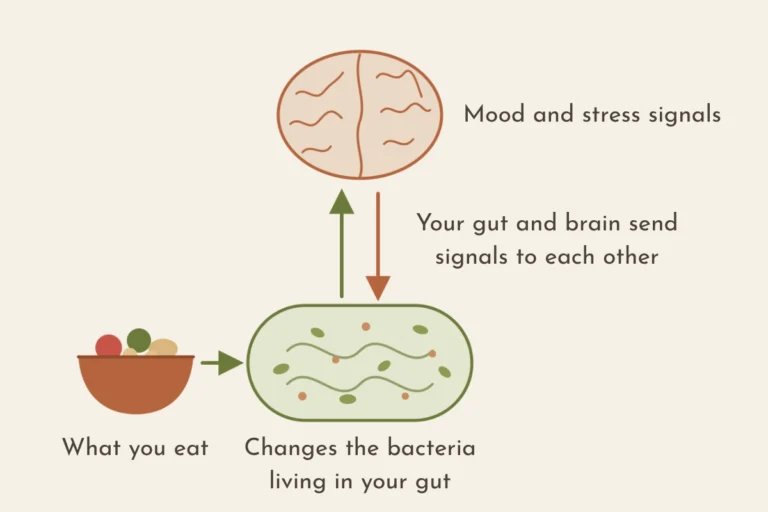
Fibre-rich foods like vegetables, beans, lentils and whole grains feed many of these bacteria. That is one reason the Mediterranean pattern gets attention for mood. The honest caveat is that much of this evidence comes from animal studies, and we don’t yet know how well it carries over to people.
If you’re more interested in what these foods do for digestion itself, Mediterranean Diet for Gut Health: Can It Ease Bloating? covers that side.
Inflammation and other possible pathways
Ongoing inflammation is another idea. Some people with depression have higher levels of it, and what you eat is one of the things that affects it. Mediterranean Diet and Inflammation: Does It Really Help? explains how food fits in.
Researchers also point to the body’s stress-hormone system and to a substance that helps brain cells grow. A recent review for mental health clinicians lists all of these as possible pathways. It’s more likely that several small effects add up than that one food does something special.
Eating this way when your mood is low
Depression can make cooking, shopping and even deciding what to eat feel like too much. So the goal isn’t to follow a perfect plan. It’s to make a few good options easier to reach.
A simple place to start is adding rather than removing. In everyday life, that can look like:
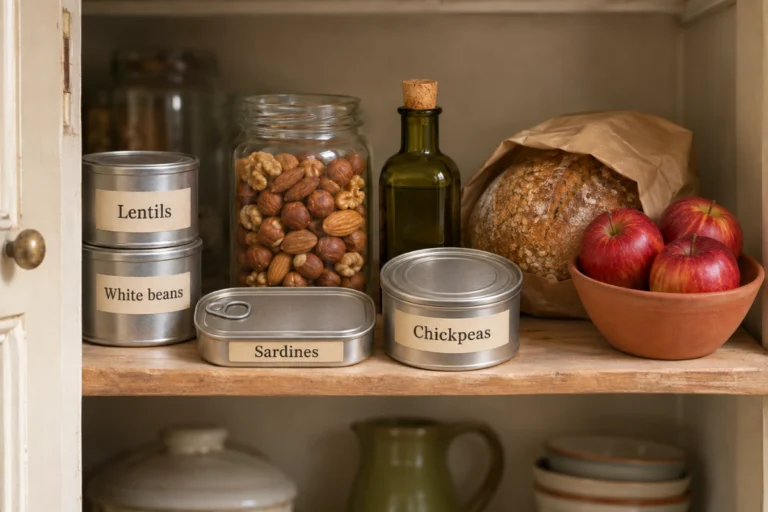
- Keeping tinned fish, like sardines or salmon, for a quick meal on toast.
- Using frozen vegetables, which are already washed and chopped.
- Adding a tin of chickpeas or lentils to soup, pasta or a salad.
- Having whole-grain bread, yogurt, fruit and a handful of nuts in the house for days when cooking feels impossible.
- Using olive oil as your everyday cooking fat.
World Health Organization guidance also suggests keeping to regular meals and staying connected with people. Eating with someone, even once a week, counts.
You don’t need to cut foods out or track anything. If breakfast is the hardest meal, 10 Mediterranean Breakfast Ideas (and Why Each One Works) has simple options. If planning a week feels useful, 6 Mediterranean Meal Plan Rules for a Week That Works keeps it simple.
One more thing matters here. A big change in appetite or weight can be a symptom of depression. If you notice one, tell your doctor rather than trying to fix it with food.
Pregnancy, new mothers, children and teens
These groups need extra care, so this post doesn’t give them food advice for mood.
More than 1 in 10 women have depression during pregnancy or after giving birth. Studies on the Mediterranean diet and depression in pregnancy show mixed results, mostly links rather than proof. Feeling low for a few days after birth is very common and usually passes within two weeks. If it lasts, gets worse, or you’re struggling to cope, talk to your doctor, midwife or health visitor. Fathers and partners can have depression after a birth too.
For children and teens, the evidence is mostly from studies that take a single snapshot. Several found a link between Mediterranean-style eating and fewer depression symptoms, but a link isn’t proof. If you think your child may be depressed, take them to see their doctor.
Food alongside care, never instead of it
In SMILES, the clearest of these studies, food was added to the treatment people already had. Nobody swapped therapy or medication for a diet. That’s the right way to think about the Mediterranean diet and depression.
The support itself seems to matter, too. Diet changes worked best when people had a nutrition professional helping them, not when they were left to work it out alone. If you can, ask your doctor about seeing a dietitian. That’s especially worth doing if you’ve lost your appetite, had a big change in weight, or have a difficult relationship with food.
Food can be one steady, practical thing you do for yourself. It works best as part of a wider plan made with people who can help. If you’re struggling, talk to someone you trust and to a health professional. If you might harm yourself, contact emergency services or a crisis line now.
F.A.Q.
No. Don’t stop or change your medication without talking to your doctor first. In the clearest study on the Mediterranean diet and depression, food was added to people’s existing treatment, not used instead of it. Coming off antidepressants suddenly can cause withdrawal symptoms, so any change needs a plan made with your doctor.
No single food has been shown to lift mood. What matters most is the overall pattern: vegetables, fruit, beans, whole grains, nuts, olive oil and fish, eaten regularly. A large review found no clear link for most single food groups, including fish. Think of the whole plate, not one ingredient.
Most of the research on the Mediterranean diet for mental health is about depression. For anxiety, studies that changed people’s diets didn’t show a clear effect. Eating this way still supports your overall health, but it isn’t a treatment for anxiety.
Most of the Mediterranean diet and depression studies lasted around 12 weeks. That’s how long they measured, not a promise of when you’ll feel better. Everyone’s experience is different, and changes in mood have many causes besides food.
Yes, if you can. In the Mediterranean diet and depression studies with the clearest results, people had several sessions with a dietitian. That support seems to be part of what helped. A dietitian can also adjust advice if depression has affected your appetite, energy or weight.

Nour is a registered dietitian, nutrition researcher, and founder of MedDietMindset. With a passion for evidence-based nutrition, she specializes in Mediterranean diet strategies, PCOS management, and sustainable weight loss. Nour is dedicated to transforming complex scientific research into clear, actionable guidance to support healthier, long-lasting lifestyle changes. Through her blog, she empowers readers to build habits that prioritize well-being, balance, and vitality.