Table of Contents
ToggleYes, chickpeas for PCOS are worth adding to your plate regularly. They pair plant protein with fiber in a way that helps steady your blood sugar after meals, keeps you fuller for longer, and fits naturally into the kind of eating pattern that tends to help with PCOS overall. They’re not a cure or a stand-alone fix, but as part of a balanced Mediterranean diet for PCOS, they’re an easy, affordable food to lean on.
If you’re newer to managing PCOS through food, start with the bigger picture. Our guide to Mediterranean diet and health conditions covers it in full. Chickpeas are just one piece, but a genuinely useful one.
What Makes Chickpeas Worth Adding to a PCOS Diet
One cup of cooked chickpeas gives you about 14.5 grams of protein and 12 grams of fiber, all for around 270 calories. That combination — plant protein plus fiber — is exactly what tends to be missing from a lot of quick meals, and it’s exactly what makes chickpeas useful if you’re managing PCOS.
Fiber slows down how fast your body absorbs carbohydrates, which means less of a blood sugar spike after eating. Protein does something similar by slowing digestion and helping you feel satisfied. Put them together in one food, and you get a meal addition that works on two fronts at once instead of one.
This matters more with PCOS — recently renamed PMOS — than it might with other conditions. Many women with PCOS deal with some degree of insulin resistance, meaning their body needs to produce more insulin than usual to keep blood sugar under control. When insulin runs high for a long time, it can push the ovaries to produce more androgens — hormones like testosterone — which is part of what drives symptoms like irregular periods, acne, and stubborn weight gain. That’s why foods that ease pressure on blood sugar matter — not because any single food is a “PCOS superfood”
How Chickpeas Can Support Blood Sugar and Hormones
What the Research Shows About Blood Sugar
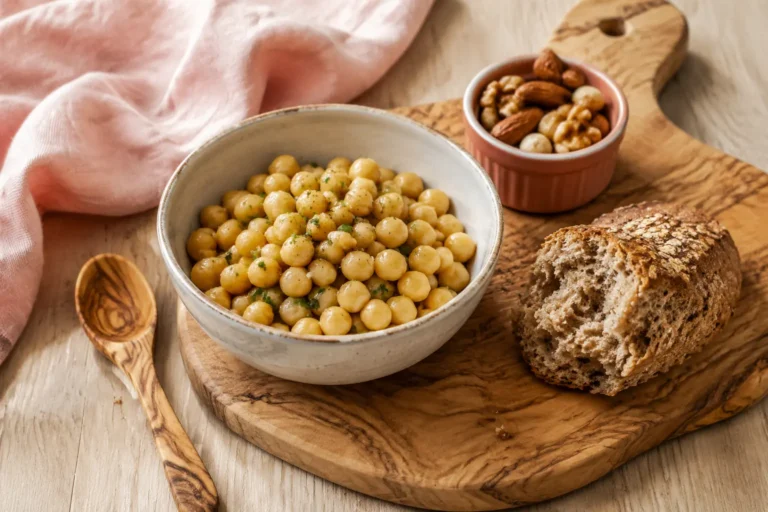
Can chickpeas for PCOS actually help with insulin resistance? In a meaningful way, yes, though it’s worth understanding what the research actually shows rather than overselling it. I’m currently involved in ongoing PCOS nutrition research myself. I’d rather give you the honest, still-developing picture than a tidier one. A recent review pooling nearly 30 studies found something clear: eating chickpeas noticeably blunts how much your blood sugar rises after a meal. That held true compared to eating the same carbohydrates without them, and the effect held up consistently. What it didn’t show clearly was a direct drop in insulin itself or in how high blood sugar peaks — the benefit shows up more in the hours after eating than in one dramatic number.
It’s also fair to say this evidence is still early. Most of it comes from short, single-meal studies rather than years of tracking the same people, so I’d treat it as a promising and consistent signal rather than a settled fact. That doesn’t make it less useful — it just means chickpeas are one supportive piece, not a guaranteed fix.
What This Means for PCOS Specifically
There’s also real evidence specific to PCOS. In one 16-week program, women with PCOS added chickpeas, lentils, or split peas to two meals a day, about a cup each time. Alongside regular exercise and health coaching, they saw real improvements in body fat and insulin resistance. A comparison group on another structured healthy-eating plan saw similar results. Both approaches worked. That tells you pulses like chickpeas aren’t magic, but they are a legitimate way to build a helpful eating pattern.
Here’s the part I think matters most: a year later, once the structured support ended, a lot of participants had regained weight. Some of that improvement in insulin resistance faded too. That’s not a strike against chickpeas. It’s a reminder that no single food, or even a great 16-week plan, does much good as a temporary fix. What helps is building chickpeas into how you eat most of the time, not treating them as a short intervention.
The Fullness Effect
Chickpeas also help in a more immediate way: they keep you full. In one study, people who ate chickpeas before a meal naturally ate less at their next meal. That held true compared to when they’d eaten white bread instead. Managing appetite and cravings is often part of what makes PCOS frustrating. That fullness effect is one of the more practical, immediate benefits chickpeas offer.
How to Actually Add More Chickpeas to Your Meals
You don’t need a special meal plan to make chickpeas for PCOS part of your routine. A simple place to start is swapping them into meals you already make.
Some easy ways to work them in:
- Add a half cup to a salad you’re already making for lunch
- Roast a can with olive oil and spices as a snack or salad topper
- Blend into hummus and use it in place of a heavier spread or dip
- Stir into soups, stews, or a pot of rice or pasta
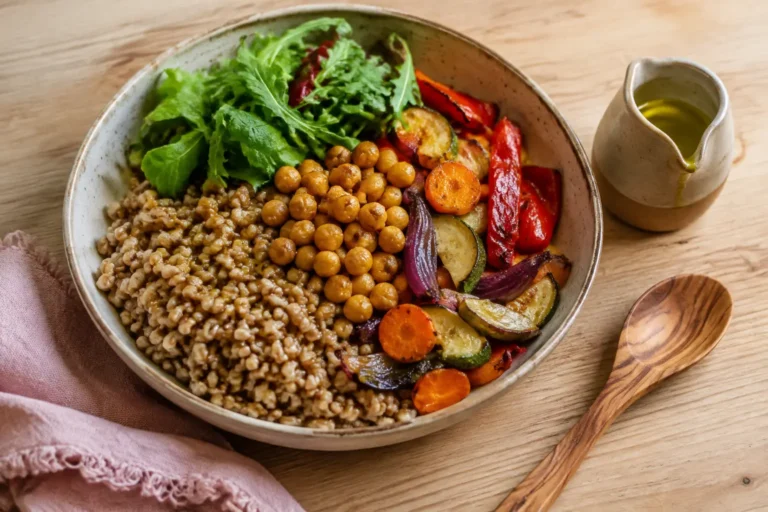
- Use as a base for a grain bowl with vegetables and a protein source
One detail worth knowing: pairing chickpeas with a higher-carbohydrate food, like rice or pasta, actually helps blunt the blood sugar response of the whole meal — so there’s no need to avoid combining them. A cup or so, a few times a week, is a reasonable place to start. You can build up from there based on how your body responds and how much you enjoy eating them.
A Few Things to Keep in Mind
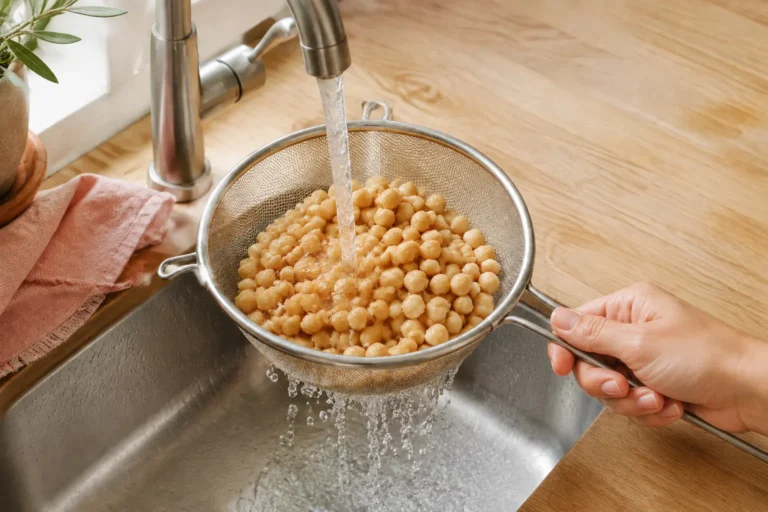
Canned chickpeas are the easiest way to eat more of them, but they do come with added sodium. Draining and rinsing them under water cuts a real chunk of that sodium — a simple step that takes seconds and makes canned chickpeas a perfectly reasonable everyday choice.
If your gut isn’t used to legumes yet, chickpeas can cause some gas or bloating at first. That happens because they contain a type of fiber your gut bacteria ferment, and your gut can adapt to it with practice. Start with smaller amounts, like a few tablespoons instead of a full cup, and build up over a couple of weeks. Canned chickpeas also tend to be gentler on digestion than dried ones — some of that fermentable fiber leaches out during canning.
None of this means chickpeas for PCOS are only for people who tolerate them perfectly right away. Most people adjust with a little consistency.
Other Ways to Support PCOS Through Food
Chickpeas for PCOS work best as one useful piece of a broader pattern, not a stand-alone fix. If you want to go deeper on specific foods and strategies, olive oil for PCOS is another everyday staple worth understanding, Our roundup of the best Mediterranean foods for PCOS weight loss covers more of what to prioritize on your plate. Wondering why this style of eating works well for PCOS in the first place? This breakdown of PCOS weight loss and the Mediterranean diet explains the bigger picture.
F.A.Q.
Yes. Chickpeas for PCOS are a genuinely useful food to eat regularly. They combine plant protein and fiber, which supports steadier blood sugar and better fullness — two things that matter a lot with PCOS.
They can help, though not on their own. Research shows chickpeas blunt blood sugar spikes after meals, and one PCOS study found real improvements in insulin resistance when legumes became a regular part of the diet. That’s one reason chickpeas for PCOS keep coming up as a practical, evidence-backed choice.
There’s no single “correct” amount. Around a cup a few times a week is a reasonable starting point based on the research. You can eat them more often if you enjoy them and your digestion tolerates them well.
Yes. Canned chickpeas offer the same protein and fiber benefits as dried ones. Just drain and rinse them first to cut sodium — it also tends to make them easier to digest.
Chickpeas contain a fiber that your gut bacteria ferment, which can cause gas if you’re not used to legumes. Start with smaller portions and build up gradually — that usually resolves it within a couple of weeks.

Nour is a registered dietitian, nutrition researcher, and founder of MedDietMindset. With a passion for evidence-based nutrition, she specializes in Mediterranean diet strategies, PCOS management, and sustainable weight loss. Nour is dedicated to transforming complex scientific research into clear, actionable guidance to support healthier, long-lasting lifestyle changes. Through her blog, she empowers readers to build habits that prioritize well-being, balance, and vitality.