Table of Contents
TogglePCOS meal prep for your first Mediterranean week comes down to three steps, in this order. Stock a short set of staples, swap three things in meals you already eat, then cook a few basics ahead. You don’t need new recipes or a full meal plan to begin. You just need a kitchen where the easy choice is already the Mediterranean one.
If you have PCOS (newer health guidelines use the name PMOS), the Mediterranean diet for PCOS guide explains why this way of eating helps. This post is the practical side of it: PCOS meal prep, starting in your own kitchen. There’s no single overview of every condition yet, so the health conditions section is where the other guides live.
Why Meal Prep Is the Easiest Way to Start
The hard part of eating well with PCOS is rarely knowing what to eat. It’s 6 p.m., you’re tired, and nothing is ready. That’s the moment a good plan turns into takeaway or toast.
PCOS meal prep moves those decisions earlier in the week, to a time when you have the energy for them. When someone with PCOS asks me where to start, I usually point to the kitchen, not the menu.
There’s a good reason to think it helps. People who eat home-cooked meals more often tend to eat more Mediterranean-style, with more fruit and vegetables. That doesn’t prove cooking is the reason, but it points the same way.
The order matters too. You stock first, so the swaps are possible. You swap before you prep, so the food you cook ahead is already the new version. And you prep last, so the busiest days of the week are covered.
Step 1: Stock the Kitchen
The first step of PCOS meal prep happens at the shop, not the stove. You’re not buying everything a Mediterranean kitchen could hold. You’re buying what this week’s swaps and prep need, plus a few things that keep.
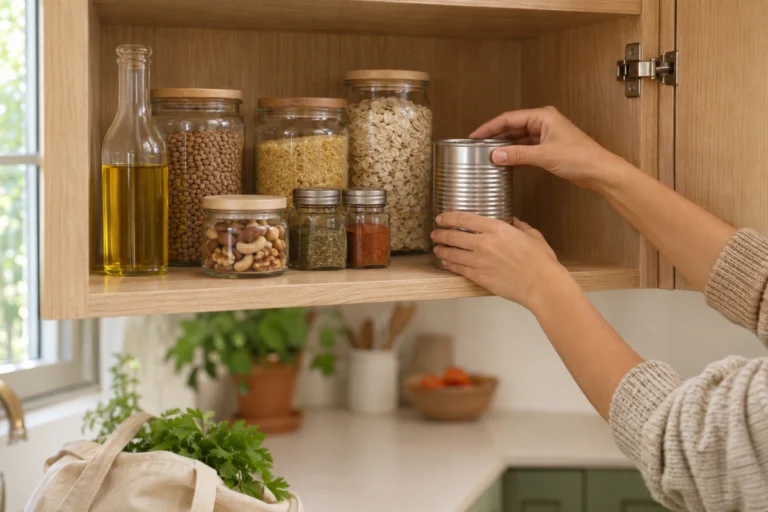
Cupboard staples that last
These keep for weeks, so one shop covers you for a while:
- Olive oil, for cooking and dressing
- Canned or dried chickpeas, beans and lentils
- Two whole grains, such as barley, bulgur or freekeh
- Rolled oats
- Canned sardines, tuna or salmon
- Unsalted nuts
- A few spices you like, such as cumin, za’atar or paprika
If you’d like to know why each of these earns its place, the guide covers the foods worth building PCOS meals around. There’s also a closer look at chickpeas for PCOS.
Fridge and freezer
- Greek yogurt or labneh
- Eggs
- Frozen vegetables and frozen berries
- Fresh vegetables that keep well, such as cabbage, carrots, peppers and cucumbers
- Lemons
Frozen vegetables are just as good a choice as fresh. Where their vitamins did differ, frozen often beat fresh produce that had sat in the fridge for a few days. They also wait for you, which helps PCOS meal prep survive the weeks when cooking doesn’t happen.
Step 2: Swap Three Things First
Three changes you keep are worth more than ten you drop by Thursday. So the second step of PCOS meal prep is small on purpose. Swap three things in meals you already eat, and leave everything else alone for now.
Each swap below keeps a meal you like and changes one part of it. Bigger habits can come later. The 30-day Mediterranean diet challenge adds them one at a time.
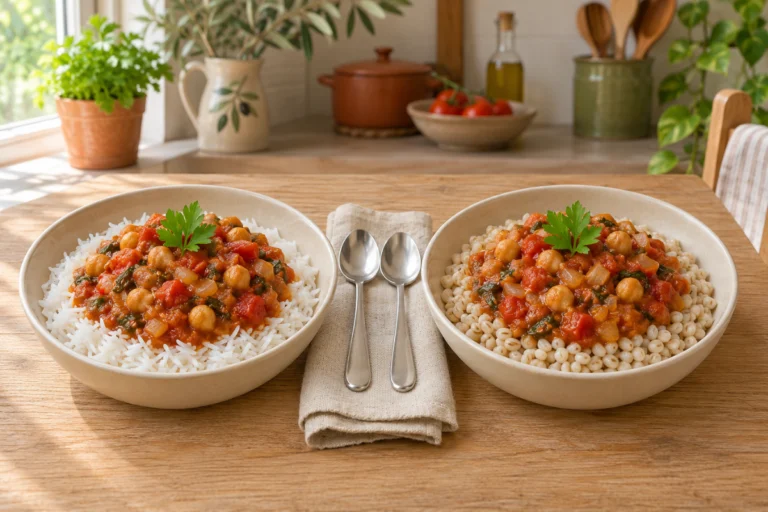
The grain at dinner: white rice to barley or lentils
If white rice is on the table most nights, this swap does the most work. Rice raises blood sugar quickly. With PCOS, your body often needs extra insulin to bring it back down.
Brown rice isn’t the fix you might expect. It raises blood sugar almost as fast as white rice, while barley and lentils are much slower. Wholemeal bread is much the same as white bread on this measure, although it does bring more fiber.
So try one of these instead:
- Barley or bulgur in place of rice, in a pilaf or under a stew
- Half rice, half lentils, cooked together the way mujaddara is
There’s some PCOS-specific evidence for this kind of change. In one year-long study, women with PCOS who ate slower carbs had better insulin results than on a standard healthy diet. More of them saw their cycles become more regular, too. About half the women dropped out, though, so it’s a good sign rather than proof.
The cooking fat: butter or ghee to olive oil
If your eggs, vegetables or rice usually start with butter or ghee, use olive oil instead. It works for frying eggs, roasting vegetables and dressing salads.
The evidence here is about your heart rather than PCOS itself. People who used olive oil in place of butter, margarine or dairy fat had a lower risk of early death over nearly 30 years. Deaths from heart disease were lower too. The study watched what people ate rather than testing it. The olive oil users also tended to have healthier habits overall.
Olive oil is still calorie-dense, so measure it with a spoon rather than pouring. There’s more on how much olive oil to use with PCOS.
The afternoon snack: biscuits to fruit and nuts
The afternoon snack is where a lot of good days come apart. A packet of biscuits or a pastry with tea is quick, but it rarely holds you until dinner.
Swap it for a piece of fruit with a small handful of nuts, or hummus with vegetable sticks. In one short study, people who snacked on almonds felt less hungry, and their blood sugar rose less after eating. They didn’t gain weight either, because they naturally ate a little less elsewhere. Keep the nuts to a small handful, though. They’re easy to overdo.
Step 3: Prep a Few Basics Ahead
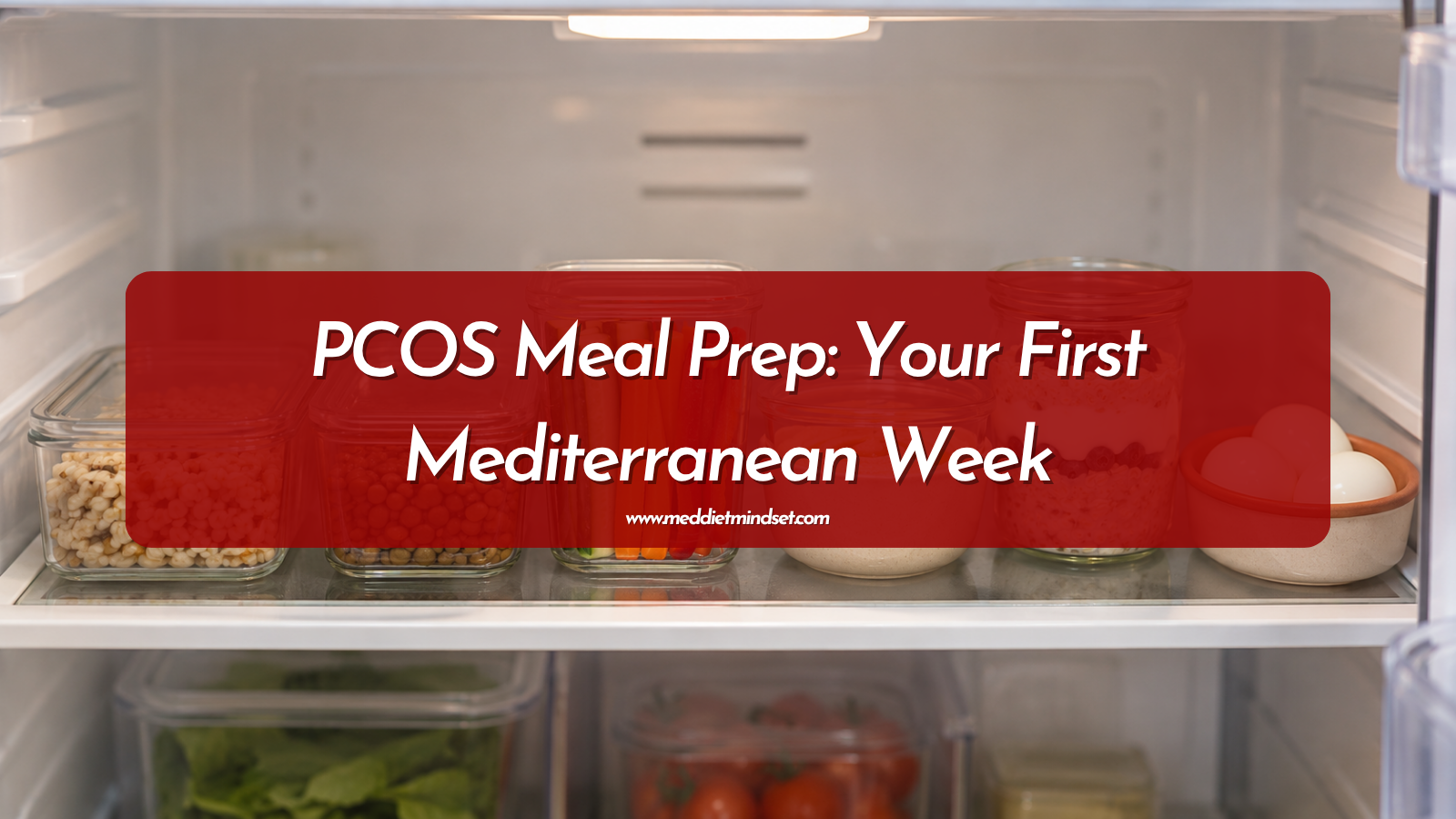
Cooking a few things ahead is the last step. It’s easiest in one longer session at the start of the week. You’re not making full meals. You’re making the parts that take longest, so weekday meals only need putting together.
One grain and one pot of lentils or beans
Cook a pot of barley or bulgur and a pot of lentils or chickpeas. Together they cover lunches, dinners and the rice swap from step 2. Cooked grains and beans reheat well.
For how long cooked food keeps, and when to freeze it, see Rule 3 of the Mediterranean meal plan rules.
Washed and chopped vegetables, plus a dip
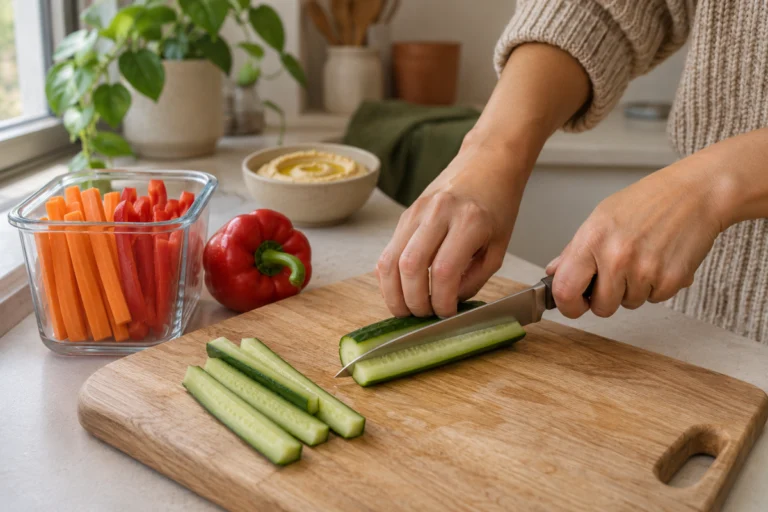
Wash and chop a few vegetables you’ll actually eat raw, such as cucumber, carrots and peppers. Keep them in a clear container at the front of the fridge.
Then make or buy one dip, like hummus, or labneh with a drizzle of olive oil. That’s your afternoon snack swap, ready to go.
One make-ahead breakfast
Breakfast is often the meal that gets skipped or rushed. Make something the night before, like overnight oats with Greek yogurt and berries, or a few boiled eggs.
Use rolled oats rather than instant. Rolled oats raise blood sugar more slowly. For more on building a first meal that lasts, see Mediterranean breakfast for PCOS.
Putting it together
This is where PCOS meal prep pays off. With those basics ready, most meals take minutes. A lunch bowl can be barley, chickpeas, chopped vegetables, olive oil and lemon. Dinner can be lentils and rice with roasted frozen vegetables and a spoon of yogurt. The guide’s sample day shows what a whole day can look like.
What to Expect From Your First Week
Your first week of PCOS meal prep is set-up, not results. The first thing you may notice is that meals feel more filling. Changes in weight, cycles and hormones take months, not days.
Some days the plan won’t hold. You’ll skip the prep session, or eat out more than you meant to. That’s normal, and it doesn’t undo anything. Pick it back up at the next meal.
What tends to backfire is changing everything at once, or cutting food hard to speed things up. If you’ve been there, here’s why crash diets backfire with PCOS. Small steps you can repeat next week will get you further.
Related Strategies
- Mediterranean meal plan rules: how to plan whole weeks once your first week is set up.
- 30-day Mediterranean diet challenge: a set structure for building habits after this first week.
- Common Mediterranean diet mistakes with PCOS: why some women follow the diet closely and still feel stuck.
- Greek yogurt for PCOS: an easy protein to keep stocked for breakfasts and snacks.
F.A.Q.
Start with three steps. Stock a few staples and swap three things in meals you already eat. Then cook a grain, a pot of lentils and some chopped vegetables ahead. PCOS meal prep doesn’t need new recipes to begin.
No. For a first week of PCOS meal prep, a few prepped basics are enough. You can put meals together from them as you go. Once that feels normal, planning the whole week is a good next step.
Start with foods that take longest to cook and reheat well, like barley, bulgur, lentils, chickpeas and beans. Add boiled eggs, chopped raw vegetables and a dip. For PCOS meal prep, slower carbs like barley and lentils make the most useful base.
It depends on how much you cook, but much of the time is hands-off while grains and beans simmer. For a first week, one longer session plus a few minutes on the evenings you put meals together is enough. Add more once it fits your week.
It can help indirectly. PCOS meal prep makes filling, home-cooked Mediterranean meals the easy option on busy days. Meal prep itself hasn’t been tested as a weight-loss method. Think of it as the thing that makes the diet doable.