Table of Contents
Toggle| Week | Habit |
|---|---|
| Week 1 | 1. Drink water first thing in the morning |
| Week 1 | 2. Mediterranean-inspired breakfast |
| Week 2 | 3. 10-minute walk after breakfast |
| Week 2 | 4. Mindful eating |
| Week 3 | 5. Mediterranean lunch |
| Week 3 | 6. 20-minute walk after lunch |
| Week 4 | 7. Mediterranean dinner |
| Week 4 | 8. Reflect and plan ahead |
The 30-day Mediterranean diet challenge adds eight small habits over four weeks, two each week, one at a time. You start with water and breakfast. Then you add short walks after meals, mindful eating, and Mediterranean-style lunches and dinners. You keep each habit as you add the next, with no calorie counting and no banned foods.
How the 30-Day Mediterranean Diet Challenge Works
The 30-day Mediterranean diet challenge is built on one idea: change a little, keep it, then change a little more. Most diets ask you to rebuild your whole day on a Monday. This one asks for one new habit every few days.
Two habits a week, one at a time
Each week has a theme and two habits. They don’t arrive together. The tracker brings them in a few days apart. That way, each new habit gets some time on its own before the next one joins it.
Nothing gets swapped out along the way. By the last week, all eight habits are running together. That’s the point: small changes are much easier to keep when they’re added to a routine you already have.
What 30 days can and can’t do
Here’s the honest part. Thirty days is a strong start, but it won’t make every habit automatic.
In one well-known study, a new daily habit took about two months on average to start feeling automatic. For some people it took far longer. The same research found that simple actions, like drinking water, became automatic faster than more involved ones. That’s why this challenge starts with a glass of water.
Missing a day won’t undo your progress, either. What matters is getting back to it the next day. Skipping often is different, so aim for most days rather than every day.
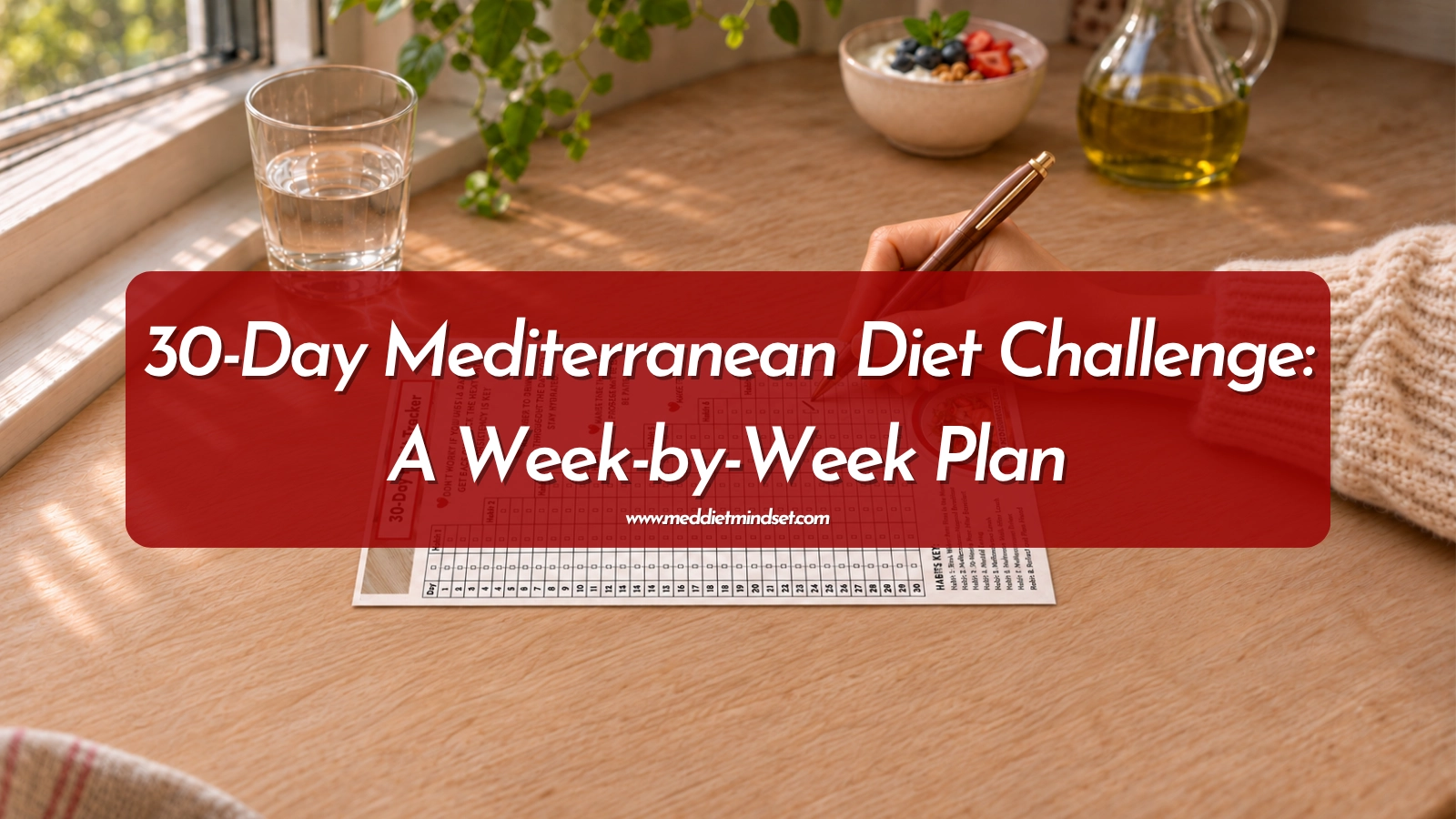
Get the printable tracker. The 30-day Mediterranean diet challenge comes with a free 7-page PDF: the four weeks explained, and a 30-day tracker grid with a daily box for each habit, starting from the day it begins. Print it and keep it somewhere you’ll see it each morning.
Week 1: Hydration and Breakfast
Your mornings come first. Both habits in week 1 of the 30-day Mediterranean diet challenge happen before your day gets busy. That makes them easier to repeat.
Habit 1: Drink water first thing in the morning
Before coffee or breakfast, drink a glass of water. That’s the whole habit.
It isn’t here because morning water melts fat. It’s here because it’s simple, and simple habits are the easiest to build. Keep a glass or bottle by the kettle so the cue is right where you’ll be.
Habit 2: A Mediterranean-inspired breakfast
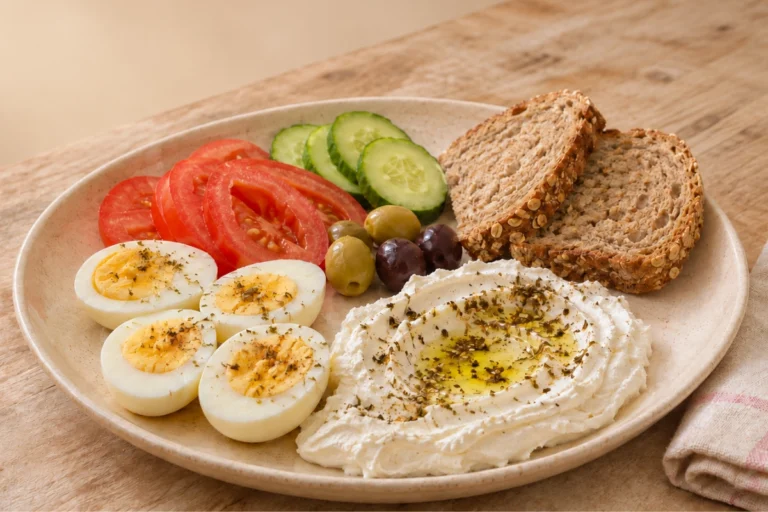
Later in week 1, once the water habit has had a few days on its own, make your breakfast Mediterranean. In everyday life, that can look like:
- Greek yogurt with fruit, a few walnuts and a drizzle of honey
- Eggs with tomato, cucumber, olives and whole-grain bread
- Labneh, olive oil and za’atar on whole-grain bread, with vegetables on the side
You don’t need to start from scratch. If breakfast is usually toast with jam, try adding eggs or labneh and some tomato.
One thing to know: eating breakfast isn’t a weight-loss tool on its own. In short trials, people asked to eat breakfast ate more over the whole day, not less. So if you don’t usually eat breakfast, apply this habit to your first meal of the day instead.
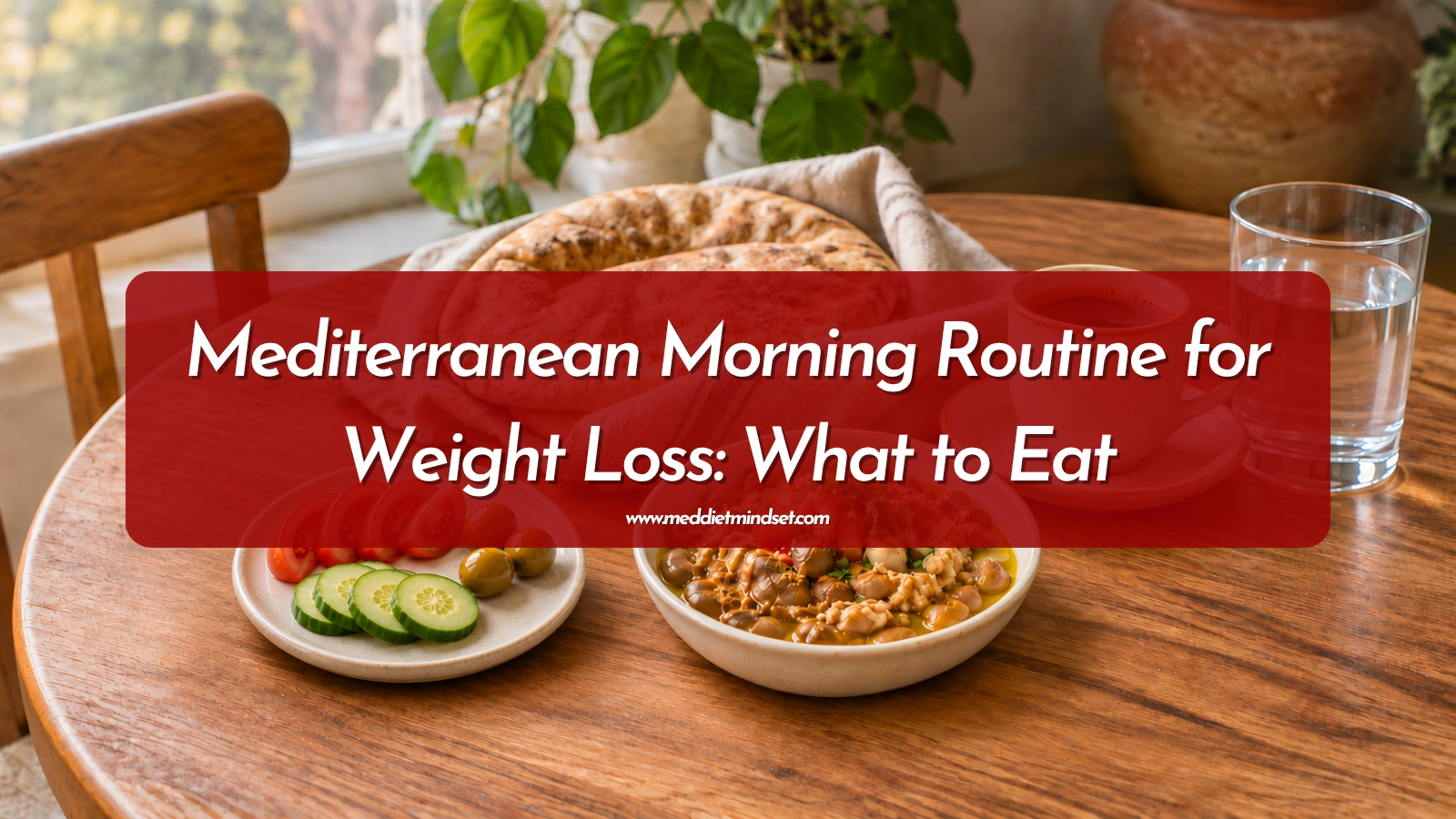
For more options, see these Mediterranean breakfast ideas. If you’d rather put your own together, here’s what to eat in the morning to lose weight.
Week 2: Movement and Mindful Eating
Week 2 adds a little movement and a little attention. Neither one needs special equipment or extra time in your day.
Habit 3: A 10-minute walk after breakfast
In week 2, add a 10-minute walk after breakfast. Around the block, to the shop, or up and down the stairs all count.
A short walk after eating helps your body use the sugar from that meal. In people with type 2 diabetes, walking after meals kept blood sugar steadier than the same amount of walking at any other time.

Habit 4: Mindful eating
A few days later, once the walk has settled in, eat one meal a day without a screen. No phone, no TV, no laptop. Just the meal.
This sounds small, but it matters. When you eat while distracted, it’s easy to eat more without noticing. You also tend to feel hungry again sooner, because you don’t really remember the meal.
Mindful eating isn’t a proven weight-loss method by itself. What it does is help you notice when you’ve had enough, and enjoy the food you’re already eating.
Week 3: Lunch and a Longer Walk
Next comes the middle of your day. Lunch is often the meal that gets rushed, skipped, or eaten at a desk. That’s why week 3 of the 30-day Mediterranean diet challenge starts there.
Habit 5: A Mediterranean lunch
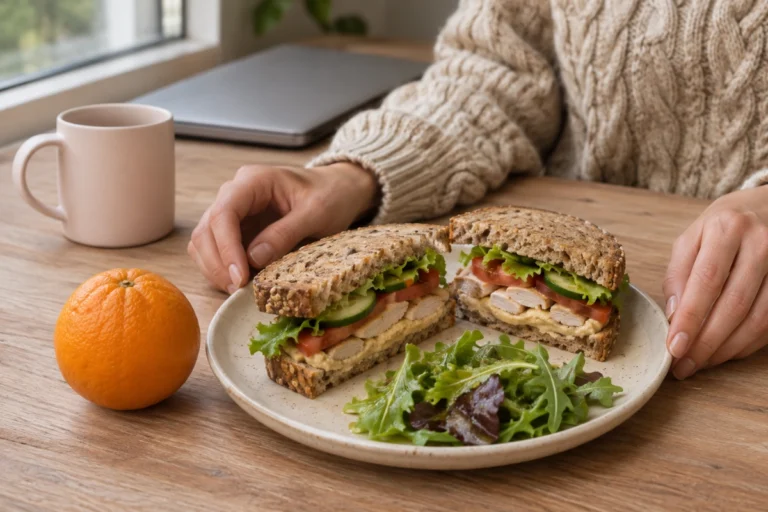
In week 3, build lunch the Mediterranean way. A simple place to start is plenty of vegetables, a source of protein, a whole grain, and some olive oil.
You don’t have to give up the meals you like. If lunch is usually a sandwich, keep it. Use whole-grain bread, add hummus, chicken or tuna and plenty of salad, and have fruit on the side.
Other easy options are a lentil salad with feta, leftover chicken with bulgur and vegetables, or a bean soup with bread. For help fitting these into your week, see how to build a Mediterranean meal plan.
Habit 6: A 20-minute walk after lunch
A few days later, once lunch has settled in, walk for 20 minutes after lunch. If that’s hard on a workday, split it into two 10-minute walks.
Even short movement helps. A few minutes of light walking after a meal lowered blood sugar more than sitting still. Standing helped too, just less than walking.
Week 4: Dinner and Planning Ahead
The final week adds dinner, and then a habit that helps the others last.
Habit 7: A Mediterranean dinner
In week 4, use the same approach for dinner that you used for lunch. Vegetables, a protein, a whole grain or potatoes, and olive oil.
Some easy dinners:
- Baked fish with roasted vegetables and potatoes
- Chickpea and vegetable stew with bread
- Mujaddara (lentils and rice) with salad and yogurt
If you cook for a family, you don’t need a separate meal. Add a vegetable side and use olive oil, and dinner is most of the way there.
Habit 8: Reflect and plan ahead
A few days later, once dinner has settled in, take five minutes each day to look at your tracker. Which habits feel easy now? Which ones keep getting missed?
Then plan one thing for tomorrow. Buy the yogurt. Cook extra lentils for lunch. Put your walking shoes by the door.
People who keep track of what they’re doing tend to do better with weight loss. A box ticked each day is the simplest way to do that.
Adjusting the Challenge to Your Life
You don’t need to do the 30-day Mediterranean diet challenge perfectly. A few common situations, and what to do:
- You miss a day. Pick up where you left off the next day. One missed day doesn’t erase the days before it.
- You already do one of the habits. Tick it and enjoy the easy win. Keep going with the rest.
- A walk isn’t possible. Heat, work and mobility all get in the way sometimes. Walk later in the day, walk indoors, or simply stand and move around after eating. Some movement beats none.
- A habit isn’t working for you. Change the details, not the idea. A walk can be a different route. Mindful eating can be a different meal.
Related Strategies
- Morning routine for weight loss: how to build a breakfast that keeps you full, and the morning habits around it.
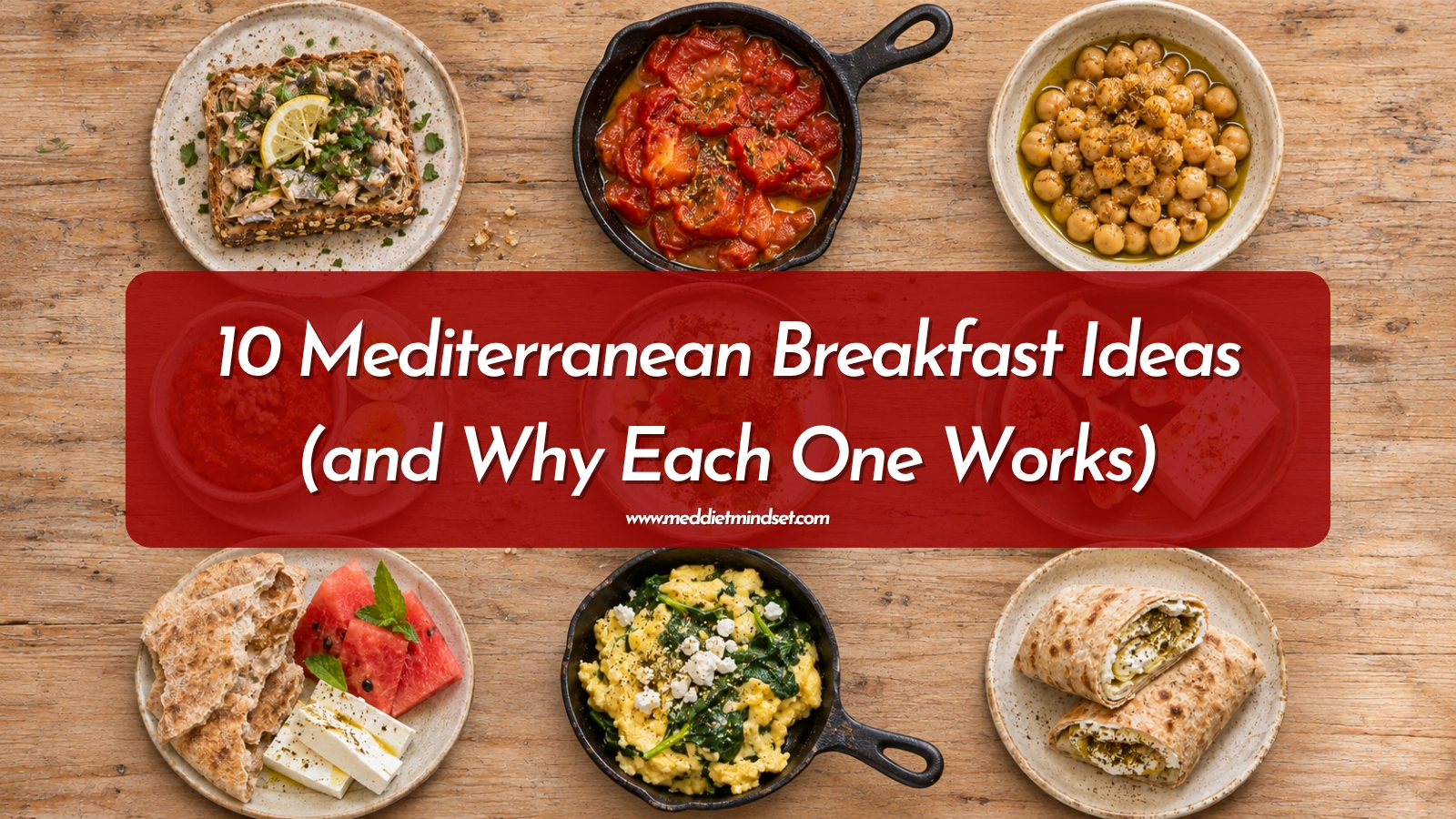
- Mediterranean breakfast ideas: ten breakfasts to try once Week 1 starts.
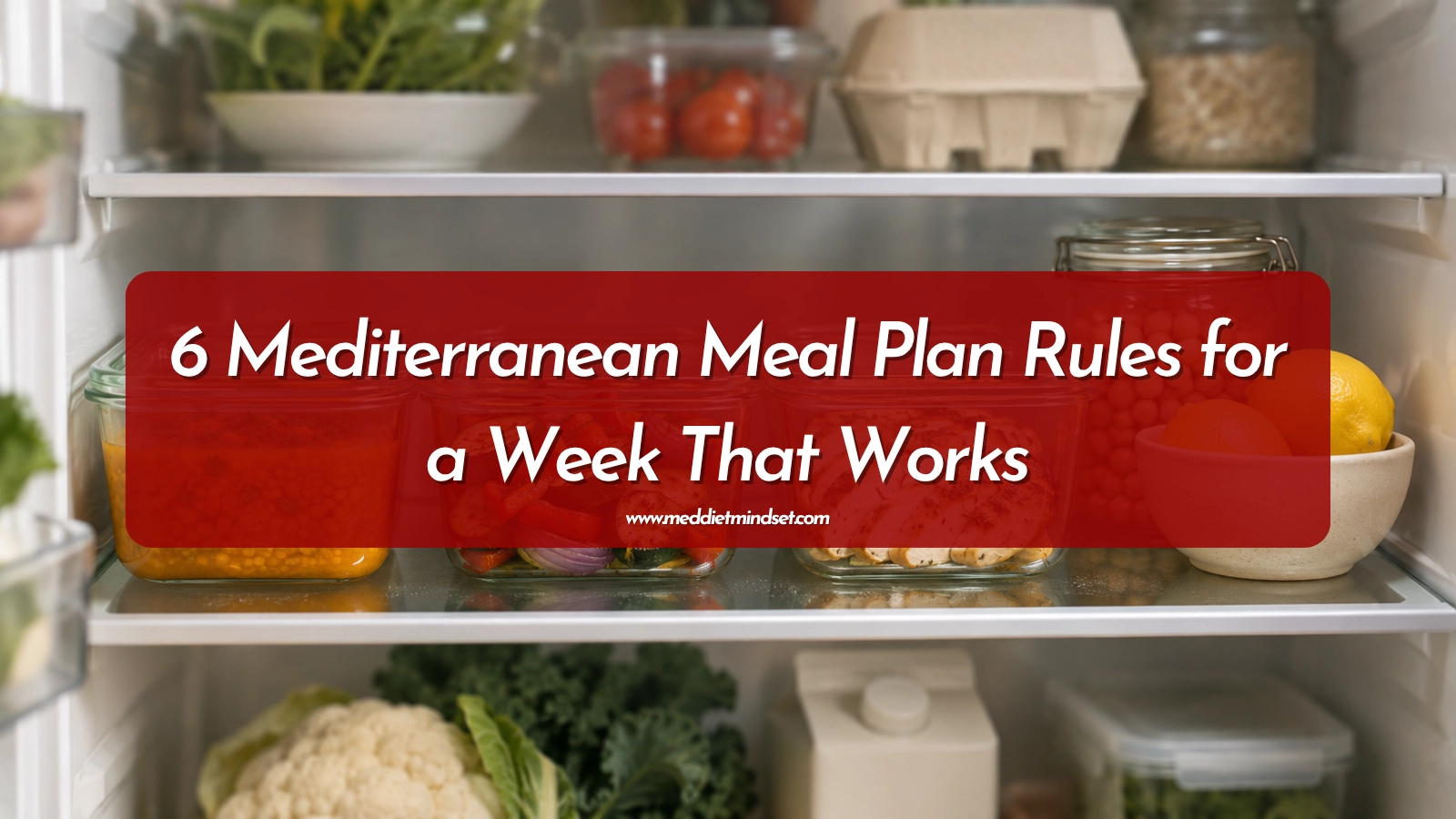
- Mediterranean meal plan rules: how to plan the lunches and dinners from Weeks 3 and 4 across a whole week.
F.A.Q.
You can, but 30 days is a short window, and results vary a lot between people. Over the longer term, the Mediterranean diet helps with weight loss about as well as other well-planned diets. I think its real advantage is that it’s easier to live with. Here’s more on how the Mediterranean diet supports weight loss.
No. The 30-day Mediterranean diet challenge changes what you eat and how you eat it, not the numbers. If weight loss is your goal and nothing changes after a few weeks, portions are worth a look later. They aren’t the place to start.
Yes. Drink your glass of water first, then have your coffee as usual. If it usually comes with a lot of sugar or syrup, that’s worth a look, but it isn’t part of this challenge.
Yes, if it suits you. Fasting changes when you eat, and this challenge changes what and how you eat. If you skip breakfast, apply Habit 2 to your first meal. Here’s a fuller comparison of intermittent fasting vs the Mediterranean diet.
After the 30-day Mediterranean diet challenge, keep going with the habits you ticked most often. They’re the ones closest to sticking. For the ones you kept missing, give them another month on their own. Most habits need longer than 30 days anyway, so this is normal, not a setback.