Table of Contents
ToggleGetting pregnant with PCOS is usually harder because ovulation is unpredictable, not because it has stopped. Cycles run long or get skipped, so there are fewer chances to conceive across a year. The fertile window also moves from month to month, which makes it easy to miss. Most women with PCOS do go on to have children, though it often takes longer and sometimes needs medical help.
This post covers one piece of a much bigger topic. My complete guide to the Mediterranean diet for PCOS covers hormones, weight, and eating overall, and the health conditions section has related articles. You may also see PCOS called PMOS now — fertility specialists already use the new name.
Why Getting Pregnant with PCOS Takes Longer
Getting pregnant with PCOS is harder for one main reason, and everything else follows from it. Ovulation doesn’t happen on a reliable schedule. It isn’t that your body can’t do it. It’s that you can’t count on when.
Ovulation is delayed, not switched off
Most women with PCOS still ovulate. It just tends to happen later than expected, and some months it doesn’t happen at all.
The reason sits with your hormones. Higher insulin pushes testosterone up, and higher testosterone stops a follicle from finishing the job of maturing an egg. If you want that chain explained properly, how insulin resistance disrupts ovulation walks through each step.
Fewer cycles a year means fewer chances
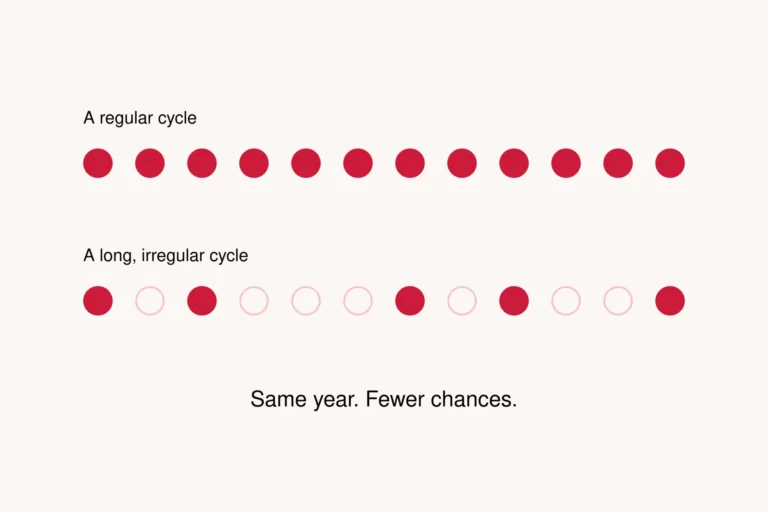
A regular cycle gives you roughly 12 or 13 chances to conceive each year. That’s the baseline most fertility advice quietly assumes.
Now change the numbers. Cycles longer than 35 days count as irregular, and fewer than eight periods a year is common with PCOS. Five or six chances a year is a very different starting point from twelve.
Nothing has gone wrong in any particular month. There are simply fewer months that count. This is the biggest reason getting pregnant with PCOS takes longer, and it isn’t about anything you did.
Most women with PCOS do have children
This is worth saying plainly, because the internet rarely does. Followed into their forties, roughly three in four women with PCOS had at least one child. Among women without PCOS it was closer to four in five.
About half said they’d struggled to conceive at some point. Which also means about half didn’t. First babies tended to arrive around nine months later than average.
Harder and slower is the honest summary. Unlikely isn’t.
The Timing Problem Nobody Warns You About
Here’s the part that makes getting pregnant with PCOS so frustrating. Even in the months when you do ovulate, the usual tools for spotting it often don’t work.
Why ovulation predictor kits mislead with PCOS
Those sticks look for a rise in a hormone called LH. In a typical cycle it surges a day or two before an egg is released, which is what makes the test useful.
With PCOS, that hormone often sits high all month instead of spiking. So the stick can read positive when no egg is coming. Some women get positive after positive and assume they’re ovulating constantly.
The reverse happens too. If you test on the days a textbook cycle suggests, you may miss a surge that arrives three weeks later. Either way you end up timing things around a signal that isn’t telling you much.
Period apps have a different problem with the same result. Most predict your fertile window from your average cycle length. When your cycles vary by two or three weeks, that average describes nothing real.
There’s still a use for the app, though. Log what actually happened instead of trusting what it predicts. A record of your real cycle lengths is worth bringing to an appointment.
What tends to work better
Confirming ovulation afterwards is more reliable than trying to predict it. A blood test taken about a week before your period is due shows whether you actually ovulated that month.
Ask your doctor about it. With long cycles the timing of that test needs adjusting, so it’s worth arranging properly rather than guessing.
What comes back is simpler than you’d expect. A high enough level means an egg was released that cycle. A low one means it wasn’t, which is useful to know rather than a bad result. One month doesn’t settle it either way, so it’s often worth repeating.
What Actually Helps When You're Getting Pregnant with PCOS
Food, weight, and medication all have a genuine role here. The order they come in matters, and it isn’t the order most people expect.
The weight number is smaller than you think
Where there’s weight to lose, around 5% of your body weight is often enough for ovulation to happen more regularly. For most women that’s a few kilos, not a full transformation. Food and movement are also where doctors are meant to start, before any medication.
One honest caveat comes from the same researchers. Better ovulation isn’t the same thing as a baby, and that second step hasn’t been properly studied. So treat 5% as a reasonable goal, not a promise.
How you eat matters as much as how much
Most women I work with have already tried eating less. What they often haven’t tried is eating differently.
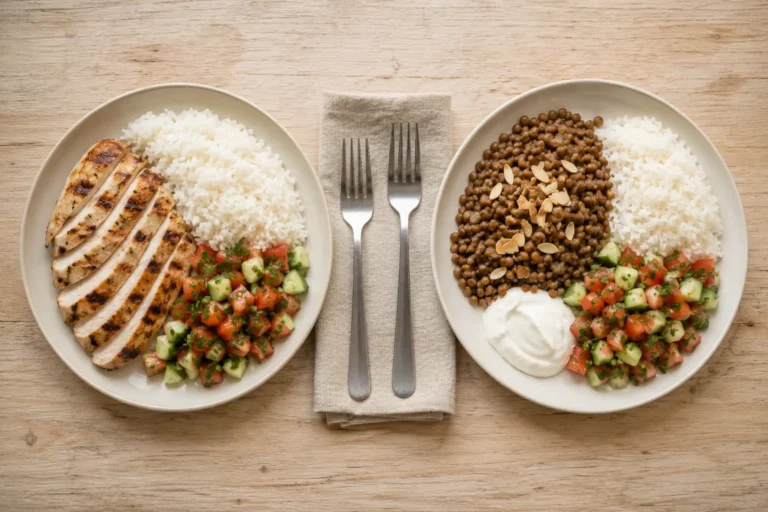
I’d rather be straight with you about the evidence. There’s no proof that one type of diet beats another here, and there’s no such thing as a fertility diet you can buy. What turns up most consistently is Mediterranean-style eating: vegetables, olive oil, fish, beans, nuts, and whole grains.
One swap has better support than most. Using beans, lentils, or nuts in place of some of the meat in your week was linked with fewer ovulation-related problems.
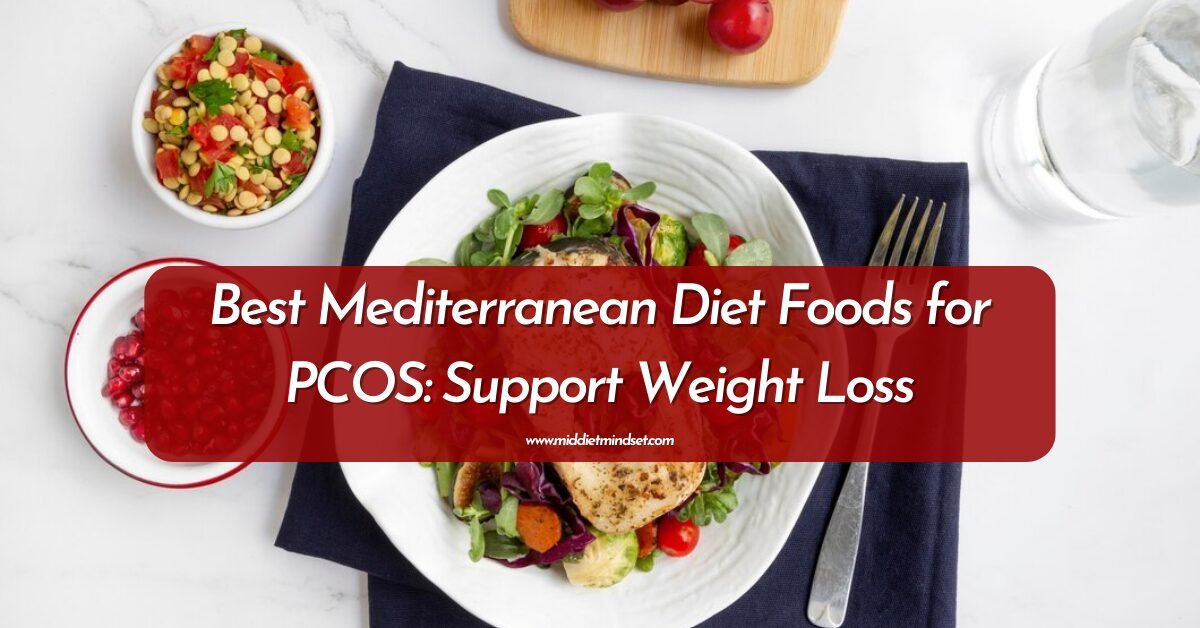
If you want the food-by-food version, the best Mediterranean foods for PCOS is a more practical place to start than a meal plan.
Where medical treatment fits
Food doesn’t replace treatment. Needing treatment isn’t a sign you didn’t try hard enough.
If ovulation isn’t happening on its own, letrozole is the tablet doctors usually try first. It works better than clomiphene, the older option, and metformin is sometimes added alongside.
IVF sits much further down the list. Most women with PCOS never get anywhere near it.
These things also work together rather than competing. Eating well while you’re on treatment isn’t wasted effort, and starting treatment doesn’t mean the food side stopped mattering.
What Food Can't Fix
Some parts of getting pregnant with PCOS sit outside what food can reach. Knowing which parts saves you time.
When to stop waiting and get checked
This may be the most useful thing in this article. The usual advice is to try for a year before asking for help, or six months if you’re 35 or older.
That rule wasn’t written for you. Irregular or absent periods are a reason to be assessed without waiting, because the cause is already known to affect fertility. Plenty of women spend a year waiting when they didn’t need to.
The one time eating less backfires
Not every irregular cycle comes from PCOS. Periods can also stop when the body isn’t getting enough food, or is carrying too much exercise and stress. Thyroid problems, high prolactin, and early menopause can each do it too.
If that’s what’s going on, eating less makes things worse. This is the one situation where cutting back harder is the wrong move. It’s also why crash diets tend to set PCOS back rather than help. Some of the common Mediterranean diet mistakes with PCOS come from exactly that instinct.
Where to Go Next
Getting pregnant with PCOS usually involves the same changes that help PCOS generally. If weight is part of your picture, why the Mediterranean diet works so well for PCOS covers that properly. And if you’re weighing this way of eating against a low-carb approach, that comparison is here.
F.A.Q.
Yes, and most women do. Getting pregnant with PCOS naturally is more likely when your cycles sit at the shorter end. Long gaps between periods make it harder, simply because there are fewer chances. It’s worth being assessed early rather than waiting to see.
Longer than average, and there’s no reliable number I can give you. Women with PCOS tend to have their first baby around nine months later than women without it. That’s an average, not a prediction. Getting pregnant with PCOS depends far more on how often you ovulate than on how long you’ve been trying.
It helps ovulation, which is the step that’s usually stuck. Around 5% of your body weight is the amount linked with cycles becoming more regular. What nobody can promise is that weight loss ends in a pregnancy, because that part hasn’t been studied well. Weight is also only one part of getting pregnant with PCOS. Plenty of women at a perfectly normal weight have the same trouble ovulating.
Yes. Plenty of women with PCOS ovulate regularly and conceive without any difficulty. The condition affects ovulation in most women who have it, but not in all of them, and not to the same degree. This is why getting pregnant with PCOS looks so different from one woman to the next.
No, and this gets missed constantly. A male factor is involved in around half of couples who struggle to conceive. A semen analysis belongs in the first round of tests. Having PCOS doesn’t mean the search should stop with you.

Nour is a registered dietitian, nutrition researcher, and founder of MedDietMindset. With a passion for evidence-based nutrition, she specializes in Mediterranean diet strategies, PCOS management, and sustainable weight loss. Nour is dedicated to transforming complex scientific research into clear, actionable guidance to support healthier, long-lasting lifestyle changes. Through her blog, she empowers readers to build habits that prioritize well-being, balance, and vitality.