Table of Contents
ToggleIf you have PCOS, you’ve probably wondered whether low-carb eating or the Mediterranean diet works better. That’s the real question behind the Mediterranean diet vs. low-carb for PCOS debate. Low-carb eating tends to move insulin and testosterone numbers faster. Mediterranean-style eating is easier to stick with and holds its results better over time. For many people, combining the two — Mediterranean eating with fewer refined carbs — works better than either extreme on its own.
Quick Comparison
| Mediterranean Diet | Low-Carb Diet | |
|---|---|---|
| Carbs | Whole grains, legumes, and fruit stay in the picture | Cut sharply, sometimes below 50g a day |
| Insulin & blood sugar | Improves steadily over weeks to months | Often improves faster, especially early on |
| Hormones (testosterone, cycles) | Improves gradually, more so combined with fewer refined carbs | Can lower testosterone and help cycles return |
| Inflammation | Strong anti-inflammatory effect from olive oil, produce, and fish | Less research specifically on inflammation |
| Weight loss | Steady, tends to hold long-term | Often faster at first, harder to maintain |
| Sustainability | Easier to eat this way for years | Harder to stick with over the long run |
| Nutrient variety | Wide range of food groups | Limited fruit, grains, and legumes long-term |
This comparison is really just one piece of a bigger picture. If you want the full approach to eating with PCOS, it’s worth reading through our Mediterranean diet for PCOS guide — and if you’re curious how this way of eating supports other conditions too, our health conditions hub has more.
What Each Diet Actually Means for PCOS
The Mediterranean Pattern
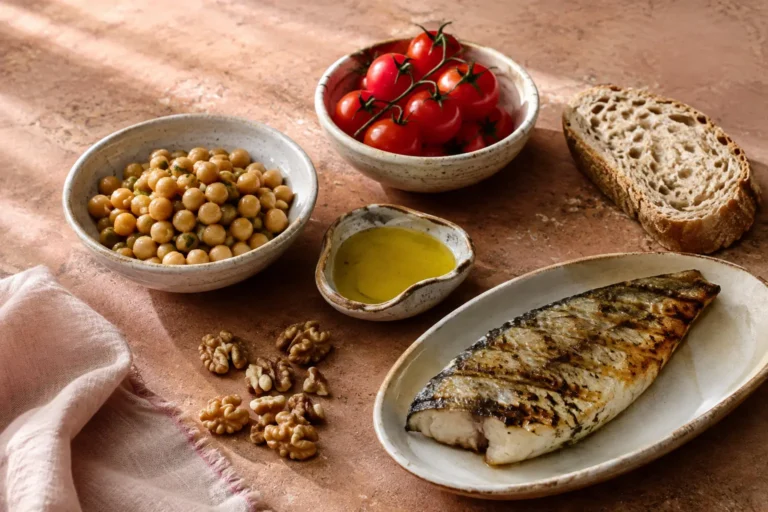
Mediterranean-style eating isn’t a strict rulebook. It’s built around vegetables, fruit, whole grains, beans, lentils, nuts, and olive oil. Fish and seafood show up a few times a week, with less red meat and processed food overall.
Carbs aren’t the enemy here. The focus is on where they come from — oats, beans, and fruit instead of white bread and sugary drinks.
That matters for PCOS — a condition doctors now call PMOS. These foods bring fiber, healthy fats, and plant compounds that work together, instead of cutting out one food group entirely.
The Low-Carb Pattern
Low-carb eating for PCOS means sharply reducing carbohydrates and eating more protein and fat instead. How far it goes varies a lot. Some versions simply cut back on refined grains and sugar. Stricter versions, like keto, push carbs below 50 grams a day. That’s low enough to cut out most fruit, grains, and legumes.
The idea behind it is straightforward: less carbohydrate coming in means less demand on insulin. For someone whose body already struggles to use insulin well, that can bring real, fairly quick relief.
How They Compare on What Matters Most for PCOS
Line up Mediterranean diet vs. low-carb for PCOS on what actually matters — insulin, hormones, and weight. The picture gets more interesting than “one wins outright.” Both approaches genuinely help.
Insulin Resistance and Blood Sugar
When researchers pooled results from several low-carb trials in women with PCOS, one pattern held. Cutting carbs consistently lowered insulin resistance markers and body weight. Less carbohydrate simply means less demand on an insulin system that’s already working harder than it should.
Mediterranean eating gets there too, just less abruptly. In a 12-week trial, women with PCOS followed either a Mediterranean pattern with fewer refined carbs or a standard low-fat diet. The Mediterranean group saw bigger improvements in insulin sensitivity, blood sugar, and cholesterol.
The takeaway: low-carb often moves the needle faster. A Mediterranean pattern gets you to a similar place on a gentler road.
Hormones and Inflammation
Cutting carbs sharply tends to lower testosterone. It can also help bring cycles back on track, which is a big reason low-carb eating gets recommended for PCOS.
Mediterranean eating works on hormones from a different angle: inflammation. Extra virgin olive oil is rich in plant compounds linked to lower inflammation in the body. Ongoing inflammation is one of the things that makes insulin resistance and hormone imbalance harder to shift in PCOS. Women who follow a Mediterranean pattern more closely tend to have better insulin sensitivity, even without dramatically cutting carbs.
That inflammation link shows up consistently across research. Most of it comes from studies that tracked eating habits and outcomes together, rather than tightly controlled experiments. It’s a real signal, not absolute proof of cause and effect.
Weight Loss and Sustainability
This is where the two approaches really diverge. In a well-known long-term comparison of eating patterns, low-carb eating produced slightly faster early weight loss. But people also dropped out of it more — roughly twice as often as those following a Mediterranean pattern. That trial wasn’t specific to PCOS. But the same pattern shows up again and again: restrictive eating is hard to keep doing.
In a PCOS-specific trial, women following a Mediterranean pattern with fewer refined carbs did better still. Over 12 weeks, they lost more weight and more inches off their waist than those on a low-fat diet.
Put simply: low-carb can win the first few weeks. Mediterranean eating tends to win the years after that.
Which Should You Choose — or Can You Combine Both?
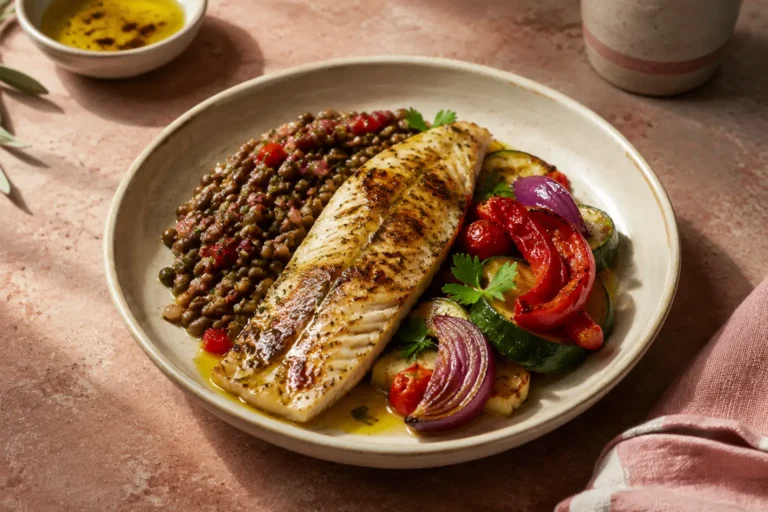
You don’t have to pick a side in the Mediterranean diet vs. low-carb for PCOS debate. I usually recommend starting with the Mediterranean pattern as your base: vegetables, beans, whole grains, olive oil, fish. From there, naturally trim back refined carbs like white bread, pastries, and sugary drinks.
That combination shows up in the research for a reason. It keeps the food variety and anti-inflammatory foods that make Mediterranean eating sustainable. At the same time, it lowers the carb load enough to ease the demand on insulin.
If your insulin resistance is more severe, a stricter low-carb phase for a few weeks can help. Do this under guidance from your doctor or dietitian. It doesn’t need to be permanent to be useful.
When Low-Carb Might Make Sense — and When It Backfires
Very low-carb eating can be worth trying short-term. This is especially true if blood sugar or insulin resistance is significant and other changes haven’t moved the needle. Some people also simply feel better on fewer carbs and find it easier to stay consistent that way.
The risk shows up with strict, long-term low-carb or keto eating. Cutting out whole grains, fruit, and legumes long-term also cuts out the fiber, B vitamins, and magnesium those foods provide. Fiber in particular feeds the bacteria that keep your gut healthy. A very low-fiber diet for months or years can work against gut health.
There’s also a hormone twist worth knowing about: restricting carbs too aggressively can raise stress hormones like cortisol. That can work against the hormone balance you’re trying to fix in the first place. This is the point where low-carb stops being low-carb and starts being a crash diet, and crash diets and PCOS don’t mix well. Research on strict keto eating specifically for PCOS is still limited. What exists points to real short-term improvements in weight and insulin. But those studies are short, and it’s hard to separate the effect of cutting carbs from the effect of losing weight. The open question isn’t whether keto works for a few months. It’s whether anyone can keep it up for years, and what the missing fiber and nutrients cost if they do.
Curious how specific Mediterranean staples fit into a PCOS-friendly plate? Start with olive oil for PCOS, chickpeas for PCOS, and Greek yogurt for PCOS. If mornings are where you’re not sure what to eat, Mediterranean breakfasts for PCOS is a good next stop. Want the bigger picture on why this way of eating works so well for PCOS? Read why the Mediterranean diet works so well for PCOS weight loss, or browse Mediterranean foods that support PCOS.
F.A.Q.
Neither one is universally “better.” Low-carb often improves insulin and hormone numbers faster. The Mediterranean diet tends to be easier to sustain and holds its results longer. Many people do best combining the two.
Yes, and it’s actually one of the best-studied approaches. Build meals around Mediterranean staples: vegetables, beans, olive oil, fish. Naturally cut back on refined carbs like white bread and sugary drinks, and you get benefits from both.
It can move insulin numbers faster in the short term, since cutting carbs directly reduces the demand on insulin. Mediterranean eating improves insulin sensitivity too, just more gradually.
Low-carb eating, especially stricter versions like keto, cuts most fruit, whole grains, and legumes. The Mediterranean diet keeps all three, since they supply fiber and nutrients that matter for PCOS.
Long-term research on keto specifically for PCOS is still limited. What’s known so far raises real questions about nutrient gaps, gut health, and stress hormones with strict, long-term carb restriction. It’s worth treating as a short-term tool, not a permanent plan.

Nour is a registered dietitian, nutrition researcher, and founder of MedDietMindset. With a passion for evidence-based nutrition, she specializes in Mediterranean diet strategies, PCOS management, and sustainable weight loss. Nour is dedicated to transforming complex scientific research into clear, actionable guidance to support healthier, long-lasting lifestyle changes. Through her blog, she empowers readers to build habits that prioritize well-being, balance, and vitality.