Table of Contents
ToggleYes, modestly. Eating the Mediterranean way can bring your average blood sugar down a little if you have type 2 diabetes. That’s why the Mediterranean diet for diabetes is one of the eating patterns diabetes guidelines recommend. It suits prediabetes too. It works alongside the treatment your doctor prescribes, never instead of it.
When you’ve just been told your blood sugar is high, every carb can suddenly feel like a problem. It isn’t. What matters most is which carbs you eat, what comes with them and how the whole plate fits together. Here’s what the Mediterranean diet for diabetes can and can’t do, and what it looks like at mealtimes.
What the Mediterranean Diet for Diabetes Does for Blood Sugar
The simple answer is that it nudges blood sugar in the right direction, both before breakfast and over the months. The effect is real but gentle. That’s exactly why it pairs well with treatment rather than replacing it.
It can bring average blood sugar down
Your doctor tracks diabetes mostly through one blood test, HbA1c. It shows your average blood sugar over the last 2 to 3 months. So one good or bad day doesn’t swing it much.
In people with type 2 diabetes, eating Mediterranean-style brought HbA1c and morning blood sugar down a little more than other diets did. The drop is modest. It won’t replace medicine, but it adds to what your medicine is already doing.
It can help if you have prediabetes
Prediabetes means your blood sugar is higher than it should be, but not yet in the diabetes range. Your doctor will tell you which range you’re in.
For prediabetes, diabetes guidelines suggest an eating pattern like the Mediterranean diet. They also suggest losing some weight if you have weight to lose. In the best-known prevention program, weight loss was the most important factor of all.
People who eat Mediterranean-style also tend to be less likely to develop type 2 diabetes. That’s a link seen over many years, though, not proof that the diet alone prevents it.
How it compares with low-carb
Cutting carbs hard can seem like the fastest fix. One study put that to the test. People with prediabetes or type 2 diabetes tried strict keto and a Mediterranean diet for three months each. Their average blood sugar ended up about the same.
Both diets cut added sugar and refined grains like white bread, and both had plenty of vegetables. The researchers think that shared ground did most of the work. The Mediterranean version kept beans, fruit and whole grains, and people found it easier to stick with. Keto pushed LDL cholesterol up and cut fiber. It was one small study, so treat it as a pointer rather than the final word.
Very low-carb diets can lower blood sugar in the short term. Even so, there’s no single right amount of carbs for everyone. Very low-carb plans can also clash with some diabetes medicines, so they need your diabetes team’s input. The Mediterranean diet for diabetes sits in a calmer middle: carbs stay, but they change.
Why It Helps: Carb Quality, Not No Carbs
This way of eating doesn’t ask you to give up carbs. It changes which ones you eat and what you eat them with.
Slower carbs and more fiber
Vegetables, beans, lentils, fruit and grains like barley and bulgur all come packed with fiber. Fiber slows how quickly sugar reaches your blood. So instead of a sharp rise after eating, you get a gentler one. That’s the heart of the Mediterranean diet for diabetes.
Eating more fiber helps bring average blood sugar down a little, and it helps cholesterol and weight too. Most of those studies were fairly short. Think of fiber as a steady everyday helper, not a quick fix.
Beans and lentils
Beans, lentils and chickpeas are some of the gentlest carbs for blood sugar. In one three-month study, people with type 2 diabetes added about a cup of beans or lentils a day. Their average blood sugar fell a little more than with extra whole-wheat foods. Their blood pressure came down too.
It’s one study, and some experts think the fiber mattered more than the beans themselves. Either way, beans are an easy first step on the Mediterranean diet for diabetes. Lentil soup, chickpeas in a salad or ful at breakfast all count. If beans give you gas at first, start with small portions and build up.
Olive oil, nuts and fish
Diabetes also raises the risk of heart disease, so the fats on your plate matter. Olive oil replaces butter. Nuts and fish take the place of some red and processed meat.
That’s one reason diabetes guidelines favor this pattern: it lowers heart risk as well as helping blood sugar. If your cholesterol is high too, here’s what the Mediterranean diet for high cholesterol looks like.
What a Mediterranean Plate Looks Like With Diabetes
A simple place to start is the diabetes plate. Fill half your plate with vegetables, such as salad, greens, peppers or courgettes. Fill a quarter with protein, like fish, eggs, chicken or beans. The last quarter is for carbs, such as bulgur, barley, potatoes or a piece of bread. Add a drizzle of olive oil, and drink water rather than sweet drinks.
Here’s what a Mediterranean diet for diabetes can look like across a normal day. You don’t need to copy these meals. Use them as a guide.
- Breakfast: two eggs with tomatoes and cucumber, a small piece of wholegrain pita and a few olives
- Lunch: lentil soup with a big salad, dressed with olive oil and lemon
- Dinner: grilled fish or chicken, roasted vegetables and a small serving of bulgur or barley
- Snack, if you want one: plain Greek yogurt with berries, or an apple with a handful of nuts
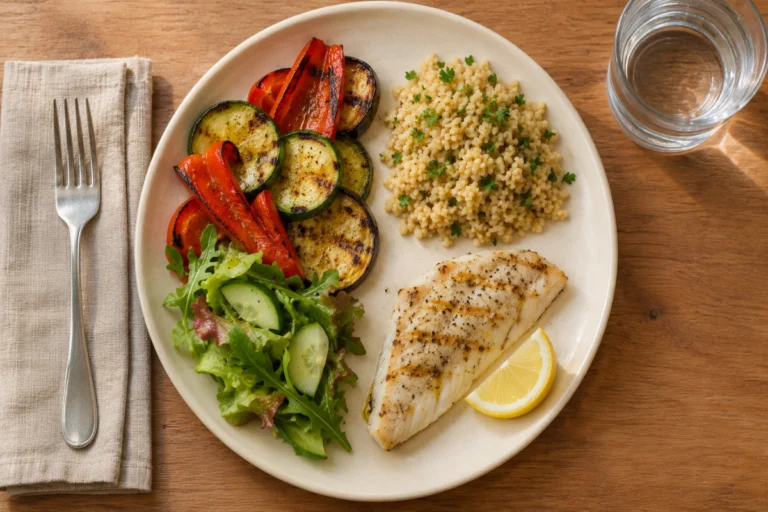
Every meal still has carbs. They’re just smaller, slower and eaten with vegetables, protein or fat. For more morning options, try these 10 Mediterranean breakfast ideas. This Mediterranean diet shopping list covers what to keep at home.
One more habit helps: a short walk after you eat. It’s part of the 30-day Mediterranean diet challenge. In people with type 2 diabetes, it keeps blood sugar steadier.

What About Weight?
If you have weight to lose, losing some of it is one of the best things you can do for blood sugar. Even a modest amount makes a difference.
The Mediterranean diet for diabetes isn’t a crash diet, and that’s part of why it helps. Meals built around vegetables, beans, fish and olive oil tend to keep you full. That makes eating a little less easier to keep up. If weight is your main focus, here’s how the Mediterranean diet helps with weight loss.
Before You Change How You Eat
Most people can start the Mediterranean diet for diabetes straight away. The exception is medicine. If you take insulin, or a sulfonylurea such as gliclazide or glimepiride, talk to your doctor or diabetes team first. These medicines can cause low blood sugar. Eating fewer carbs, or less overall, can make it drop too low.
Your team may need to adjust your doses, so don’t change or stop any medicine yourself. Not sure whether yours is one of these? Ask your pharmacist.
A few other situations need your own team’s advice first:
- Type 1 diabetes: this post is written for type 2 and prediabetes. With type 1, food and insulin have to be matched, so talk to your diabetes team.
- Pregnancy: if you’re pregnant or have diabetes in pregnancy, your midwife or diabetes team should guide what you eat.
- Children: a child with diabetes needs a plan from their own diabetes team.
- PCOS: many women with PCOS also have insulin resistance. This Mediterranean diet for PCOS guide explains how the two connect.
When to See Your Doctor
The Mediterranean diet for diabetes works best alongside regular check-ups. If you notice the common signs of type 2 diabetes, ask your doctor about an HbA1c test. Ask too if you’re worried you might have prediabetes.
If you take insulin or a sulfonylurea, learn the signs of low blood sugar: feeling shaky, sweaty, hungry or confused. Treat it the way your team has shown you. If someone with very low blood sugar is confused or can’t respond, get emergency help straight away.
And if your HbA1c keeps rising despite changes to how you eat, that isn’t a failure. It’s information your doctor can use to adjust your treatment.
Related Strategies
- Mediterranean meal plan rules: plan the week so a balanced plate is easy on busy days.
- Sugar cravings after eating: why you might want something sweet after a meal, and calm ways to respond.
- Mediterranean diet for high cholesterol: the fat and fiber changes that help your heart.
- 30-day Mediterranean diet challenge: eight small habits over four weeks, including walks after meals.
F.A.Q.
Not on its own. What some people reach is remission, which means blood sugar stays below the diabetes range without diabetes medicine. Remission mainly comes from losing weight, often through a low-calorie program with medical support. It isn’t a cure, and blood sugar can rise again. The Mediterranean diet for diabetes can help keep weight and blood sugar steady either way.
There’s no single number that’s right for everyone. It depends on your medicines, how active you are and your blood sugar results. Your diabetes team or a dietitian can help you find yours. On the Mediterranean diet for diabetes, the type of carb matters as much as the amount. Start with beans, lentils, vegetables and whole grains.
Yes. Whole fruit fits well in the Mediterranean diet for diabetes, as a snack or dessert. It brings fiber along with its sugar. Juice is different, because most of the fiber is gone. That’s why whole fruit is the better swap for juice.
Yes. They simply move to a quarter of your plate instead of half or more. Barley, bulgur and lentils bring more fiber than white rice. With bread and pasta, keep the portion modest and eat it with vegetables and protein.
HbA1c reflects your average blood sugar over the last 2 to 3 months. So your next routine test is the first fair check. Give it time, and keep going even if the first change is small.