Table of Contents
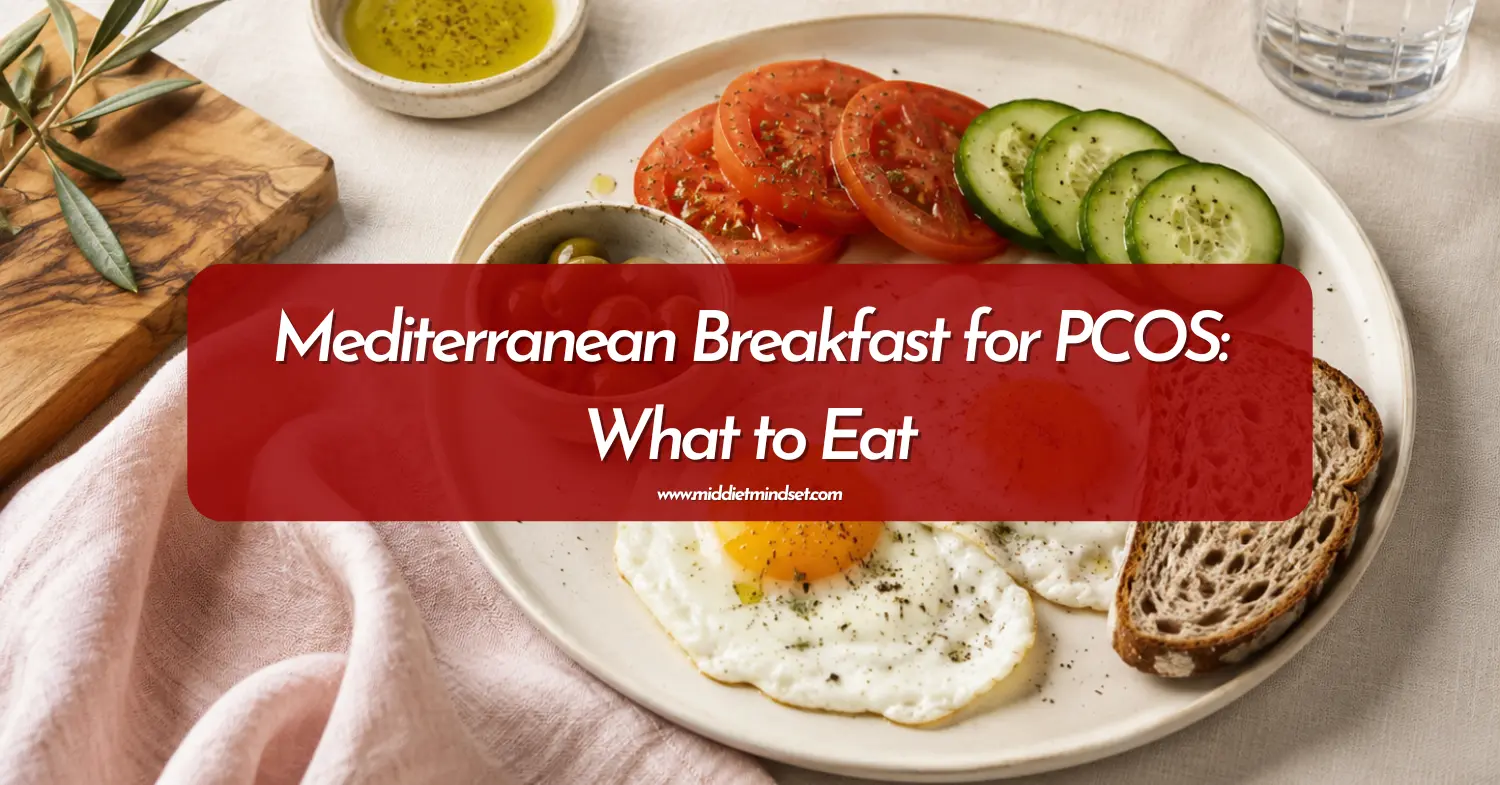
ToggleA Mediterranean breakfast for PCOS is built from four parts: protein, plants for fiber, a healthy fat, and a slower carbohydrate. That combination keeps blood sugar steadier through the morning, which matters because insulin sits at the center of PCOS. Eggs with vegetables and olive oil works. So does plain Greek yogurt with berries and walnuts. The foods can change from day to day. The structure is what does the work.
This post covers one meal in detail. For the wider picture of how this way of eating fits PCOS, start with our Mediterranean Diet for PCOS guide. If you want to see how food connects to other conditions, our Mediterranean Diet and Health Conditions hub is a good place to look.
Why Breakfast Feels Harder With PCOS
Breakfast isn’t more important than every other meal. But with PCOS — a condition that officially became PMOS in 2026 — it often sets the tone for the rest of the day. That’s the thinking behind a Mediterranean breakfast for PCOS.
How insulin resistance changes your morning
Most women with PCOS have some degree of insulin resistance. That means the body doesn’t respond to insulin as easily as it should. To keep blood sugar in range, it produces more.
Extra insulin doesn’t only affect blood sugar. It also pushes the ovaries to produce more testosterone, which is part of why symptoms like irregular cycles and acne show up.
Here’s what that actually means at breakfast. A meal that sends blood sugar up quickly asks for a bigger insulin response. With PCOS, that response tends to run higher already.
Why toast and coffee leave you hungry by 10am
A breakfast made almost entirely of fast carbohydrates gives you a quick rise in blood sugar and a quick fall afterward. That drop is what you feel as hunger, low energy, or a sudden need for something sweet.
There’s also good reason to make breakfast a real meal rather than an afterthought. In women with PCOS, moving more of the day’s food to the morning improved insulin resistance and lowered testosterone without changing how much they ate overall. That’s early evidence rather than a rule to follow exactly, but it points somewhere useful. A proper breakfast is worth eating.
What Goes on the Plate
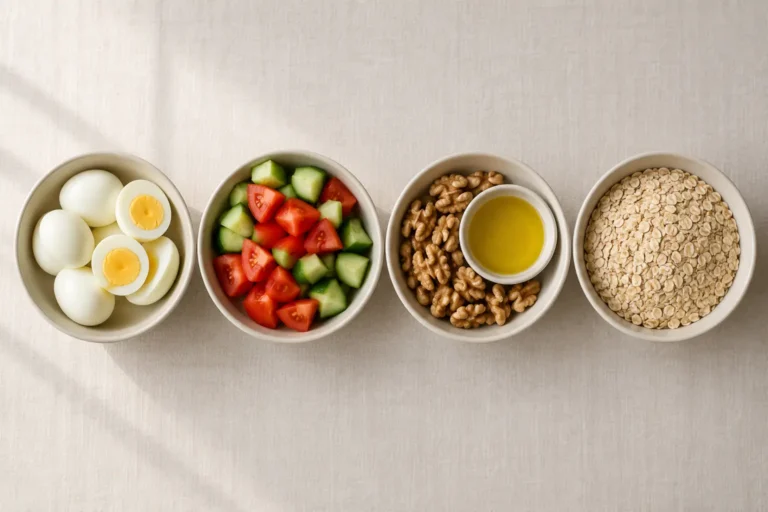
A Mediterranean breakfast for PCOS doesn’t require special foods or a recipe. It requires four parts. Once you know them, you can build the meal from whatever is already in your kitchen.
Start with protein
Protein is the anchor of a Mediterranean breakfast for PCOS. Starting with it gives you a gentler rise in blood sugar than a carb-heavy breakfast does. That steadier effect carries through to lunch instead of causing a rebound later.
In everyday life, that looks like eggs, plain Greek yogurt, cottage cheese, tinned fish, or beans. Aim for a real portion. Two eggs, or a proper bowl of yogurt rather than a few spoonfuls.
One honest note here. A protein-rich breakfast reliably keeps people fuller, but on its own it won’t change your body composition. It’s there to steady your morning, not to do the work of everything else.
Add plants for fiber
Fiber is the part most often missing. Women with PCOS tend to eat less of it than women without PCOS, and lower fiber intake tracks with more insulin resistance and higher testosterone.
Vegetables at breakfast feel strange if you didn’t grow up eating them that way. Around the Mediterranean, it’s completely normal. Tomatoes, cucumber, olives, spinach, peppers, or fresh herbs all work, and most need no cooking at all.
Fruit counts too. Berries, a sliced peach, or a handful of grapes bring fiber along with the sweetness.
Include a fat that keeps you satisfied
Fat slows the meal down and makes it worth eating. It also carries flavor, which matters more for consistency than people expect.
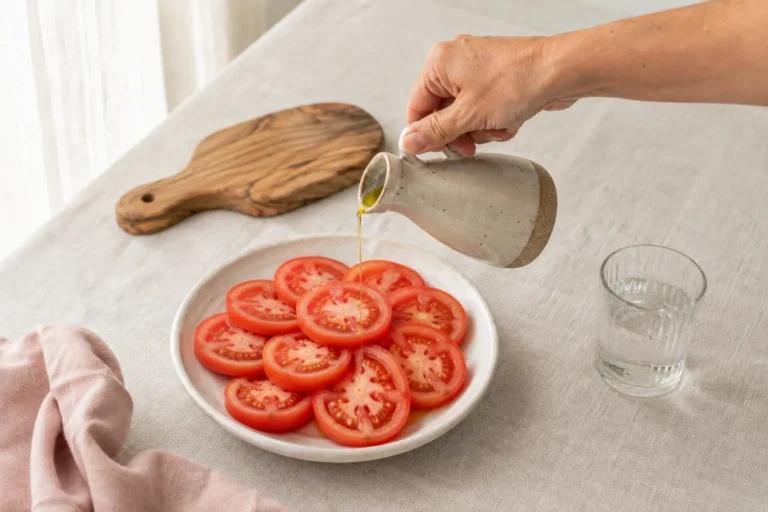
Olive oil is the obvious choice. Drizzle it over eggs, stir it into yogurt with herbs, or pour it over sliced tomatoes with a pinch of salt. Nuts, seeds, avocado, and tahini do a similar job.
You don’t need much. A tablespoon of olive oil or a small handful of walnuts changes how a breakfast feels for hours afterward.
Choose a carbohydrate that earns its place
Carbohydrates aren’t the problem here. The type and the company they keep matter far more than the amount.
In women with PCOS, slower-digesting, higher-fiber carbohydrates improved blood sugar and shifted hormone markers in a helpful direction. Another study found better insulin response on a slower-carb diet even when weight didn’t change at all.
In practice, that means oats, whole grain or sourdough bread, chickpeas, lentils, or a small potato. Eat them alongside protein and fat rather than on their own.
What This Looks Like on a Real Morning
Here’s how a Mediterranean breakfast for PCOS comes together once the four parts are in place. None of these take long, and none of them need a recipe.
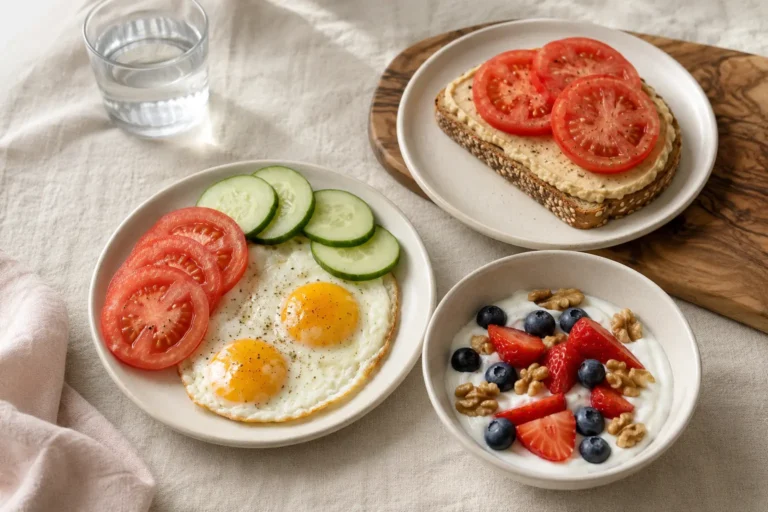
Savory eggs. Two eggs cooked in olive oil, with tomatoes and cucumber alongside and a slice of whole grain bread. Add olives or za’atar if you have them.
Yogurt bowl. Plain Greek yogurt with berries, a spoonful of walnuts or ground flaxseed, and a sprinkle of cinnamon.
Five-minute version. Hummus or labneh on whole grain toast, with sliced tomato and a drizzle of olive oil. Add a boiled egg if you have one ready in the fridge.
I usually suggest starting with the breakfast you already eat most mornings and adding whatever part is missing. If it’s toast, add eggs. If it’s yogurt, add nuts and fruit. That’s much easier to keep up than building a new routine from scratch.
What If You're Not Hungry in the Morning?
Then don’t force it. A Mediterranean breakfast for PCOS doesn’t have to happen at 7am, and eating food you don’t want rarely lasts more than a week.
Eating earlier in the day has real support behind it. It isn’t strong enough to say that skipping breakfast harms PCOS. Nutrition advice for PCOS still hasn’t settled on one best approach, and meal timing is one piece of a much bigger pattern.
If mornings are genuinely hard, a few things help. Start smaller, since a boiled egg and a piece of fruit still counts. Or eat at 10 or 11am instead of pushing food down at 7.
What matters most is that your first meal, whenever it lands, includes protein and fiber. A late breakfast built properly beats an early one made of toast alone.
None of this has to happen at once. Breakfast is a good place to start precisely because it’s one meal, repeated.
When you’re ready for more, olive oil and chickpeas each have a post of their own, and the wider food list for PCOS covers the rest of the day whenever you want it.
F.A.Q.
Build it from protein, fiber, a healthy fat, and a slower carbohydrate. A Mediterranean breakfast for PCOS might be eggs with vegetables and olive oil, or plain Greek yogurt with berries and nuts. The structure matters more than the exact foods.
Yes. The soluble fiber in oats slows the blood sugar rise after a meal. Choose rolled or steel-cut oats over instant, and add protein from yogurt, nuts, or seeds. That way it works as part of a Mediterranean breakfast for PCOS rather than as a carbohydrate meal on its own.
Not necessarily. Eating more of your food earlier in the day has some support in PCOS, but skipping breakfast hasn’t been shown to cause harm on its own. If you’re not hungry first thing, eat a little later rather than forcing it.
No. Whole fruit brings fiber along with its natural sugar, which is why it behaves differently from juice or sweetened cereal. Pair it with protein and fat in your Mediterranean breakfast for PCOS and it fits without any trouble.
Yes. Coffee on its own doesn’t reliably change how your body handles the carbohydrates in a meal. Still, caffeine can nudge blood sugar up in the short term for some people. The bigger issue is coffee instead of breakfast, not coffee alongside it.

Nour is a registered dietitian, nutrition researcher, and founder of MedDietMindset. With a passion for evidence-based nutrition, she specializes in Mediterranean diet strategies, PCOS management, and sustainable weight loss. Nour is dedicated to transforming complex scientific research into clear, actionable guidance to support healthier, long-lasting lifestyle changes. Through her blog, she empowers readers to build habits that prioritize well-being, balance, and vitality.