Table of Contents
ToggleFor your blood sugar, yes. Walking after eating lowers the rise that follows a meal, which a later walk can’t do. Even 10 minutes helps. For weight, the timing hasn’t been shown to matter, only how much you move overall.
You’ve probably heard that a stroll after dinner is good for you. It is, and the reason is simpler than most advice makes it sound. Here’s what a walk after a meal actually does, how soon and how long to go, and what it won’t change.
Walking soon after eating vs the same walk at another time:
| Walking soon after eating | The same walk at another time | |
|---|---|---|
| Blood sugar after that meal | Rises less | No help for that meal |
| Weight | No proven extra effect | Counts just the same |
| Heart and fitness | Counts toward your weekly total | Counts toward your weekly total |
| Who gains most | People with type 2 diabetes or prediabetes | Everyone |
What Walking After Eating Does to Your Blood Sugar
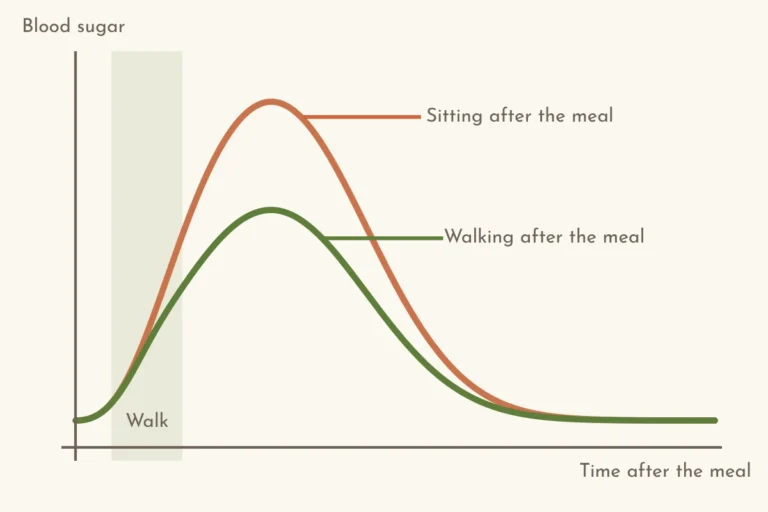
Walking after eating helps your muscles use the sugar from your meal. That keeps your blood sugar from climbing as high, or staying high as long.
Why blood sugar rises after a meal
When you eat carbs, like bread, rice, fruit or potatoes, your body breaks them down into sugar. That sugar moves into your blood, so your blood sugar rises for a while after the meal. Insulin then helps move it into your cells.
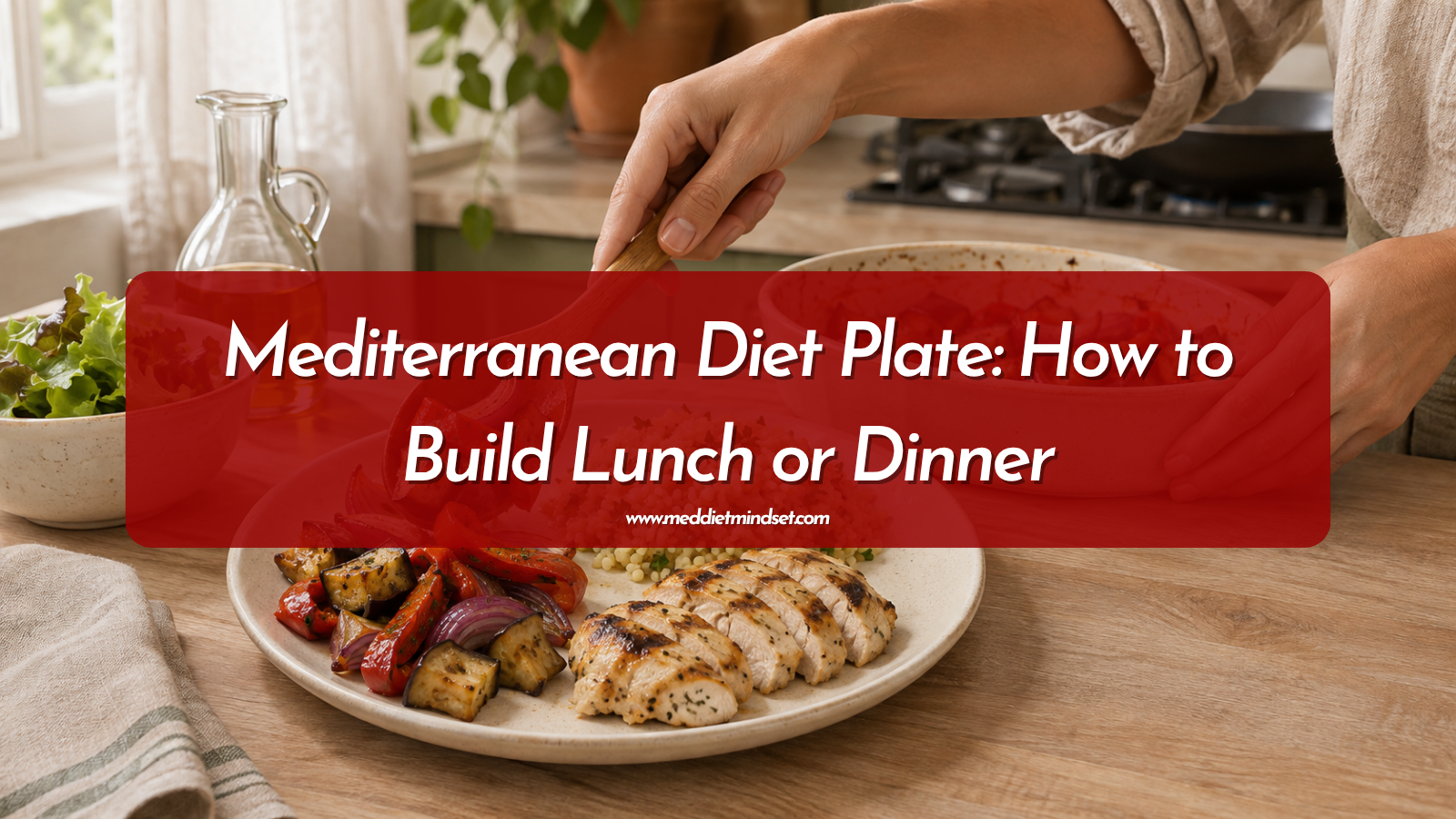
What’s on the plate matters too, and a walk works alongside it, not instead of it. Here’s how to build a Mediterranean diet plate for lunch or dinner.
How a walk helps your muscles use that sugar
Your leg muscles are some of the biggest in your body. When they work, they pull sugar out of your blood to use as fuel. They can take in that sugar without needing insulin.
So a walk at the time that sugar is arriving gives it somewhere to go. Sitting still after a big meal leaves insulin to do most of the work on its own.
Does It Matter When You Walk?
For blood sugar, it does. Walking after eating lowers the rise from that meal. A walk at another time of day is still good for you, but it isn’t there when that meal’s sugar arrives.
Short walks after meals vs one longer walk
In one study, people with type 2 diabetes tried two ways of walking 30 minutes a day. One was a single 30-minute walk, at any time. The other was a 10-minute walk after each main meal.
The walks after meals kept blood sugar lower after eating. It was the same amount of walking. Only the timing changed.
That study was small, and everyone in it had diabetes. Still, it fits the American Diabetes Association’s advice on activity. Short bouts of movement help keep blood sugar in check, and they help most after meals.
Which meal matters most
If you can only manage one walk, take it after your biggest meal. In that same study, the difference was largest after the evening meal, which was the meal with the most carbs. It’s also the meal most worth walking after if you have diabetes.
That’s often dinner, but it doesn’t have to be. In my house, lunch is often the biggest meal of the day, as it is in many Mediterranean homes. If that’s true for you too, a walk after lunch may be the one that counts most.
How Soon and How Long to Walk After Eating
When you’re walking after eating, go fairly soon, ideally within the first hour. Walk for at least 10 minutes if you can, at an easy pace. You don’t need to rush out the door or walk fast.
How soon to go
Sooner is better for your blood sugar. Walks that started soon after eating lowered the rise more than walks started a long while later, or before the meal.
But there’s no need to leave the table in a hurry. A walk 30 to 90 minutes after eating still helps. Clear the plates, have your tea, then go.
How long to walk
Ten minutes is a good start. It’s what the study above used, and it made a real difference. Walking longer helps a bit more: activity lasting over 30 minutes after a meal lowered blood sugar more than shorter bouts.
Even a few minutes count. Short breaks of light walking, repeated through the hours after a meal, lowered blood sugar compared with sitting. Standing up helped too, just less than walking.
An easy pace is enough
This isn’t a workout. Light, comfortable walking was enough in the studies above, so a pace where you can still chat is fine.
It’s also an old Mediterranean habit. In Italy, the passeggiata is an unhurried evening stroll through town, to see neighbors and get some air. You don’t need a piazza for yours. A loop around the block does the same job.
Is It Better to Walk Before or After Eating?
It depends on what you’re after. For the meal you’re about to eat, walking after eating is what lowers the rise in blood sugar. A walk before the meal does little for the rise that follows.
Across a whole day, though, walking before or after eating comes out about the same for blood sugar. So don’t let timing put you off. A walk before breakfast is still a good walk.
Walking on an empty stomach is sometimes sold as a fat-burning trick. But it doesn’t seem to lead to more weight loss than exercising after a meal.
Does Walking After Eating Help With Weight Loss?
Walking helps with weight, but the timing doesn’t seem to matter. Walking after eating burns about the same as the same walk at any other time. What counts is how much you move across the week.
If you’ve searched this, you may have seen a paper saying that walking straight after a meal beats waiting an hour for weight loss. It’s worth knowing what it was: the author and one volunteer, testing it on themselves. That’s an interesting idea, not proof, and I haven’t found a proper study that backs it up.
So walk when it suits you. Health guidelines suggest 150 to 300 minutes of moderate activity a week, and every walk counts toward it. Here’s more on how walking helps with belly fat.
If you count steps instead, a brisk walk is about 100 steps a minute, so 10 minutes is roughly 1,000 steps. Meeting those guidelines works out at about 7,000 to 8,000 steps a day, counting all your everyday walking too.
If You Have Diabetes, Prediabetes or PCOS
This is where walking after eating matters most. When your body struggles to keep blood sugar in range, a walk after meals gives it extra help right when it’s needed.
Diabetes and prediabetes
For people with type 2 diabetes, activity after meals lowered blood sugar more than it did for people without diabetes. Diabetes guidance also suggests getting up for light activity about every 30 minutes during long spells of sitting.
One caution. If you take insulin, or tablets that make your body release more insulin, activity can make your blood sugar drop too low. Gliclazide is one example of those tablets. Check with your doctor or diabetes team before adding walks after meals, and learn the signs of a low.
Here’s how the Mediterranean diet for diabetes works alongside habits like this one.
PCOS
Most women with PCOS have some insulin resistance, whatever their weight. That means the body doesn’t respond to insulin as well as it should. In one study, insulin resistance showed up in about three in four women with PCOS at a normal weight.
Regular exercise helps. On its own, it lowers insulin resistance in women with PCOS. Steady, moderate exercise, like a brisk walk, lowered it too, even though it barely changed their weight.
The international PCOS guideline suggests 150 to 300 minutes of moderate activity a week, or at least 250 if you’re aiming to lose weight. Walking after meals hasn’t been studied in PCOS itself. Still, it’s an easy, low-risk way to fit some of those minutes into your day. Here’s more on the Mediterranean diet for PCOS.
When a Walk Isn’t Possible
Some days a walk just won’t happen. It’s too hot, you’re at work, it’s raining, or walking is hard for you. Moving a little still helps.
- Stand up after eating instead of sitting straight back down. Standing helps less than walking, but more than sitting.
- Wash the dishes, tidy the kitchen or put the shopping away.
- Walk around the house, up and down the stairs, or along a corridor at work.
- Walk later in the day instead. It won’t do as much for that meal, but it still counts toward your week.
Some movement beats none, on a perfect day and on a busy one.

Related Strategies
- 30-day Mediterranean diet challenge: a short walk after breakfast in week 2, then a longer one after lunch in week 3.
- Sugar cravings after eating: why a short walk can be a good way to end a meal.
- Mediterranean diet plate: how to build the lunch or dinner that comes before the walk.
F.A.Q.
No, not at an easy pace. Walking after eating is fine for most people. Stitches are more likely after a meal, but mostly with running. The usual advice is to leave a couple of hours after a big meal before a run.
You don’t need to wait. Walking after eating helps your blood sugar most when you go fairly soon, within the first hour. A walk a little later still helps, so pick a time that suits you.
Yes, it’s a good amount. In one study, walking for 10 minutes after eating each main meal kept blood sugar lower than one longer walk did. If you have more time, a longer walk helps a little more.
Whichever you can manage. If you can only fit in one, walk after your biggest meal. Walking after eating at every main meal is better still.
Walking after eating may help a little. In one small study, a slow walk helped the stomach empty faster, though people didn’t feel any less full. In another, people with ongoing bloating who walked for 10 to 15 minutes after meals felt less bloated. For more on bloating, see the Mediterranean diet for gut health.