Table of Contents
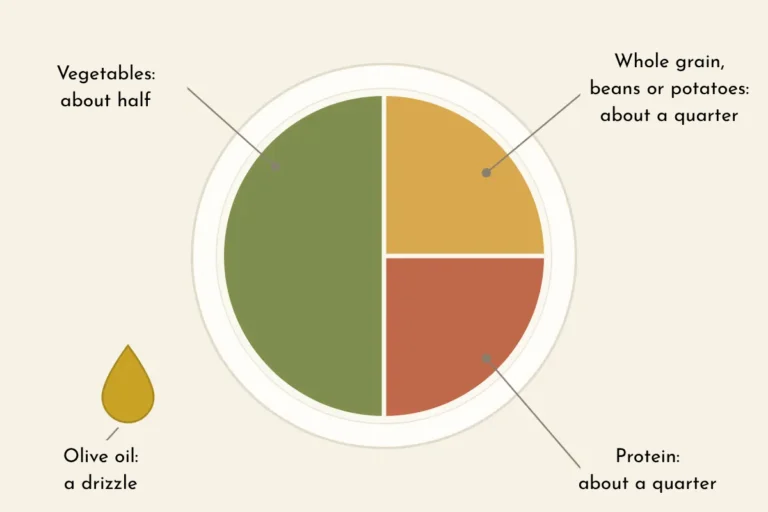
ToggleA Mediterranean diet plate is half vegetables. About a quarter is protein, such as fish, chicken, eggs, beans or lentils. The last quarter is a whole grain or potatoes, and a drizzle of olive oil finishes it. It works for lunch or dinner, with nothing to weigh or count.
If you’ve started eating the Mediterranean way, you probably know which foods to buy. Putting them together into one meal is the harder part. A Mediterranean diet plate turns those foods into lunches and dinners you can make most days.
The Mediterranean diet plate at a glance:
| Part | How much of the plate | Everyday examples |
|---|---|---|
| Vegetables | About half | Salad, roasted peppers and eggplant, cooked greens, tomato and cucumber, vegetable soup |
| Protein | About a quarter | Fish, chicken, eggs, beans, lentils or chickpeas |
| Whole grain, beans or potatoes | About a quarter | Bulgur, barley, freekeh, whole-grain bread, whole-wheat pasta, potatoes |
| Olive oil | A drizzle | Over salad, tossed with roasted vegetables, or in the pan |
Why a Mediterranean Diet Plate Keeps You Full
It gives most of the space to foods that fill you up without adding much. Then it adds the foods that hold you until the next meal. Vegetables do the first job. Protein, fiber and a little fat do the second.
Vegetables are mostly water. That means they let you eat a satisfying portion for fewer calories. You get a full plate rather than a small one.
There’s one catch. The vegetables need to take space from something else. In one study, people ate less when vegetables replaced some of the grain and meat on the plate. Piling extra vegetables on top didn’t lower the meal’s calories.
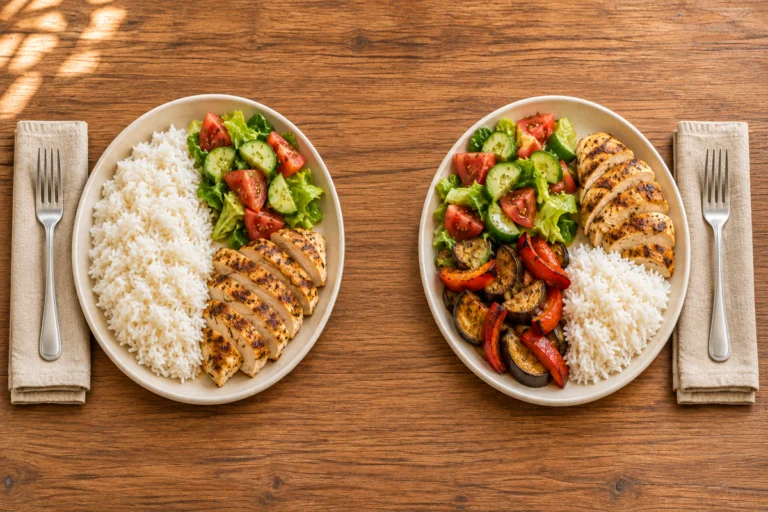
That’s why the Mediterranean diet plate is about proportions. Half the plate goes to vegetables, so the rice, bread and meat naturally take up less of it. Nothing is banned. Each part simply has its own space.
How to Build a Mediterranean Diet Plate
Build your Mediterranean diet plate in four steps, starting with vegetables. Once half the plate is full, the other parts fall into place.
Start with vegetables: half the plate
Fill half the plate with vegetables. They can be raw, roasted, grilled, stewed or in a soup. Frozen and canned vegetables count too, and they make busy evenings easier.
Aim for at least two kinds, such as a salad beside roasted peppers, or greens with tomatoes. Two kinds keep the meal interesting. Potatoes are the exception. They belong in the carb quarter, not this half, because they affect blood sugar more like a starch.
Add a protein: about a quarter
Protein takes about a quarter of the plate. Good options are fish, chicken, eggs, beans, lentils and chickpeas. A spoon of yogurt or a little cheese on the side works too.
Protein helps a meal hold you. Meals with more protein leave people fuller for the next few hours. That doesn’t always mean eating less later, but it makes the gap between meals easier.
Fish deserves a regular spot. The American Heart Association suggests one to two seafood meals a week, especially in place of less healthy foods. Here’s which fish to choose and how often. Red meat fits now and then, while processed meats like sausages and deli meats are best kept for rare occasions.
Add a whole grain, beans or potatoes: about a quarter
The last quarter is your carb. Bulgur, barley, freekeh, whole-grain bread, whole-wheat pasta and potatoes all work. So do beans and lentils.
Whole grains tend to leave you more satisfied than refined grains like white bread. Over the years, people who eat more fiber and whole grains have lower rates of heart disease and type 2 diabetes.
If white rice is your usual, you don’t need to drop it. Try barley or bulgur some nights, or cook half rice and half lentils, the way mujaddara is made.
Beans are the one food that fits two parts of the plate. They’re a good protein choice, and they bring carbs too. So a lentil stew can be your protein and your carb at once. Add a salad and some olive oil, and the plate is done. If beans give you gas, start with small amounts and build up slowly.
Finish with olive oil
Olive oil is what makes the vegetables worth eating. Drizzle it over salad, toss roasted vegetables in it, or cook with it in place of butter.
It helps in a practical way too. Your body takes in more of the colorful pigments in vegetables when there’s some fat with them. In one small study, people absorbed almost none from a salad with a fat-free dressing.
Keep it to a drizzle, though. In the vegetable study above, vegetables cooked with more fat added to the meal’s calories. Lemon, garlic and herbs add flavor without adding much at all.
What a Mediterranean Diet Plate Looks Like in Real Meals
You don’t need new recipes to start. Most meals you already cook can become a Mediterranean diet plate with a few changes in proportion.
Example plates for lunch and dinner
These are combinations, not recipes. Use them as a starting point and swap in what you have.
- Lunch: an omelet with spinach and tomatoes, a cucumber and parsley salad, and a slice of whole-grain bread
- Lunch: roasted eggplant and peppers over barley, with chickpeas and a spoon of yogurt
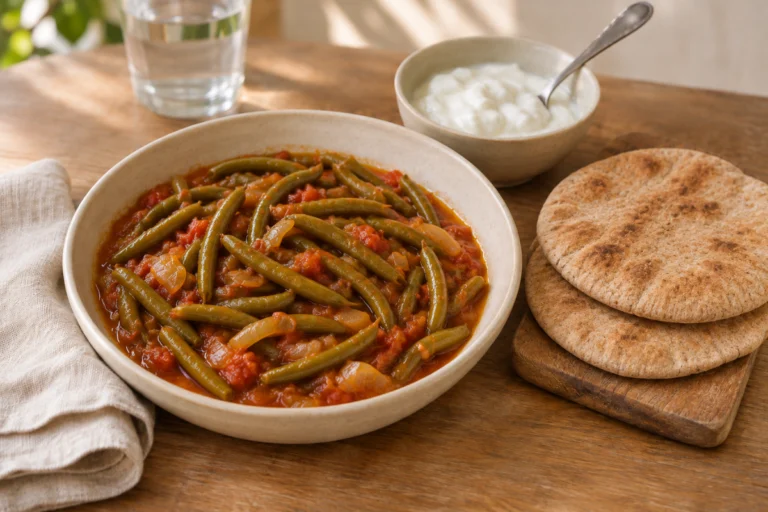
- Dinner: green beans stewed in tomato and olive oil, a piece of grilled chicken, and a slice of whole-grain bread
- Dinner: whole-wheat pasta in a tomato and lentil sauce, with a big green salad on the side
Notice what each one has: plenty of vegetables, a protein, a carb and olive oil. The foods change from meal to meal. The shape stays the same.
Stews, soups, sandwiches and bowls
A lot of Mediterranean food isn’t divided neatly on a plate. Where I live, many dinners are a pot of vegetables or beans cooked in olive oil, eaten with bread. That still counts.
For a mixed dish, use the four parts as a checklist: plenty of vegetables, a protein, a carb and some olive oil. If one is missing, add it on the side. A salad goes next to a pasta dish, and yogurt goes with a vegetable stew.
Sandwiches and wraps work the same way. Fill them with salad, add hummus, eggs or chicken, and use whole-grain bread. Soups and stews also make good leftovers, and cooking once to eat twice keeps this going through a busy week.
How Much Should Go on the Plate?
Enough to keep you comfortably full until your next meal. Mediterranean diet portion sizes depend on you, because the plate sets proportions, not amounts. Even guides that use the same shape, like the Harvard Healthy Eating Plate, don’t set calories or servings.
Proportions, not portions
How much you need depends on your hunger, your size and how active you are. If you walk a lot or work on your feet, you may want a bigger carb portion. If you’re trying to lose weight, keep the vegetable half generous and let the carb quarter be the part that shrinks.
Keep the protein steady when you’re eating less. Getting a bit more of it helps you keep more muscle and lose a little more fat.
You don’t need a special plate either. A smaller plate on its own doesn’t seem to change how much people eat. What changes the meal is what fills it.
If you have diabetes or PCOS
The shape stays the same. The diabetes plate uses the same half, quarter and quarter. Here’s how the Mediterranean diet for diabetes fits around it. If you take medicine for diabetes, talk to your doctor before you change how many carbs you eat.
The same plate works with PCOS too. PCOS meal prep breaks a first Mediterranean week into simple steps.
Related Strategies
- Mediterranean meal plan rules: how to plan these lunches and dinners across a whole week.
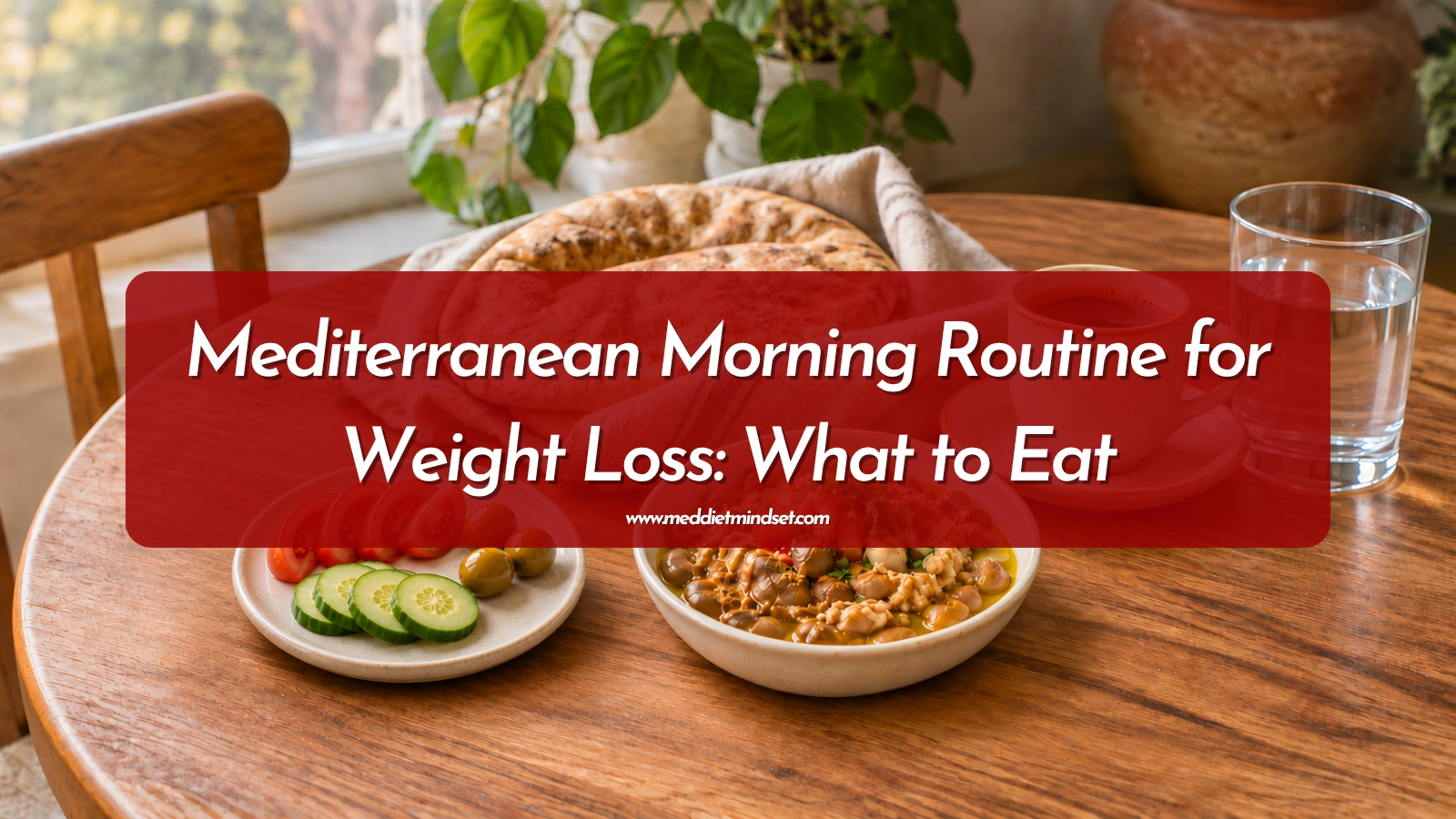
- Mediterranean morning routine: the same four-part idea, built for breakfast.
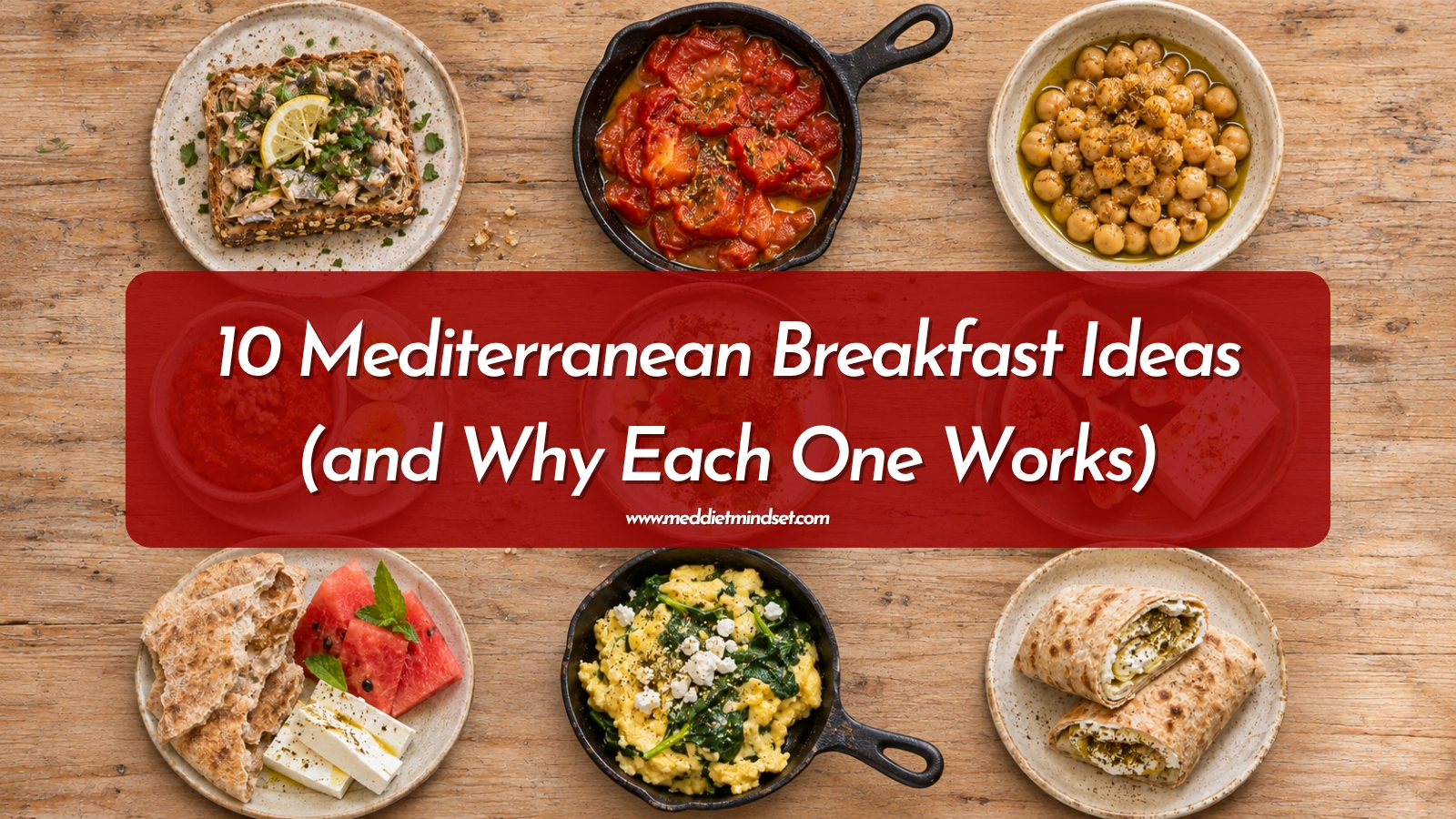
- Mediterranean breakfast ideas: ten breakfasts that already follow the pattern.
- Mediterranean diet shopping list: what to keep at home so a plate comes together quickly.
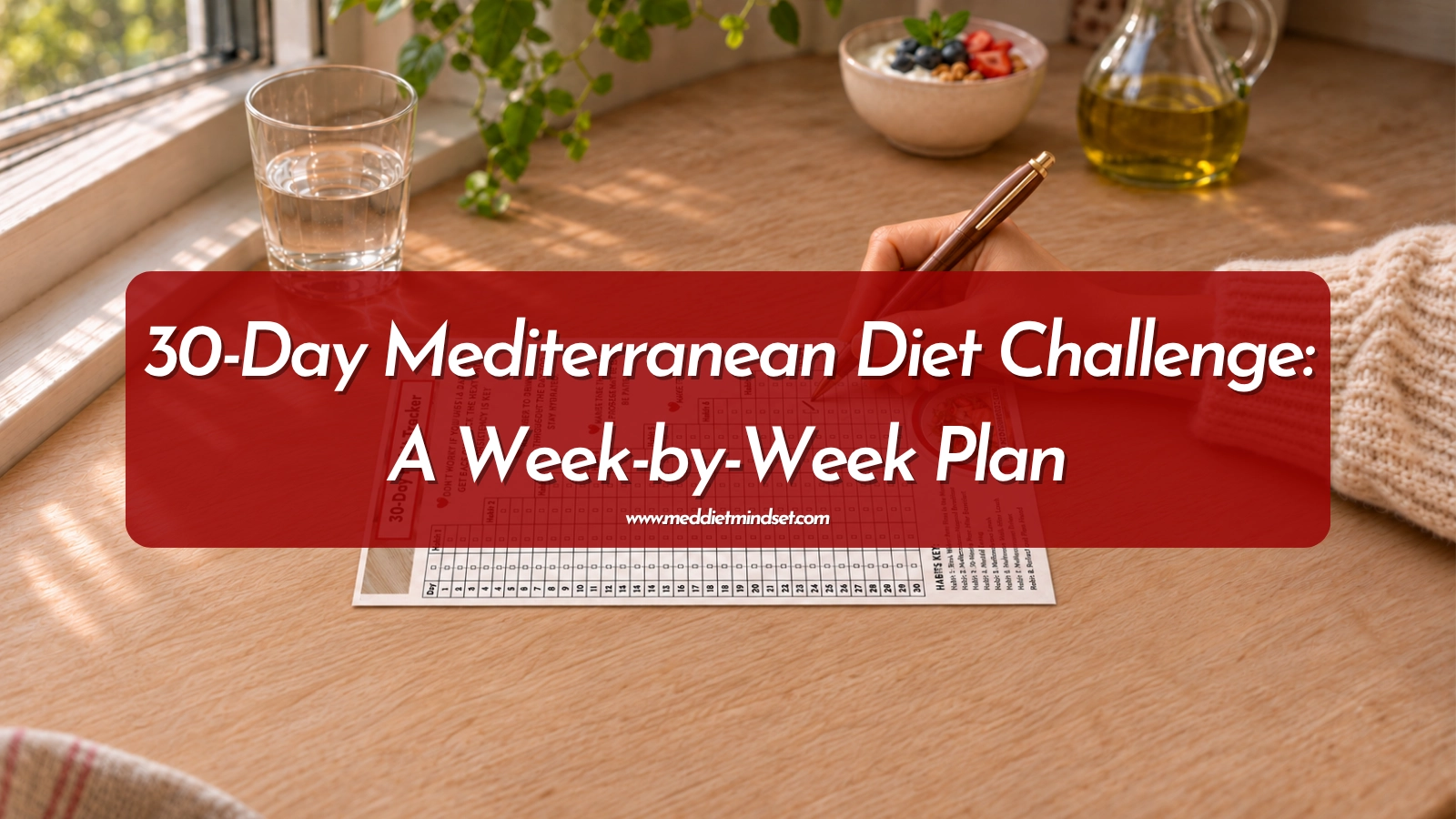
- 30-day Mediterranean diet challenge: lunch in week 3 and dinner in week 4, one habit at a time.
F.A.Q.
They’re close relatives. The diabetes plate uses the same half vegetables, quarter protein and quarter carbs. A Mediterranean diet plate adds olive oil and leans on fish, beans and whole grains.
No. Beans, lentils, chickpeas and eggs all work as the protein. Many traditional Mediterranean meals have no meat at all, like a lentil stew or chickpeas cooked with spinach. If you eat fish, aim for it once or twice a week.
Yes. On a Mediterranean diet plate, pasta and rice go in the carb quarter, alongside vegetables and a protein. Whole-wheat pasta brings more fiber. For rice, try barley or bulgur some nights, or mix rice with lentils.
It can help. A Mediterranean diet plate is half vegetables, so it fills you up for fewer calories. It isn’t a shortcut, though: what you eat over weeks matters more than any one meal. Here’s how the Mediterranean diet helps with weight loss more broadly.
The same idea works, in a breakfast form. A Mediterranean breakfast has a protein, a fiber-rich carb, vegetables or fruit, and some healthy fat. This Mediterranean morning routine shows how to build one, and these Mediterranean breakfast ideas give you ten to try.