Table of Contents
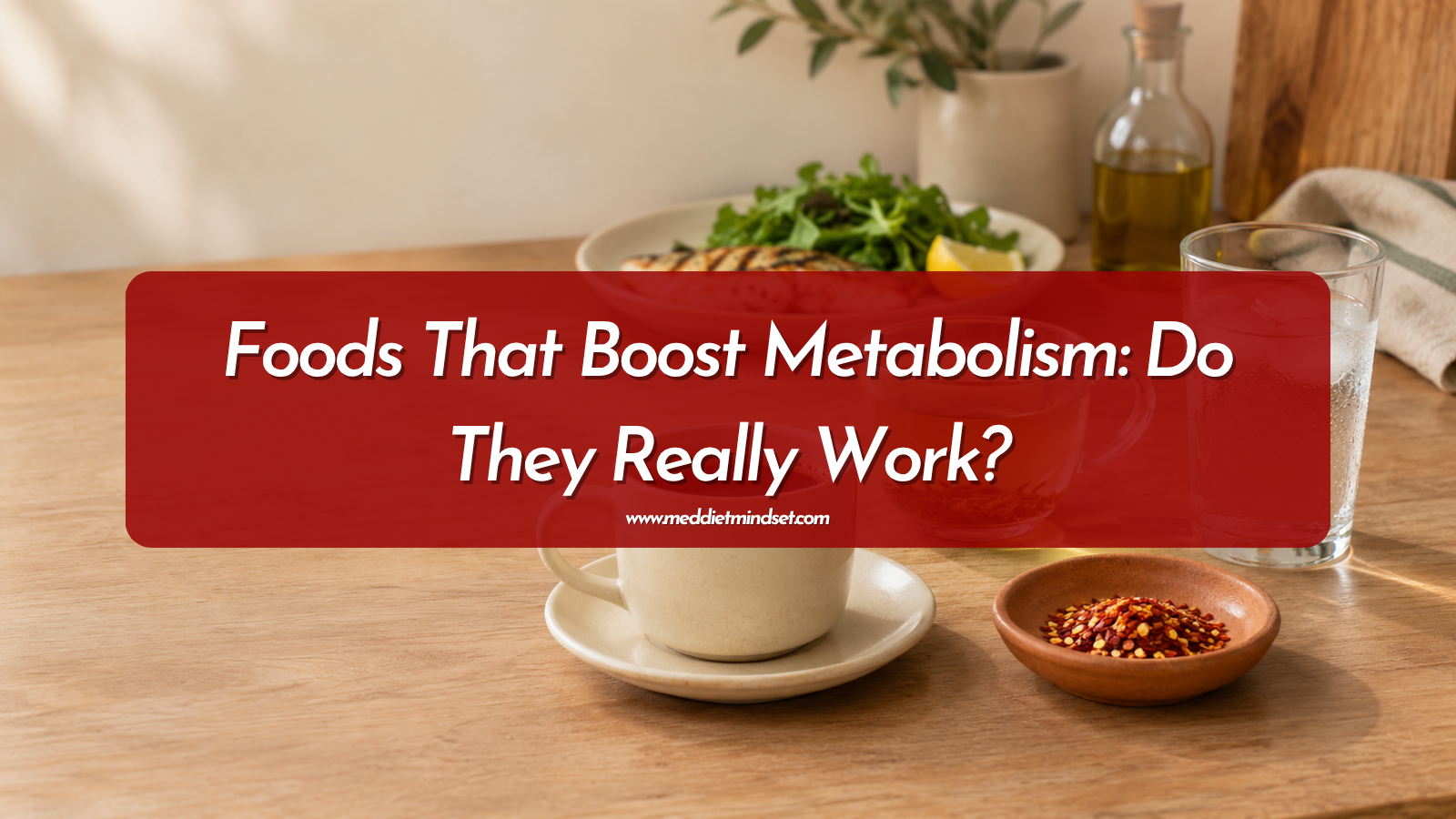
ToggleYes, but only a little. A few foods raise the calories you burn, but far less than most lists suggest. Protein has the clearest effect, while coffee, green tea and chili give a small, short lift. What changes your daily calorie burn more is keeping your muscle, moving through the day and eating enough.
If you’ve searched for foods that boost metabolism, you’ve probably found long lists promising faster fat loss. Here’s what those foods actually do, and where your effort pays off more.
What “Boosting Your Metabolism” Actually Means
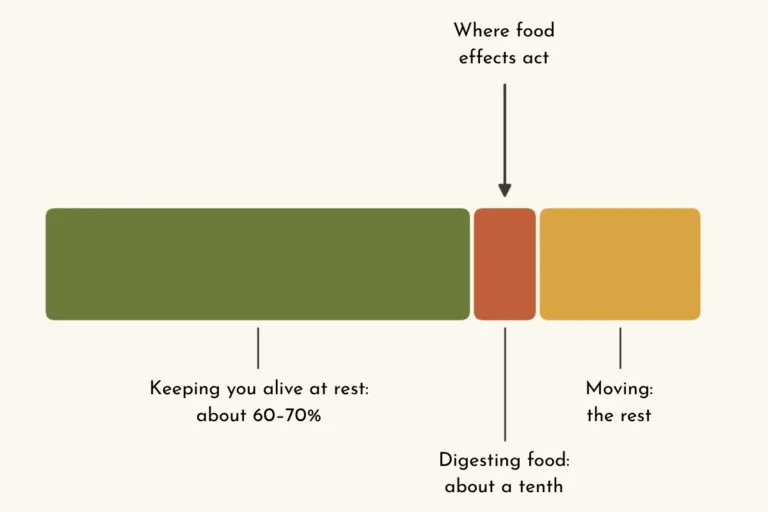
Your metabolism is simply the energy your body uses in a day. It has three parts, and they aren’t equal.
- Keeping you alive at rest. Breathing, your heartbeat, your brain and your organs use about 60 to 70% of your daily calories.
- Digesting food. Breaking down and storing what you eat uses roughly a tenth.
- Moving. Walking, cooking, climbing stairs and exercise make up the rest.
Foods that boost metabolism can only work on the second part, the energy used to digest a meal. That’s why their effect stays small. Even a real change there is a change to a small slice of your day.
Does Protein Boost Metabolism?
Yes, a little, and more than any other food. Your body uses more energy to digest protein than carbs or fat. This is called the thermic effect of food.
Out of every 100 calories of protein you eat, your body uses about 20 to 30 just to process it. For carbs it’s 5 to 10, and for fat it’s 0 to 3. So among foods that boost metabolism, protein-rich ones have the clearest effect.
Protein’s bigger job comes when you’re losing weight. Eating a bit more of it helps you keep more muscle and lose a little more fat. Your body also slows down a little less. The benefits are modest, and they depend on keeping it up. Protein also helps meals feel more satisfying, though that doesn’t always mean eating less at the next meal.
On the Mediterranean diet, protein comes from fish, eggs, Greek yogurt, beans, lentils and chicken. A simple place to start is a source of protein at each meal.
Coffee and Green Tea: A Small, Short Lift
Coffee and green tea top most lists of foods that boost metabolism. They can give a small lift, but not enough to change your weight.
Caffeine does raise your calorie burn, but only slightly and only for a while. A moderate dose raised resting calorie burn by 3 to 4% for about two and a half hours. That comes from one small, older study, and it describes a short lift rather than a lasting change.
Green tea gets even more attention. In studies outside Japan, green tea products made almost no difference to weight. Most of those studies used concentrated extracts rather than cups of tea.
So keep your coffee or tea if you enjoy it. What goes into the cup matters more, and the Mediterranean morning routine shows where it fits.
Does Spicy Food Burn More Calories?
A little. Chili is on almost every list of foods that boost metabolism, and it earns a small place there. It gets its heat from a compound called capsaicin, which nudges calorie burn up slightly. Across studies, the effect came to around 30 calories a day, and the biggest effects came from capsules, not food.
The effect is real but small. A pinch of chili flakes on your eggs won’t change your weight. Add it because you like the heat, not as a metabolism trick.
Cold Water, Celery and Other Metabolism Myths
Some ideas about foods that boost metabolism start from a real piece of science that got stretched. Here’s the fuller picture.
Cold water
Drinking water at room temperature didn’t change calorie burn at all in a careful lab test. Ice-cold water raised it slightly, by about 4.5% for an hour. That’s far less than the energy needed to warm the water up. Drink water when you’re thirsty, at whatever temperature you like.
“Negative-calorie” foods
You may have heard that celery takes more energy to digest than it contains. It doesn’t. When women ate 100 g of celery, digesting it used most of its 16 calories, but not more. Celery is still a crunchy, low-calorie food worth eating. It just isn’t burning anything off.
Olive oil and “fat-burning” foods
Olive oil often appears on lists of foods that boost metabolism, but that isn’t why it matters. After a meal, calorie burn was the same whether the fat came from olive oil or cream. Some studies suggest unsaturated fats like olive oil are burned a little more readily than butter-type fats. Even so, the difference is small.
No single food burns body fat on its own. Over weeks and months, your weight depends on your overall eating and activity, along with things like sleep and medicines. Olive oil earns its place for other reasons, like making vegetables and beans taste good.
What Supports Your Metabolism More Than Any Food
If foods that boost metabolism only go so far, the bigger wins sit mostly outside the kitchen. The one exception is eating enough.
Keep your muscle
Muscle burns more calories than fat, even at rest. The difference is smaller than people think, though. A kilo of muscle burns about 13 calories a day at rest, compared with about 4.5 for fat.
The real value of muscle is strength, and not losing what you have when you eat less. In older adults with obesity, strength training while cutting back prevented almost all muscle loss. Bodyweight exercises at home, resistance bands or gym machines all count. Pair them with protein at each meal.

Move more through the day
Movement is the part of your calorie burn you have the most say over. It doesn’t have to mean the gym. Walking, taking the stairs, carrying shopping and gardening all add up. Here’s how walking adds to the calories you burn, and why that matters more than any single food.
Eat enough, and lose weight steadily
After you lose weight, your body may use slightly less energy than expected for a while. This is often called metabolic adaptation. It’s small, about 50 calories a day in one long study, and it largely faded once people’s weight was stable. It also didn’t predict who regained weight.
So your metabolism isn’t broken after a diet, and you don’t need foods that boost metabolism to fix it. Steady weight loss, with enough protein and some strength work, helps you keep more muscle along the way. If you have PCOS, here’s why crash diets backfire and what to do instead.
What this looks like on a plate
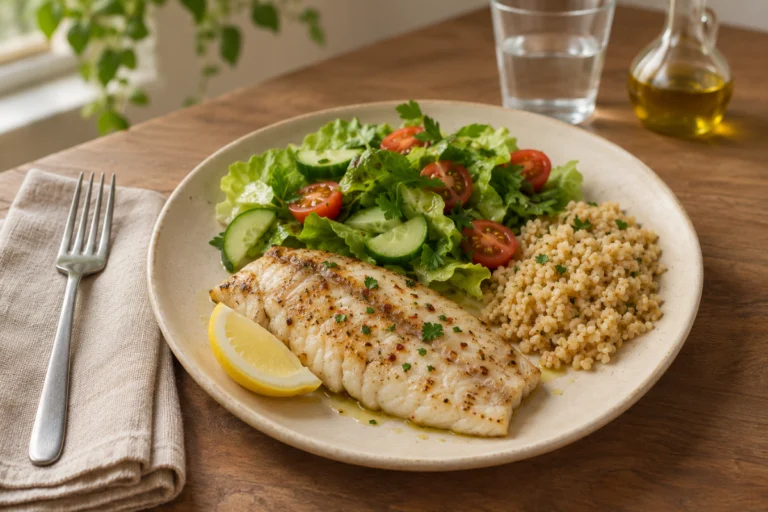
In everyday life, a plate that covers all of this is simple. Start with grilled fish, eggs or a bowl of lentils for protein. Add a big salad or roasted vegetables, a portion of bulgur or wholegrain bread, and a drizzle of olive oil.
A pinch of chili and a coffee after lunch are welcome too. Like other foods that boost metabolism, they’re just not doing the heavy lifting.
When Metabolism Really Is Different
Some health conditions and medicines do change how your body uses energy. Thyroid hormones control the way your body uses energy, so an underactive thyroid can slow it down. Some medicines can also make you hungrier or make your body burn fewer calories.
Do you have a thyroid condition or take regular medicine? If your weight is changing without a clear reason, talk to your doctor. Don’t stop or change a medicine on your own.
Age matters less than most people think. For your body size, calorie burn stays steady from about 20 to 60, then starts to dip. Losing muscle still lowers the total, which is one more reason to keep it.
Related Strategies
- Mediterranean morning routine for weight loss: what to eat in the morning, and where coffee fits.
- How walking helps with belly fat: simple ways to move more without an all-or-nothing plan.
- Sugar cravings after eating: why protein helps a meal feel finished.
- Mediterranean diet shopping list: the protein foods worth keeping at home.
F.A.Q.
No. Eating breakfast doesn’t make your body burn more calories, and skipping it isn’t a mistake. Like many foods that boost metabolism, breakfast is often oversold. If you’re hungry in the morning, build it around protein.
No. Eating little and often doesn’t change the calories you burn across the day. Three meals or six, the total comes out about the same. Choose the pattern that keeps you comfortably full.
A little, and usually for a while. After weight loss, your body may use slightly less energy than expected. In the research, this was small and mostly faded once weight held steady. Enough protein and some strength work help you keep muscle along the way.
Less than you might think. For your size, calorie burn stays steady from about 20 to 60, then dips slowly. Keeping your muscle matters more than any foods that boost metabolism.
No. Even the best foods that boost metabolism only raise your calorie burn a little. Fat loss comes from your overall eating and activity over time. Mediterranean meals help because they’re satisfying, which makes eating a little less easier to keep up.