Table of Contents
ToggleTo build a Mediterranean meal plan that lasts, plan the shape of your week first. Then fill it with meals you repeat, leftovers you plan for and two no-cook backups. Shop from that plan, and leave one meal open on purpose. Those are the six Mediterranean meal plan rules in short: a way to plan a real week, not a fixed menu to copy.
The 6 rules at a glance:
- Plan the shape of the week before the meals.
- Build in repeats.
- Cook once, eat twice.
- Keep two no-cook meals ready.
- Shop from the plan, not from the aisles.
- Leave one meal unplanned on purpose.
What a Mediterranean Meal Plan Needs to Do
A meal plan isn’t a list of perfect meals. Its real job is to make food decisions ahead of time, so a tired Tuesday evening needs fewer of them.
That’s the thinking behind these Mediterranean meal plan rules. They plan the week, not the plate. Each meal still follows the familiar Mediterranean pattern: a protein, plenty of vegetables, a whole grain or beans, and olive oil. The rules decide when and how those meals happen.
People who plan their meals tend to eat a wider variety of foods and a better-quality diet. That doesn’t prove planning is the reason. People who already care about food may simply be more likely to plan. What it does show is that planning goes hand in hand with eating well. In the same research, planners were also less likely to feel that deciding what to cook was a chore.
Meal planning is one of the things I’ve worked on most with clients. I usually recommend starting simpler than you think you need. A plan you can follow on a busy week beats a detailed one you can’t.
How to Build a Mediterranean Meal Plan: The 6 Rules
Each rule below takes one decision off your plate. Together, they turn a blank week into a plan that covers breakfasts, lunches and dinners. Use these Mediterranean meal plan rules in order the first time, then adjust them to fit your life.
Rule 1: Plan the shape of the week before the meals
The first of the Mediterranean meal plan rules starts before any food. Look at the week itself. Which evenings are busy? Who’s home for dinner? Which nights do you actually have time to cook?
Then give each evening a type, not a dish. A week might look like this:
| Evening | Type |
|---|---|
| Sunday | Cook, and make extra |
| Monday | Leftovers |
| Tuesday | No-cook |
| Wednesday | Cook, and make extra |
| Thursday | Leftovers |
| Friday | Unplanned |
| Saturday | Cook |
Only now do you fill in the meals. A cook night might be lentil soup or a sheet pan of chicken and vegetables. It could also be fish, which deserves a regular spot in the week.
Breakfasts and lunches need much less planning. Pick two or three breakfasts you like and rotate them. Not sure what makes a good one? The Mediterranean morning routine walks through building a breakfast that keeps you full. Most lunches can simply come from the night before.
Rule 2: Build in repeats
Trying to cook something new every night is one of the quickest ways to give up on a plan. It means a new recipe, new shopping and new decisions, five or six times a week.
Repeats take that work away. Keep two or three breakfasts on rotation and a short list of dinners you can make without a recipe. Habit research backs this up: simple actions you repeat become automatic sooner than more involved ones. A short rotation of easy meals puts that to work.
Variety still matters on the Mediterranean diet. You just get it from the ingredients, not from a brand-new meal every night. Change the vegetables on the sheet pan, swap chickpeas for white beans, or try a different fish. For fresh combinations to rotate in at breakfast, look through these Mediterranean breakfast ideas.
Rule 3: Cook once, eat twice
A leftover you planned is a meal you don’t have to think about. A leftover you only hoped for often gets forgotten at the back of the fridge.
So make extra on purpose. Cook a double pot of lentil soup on Sunday, and Monday’s lunch is done. Roast two sheet pans of chicken and vegetables, and one becomes lunch in whole-grain pita or wraps. Cooked grains, beans and roasted vegetables all reheat well.
Timing matters here. Cooked leftovers keep for 3 to 4 days in the fridge, or 3 to 4 months in the freezer. So anything you cook on Sunday should be eaten by Wednesday. If that won’t happen, freeze a portion on the day you cook it.

Rule 4: Keep two no-cook meals ready
Some evenings, cooking just isn’t going to happen. A plan that doesn’t allow for that breaks the first time it does. That’s usually the evening takeout wins.
The fix is two meals you can put together without turning on the stove. One can fill your no-cook evening, and the other stays in reserve. Keep their ingredients in stock and you always have a backup. For example:
- A plate of hummus or labneh (strained yogurt) with whole-grain bread, olives, cucumber and tomato
- A tuna and chickpea salad with olive oil, lemon and whatever vegetables you have
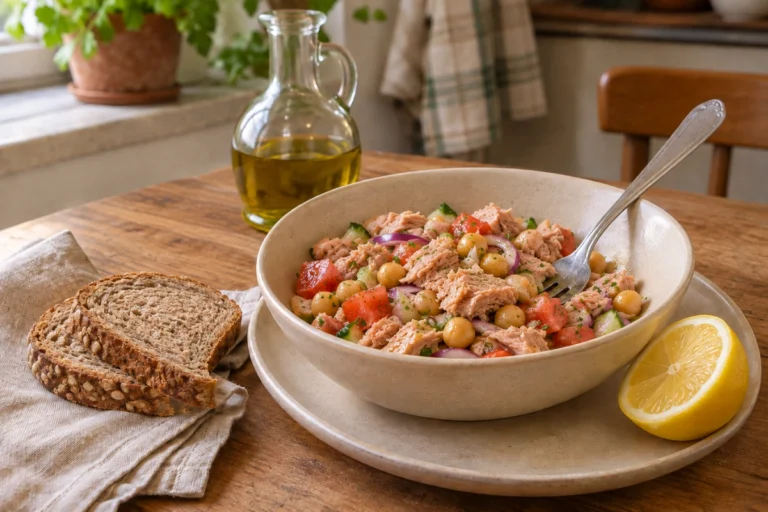
Canned foods make this easy. Canned chickpeas, beans and fish are all everyday Mediterranean staples. Draining and rinsing canned beans washes away a good share of the salt, so it’s worth the extra step.
Rule 5: Shop from the plan, not from the aisles
Once the week is planned, write your shopping list from it. Go through each meal and note what you need, including the ingredients for your two backups.
This keeps the plan and your kitchen in step. You buy what the week needs, rather than whatever looks good in the store. Shopping with a list has been linked with healthier choices in the basket, although that research looked at one specific group of shoppers. What it does suggest is that a list is a simple way to get your plan from paper into your kitchen. It’s free, and it takes a few minutes.
Rule 6: Leave one meal unplanned on purpose
This one sounds backward, but it’s one of the most useful rules. Leave one meal each week with nothing written next to it.
That open slot absorbs real life. A dinner invitation, a late night at work or a craving for something specific won’t break the plan, because the plan expected them. Use the slot for eating out, a family favorite, or finishing whatever is left in the fridge.
That’s why the last of these Mediterranean meal plan rules is about leaving space. The point is to avoid all-or-nothing thinking. When a plan has no room to bend, one changed meal can feel like the whole week has failed. A plan with space built in doesn’t have that problem. One meal won’t make or break your progress.
Adjusting Your Plan When Real Life Happens
Even a well-built plan will meet weeks that don’t go the way you expected. These Mediterranean meal plan rules are designed to bend, and here’s how to handle two common situations.
When the week goes off plan
Skip the guilt and pick it back up at the next meal. In habit research, missing the occasional day didn’t undo the habit people were building. What you do across the weeks matters far more than any single day.
If a cook night falls through, swap it with your no-cook night. If the leftovers run out early, use one of your backups. The plan is there to help you, not to grade you.
When people at home eat differently
Planning for a household doesn’t mean cooking separate meals. Choose one base that everyone can eat, then let each person finish it their own way.
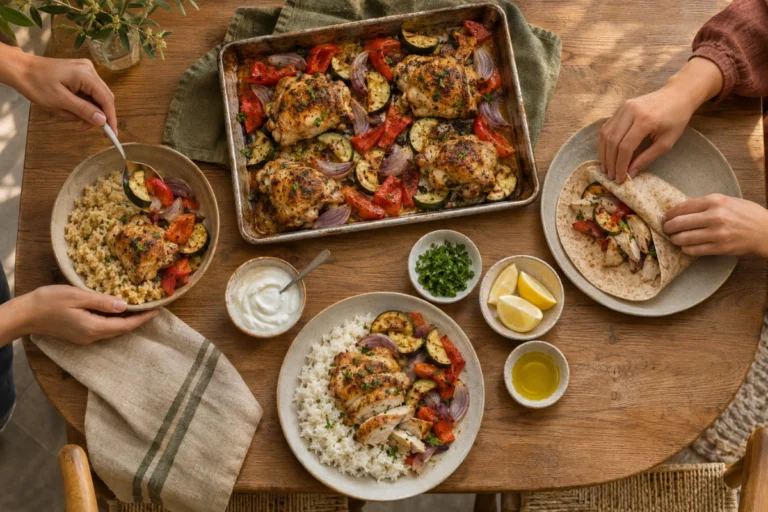
A sheet pan of chicken and roasted vegetables works well here. It can become a grain bowl for one person, a wrap for another and a plate with rice for a third. Set out olive oil, lemon, yogurt and chopped herbs, so everyone can adjust the flavor themselves.
Related Strategies
These posts cover the pieces around these Mediterranean meal plan rules:
- 30-day Mediterranean diet challenge: if you’d rather follow a set structure than build your own, this introduces eight small habits over four weeks.
- Mediterranean morning routine: how to build a breakfast that keeps you full, plus the small habits around it.
- Mediterranean breakfast ideas: ready-made breakfast combinations to rotate through your week.
F.A.Q.
Start with the shape of the week: which evenings you’ll cook, which are leftovers, and which need a no-cook meal. Then fill in the meals, repeating the ones you like. These Mediterranean meal plan rules keep the plan flexible, so it still works when your week changes.
No. Plan dinners first, since they take the most effort. Rotate two or three breakfasts, let leftovers cover most lunches, and leave one meal open. Simple Mediterranean meal plan rules like these mean planning less, not more.
Yes. Repeating meals is one of the most useful Mediterranean meal plan rules, because it makes a plan easy to keep. Get variety by changing the vegetables, beans or fish inside the meals you already know.
Cooked leftovers keep for 3 to 4 days in the fridge, or 3 to 4 months in the freezer. Plan to eat Sunday’s cooking by Wednesday, and freeze a portion if you won’t get to it in time.
It can help, mostly by making Mediterranean eating easier to stick with. People who plan their meals tend to eat a better-quality diet, although planning itself hasn’t been shown to cause weight loss. Following Mediterranean meal plan rules keeps vegetables, beans, whole grains, fish and olive oil at the center of your week. Here’s more on how the Mediterranean diet supports weight loss.