Table of Contents
ToggleThe best way to start your day for weight loss is a glass of water, then a breakfast that keeps you full. That’s the heart of a Mediterranean morning routine. Build breakfast from four parts: a protein, a fiber-rich carb, vegetables or fruit, and some healthy fat. Breakfast won’t speed up weight loss on its own, so if you don’t eat it, build your first meal the same way.
What to Eat in the Morning to Lose Weight
Breakfast is the center of a Mediterranean morning routine. But you don’t need a set menu. You need a simple way to build the plate, using food you already buy.
Here’s the method. Each part has a job, and together they make a breakfast that holds you until lunch.
Start with a protein
Protein does most of the work. Meals with more protein leave people feeling fuller in the hours after eating than meals with less. That’s the stretch between breakfast and lunch, when snacking usually starts.
Good options include eggs, Greek yogurt, labneh, feta or halloumi, ful (fava beans) and hummus. If breakfast is usually just bread and tea, protein is the first part to add.
One honest note: feeling fuller doesn’t mean you’ll automatically eat less later. Hunger is only one reason we eat. Still, a breakfast that holds you makes the morning much easier to manage.
Add a fiber-rich carb
Next, add a carb that brings fiber with it. Whole-grain bread, oats and beans are all everyday Mediterranean staples. They turn breakfast into a proper meal rather than a snack.
Not every high-fiber food fills you up the same way, though. In short-term tests, most of the fibers studied made no clear difference to fullness. Oats and whole-grain rye were among the few with better support.
Two everyday examples show the difference. Cooked oatmeal kept people fuller over four hours than a boxed oat cereal with the same calories. Whole-grain foods also tend to leave people more satisfied than refined grains like white bread. In practice, that means less hunger and less urge to snack between breakfast and lunch. It just doesn’t seem to change how much you eat at lunch itself.
The bigger payoff comes over time. People who eat more fiber and whole grains have lower rates of heart disease, type 2 diabetes and bowel cancer. In studies where people ate more fiber, their weight and cholesterol also came down a little.
When you buy bread, check that the first ingredient is a whole grain, such as whole-wheat or wholemeal flour. Plain “wheat flour” means white flour, and a brown color or “multigrain” on the bag doesn’t guarantee whole grain.
Add vegetables or fruit
Vegetables at breakfast are normal in much of the Mediterranean. Sliced tomato, cucumber, peppers and fresh herbs all work, and none of them need cooking.
If vegetables in the morning feel strange, fruit does the same job. An orange, a pear, a handful of berries or a few dates are all easy to add. Either way, it’s one of the simplest ways to eat more plants without thinking about it.
Finish with some healthy fat
Add a drizzle of olive oil, a few walnuts or almonds, some olives, or a spoonful of tahini. You don’t need much.
Fat makes breakfast taste better. That matters more than it sounds, because a breakfast you enjoy is one you’ll keep eating.
Putting it together
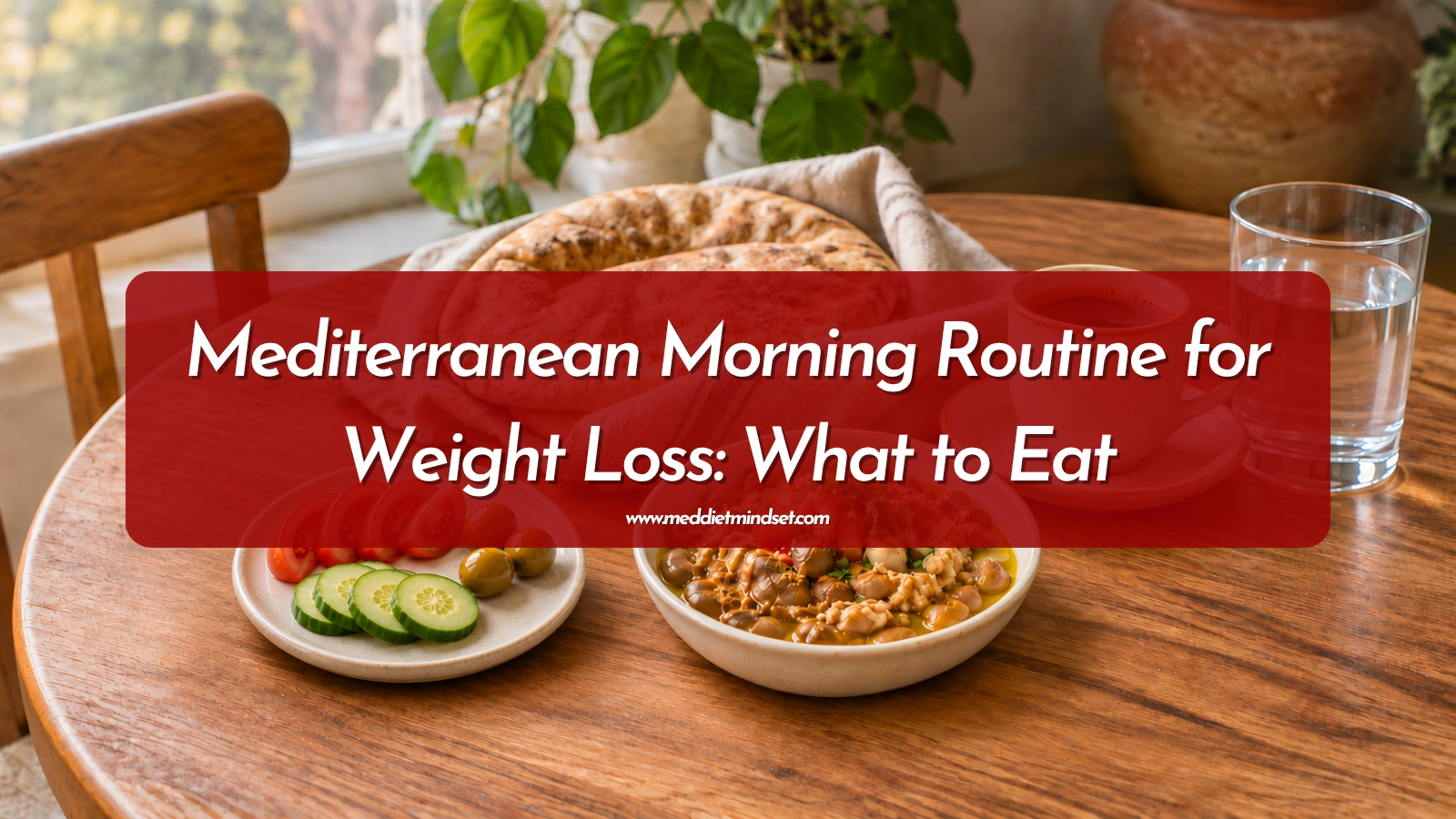
Where I live, many breakfasts already follow this pattern: ful or labneh, bread, olive oil, and a plate of tomato and cucumber. Two more examples:
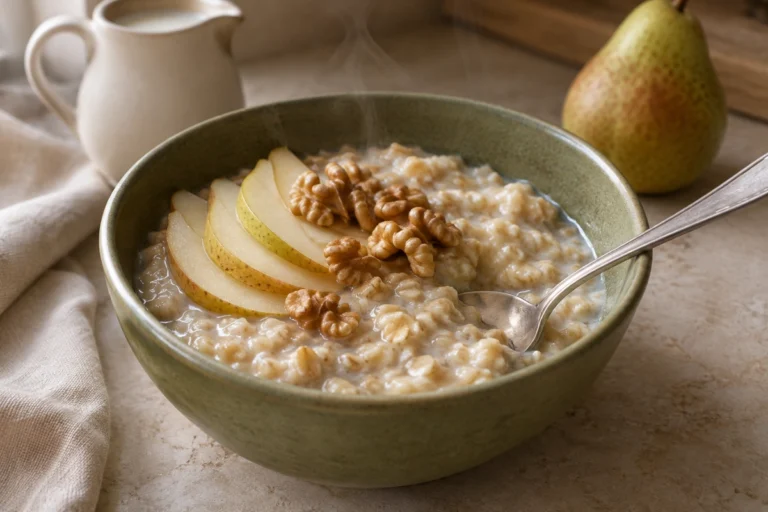
- Oats cooked in milk, topped with a sliced pear and a few walnuts
- Hummus on whole-grain toast with a boiled egg, sliced tomato and a drizzle of olive oil
You don’t have to start from scratch, either. If breakfast is usually toast with jam, keep the toast. Swap the jam for labneh, an egg and some tomato.
Before you eat, run a quick check. It’s the simplest way to keep a Mediterranean morning routine on track without measuring anything:
- Is there a protein?
- Is there a fiber-rich carb?
- Is there something fresh, a vegetable or a fruit?
- Is there a little healthy fat?
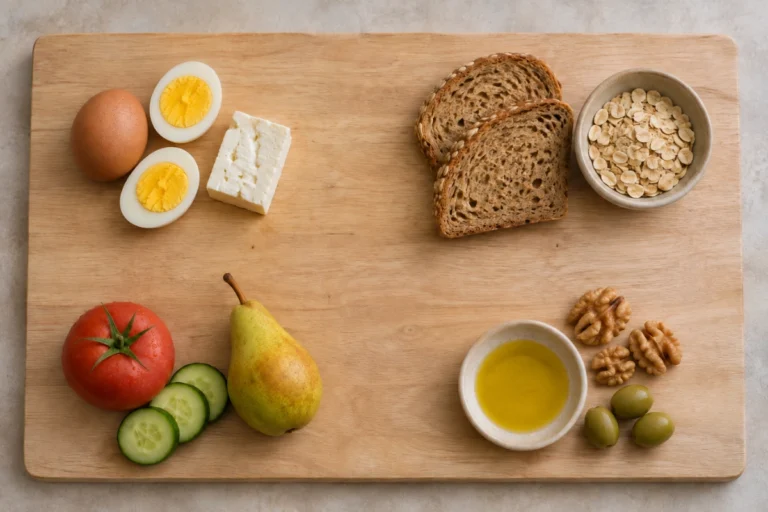
If one is missing, add it. If two are missing, start with the protein. On rushed mornings, a little prep helps. Boil a few eggs ahead, keep labneh or hummus in the fridge, and leave the oats where you’ll see them.
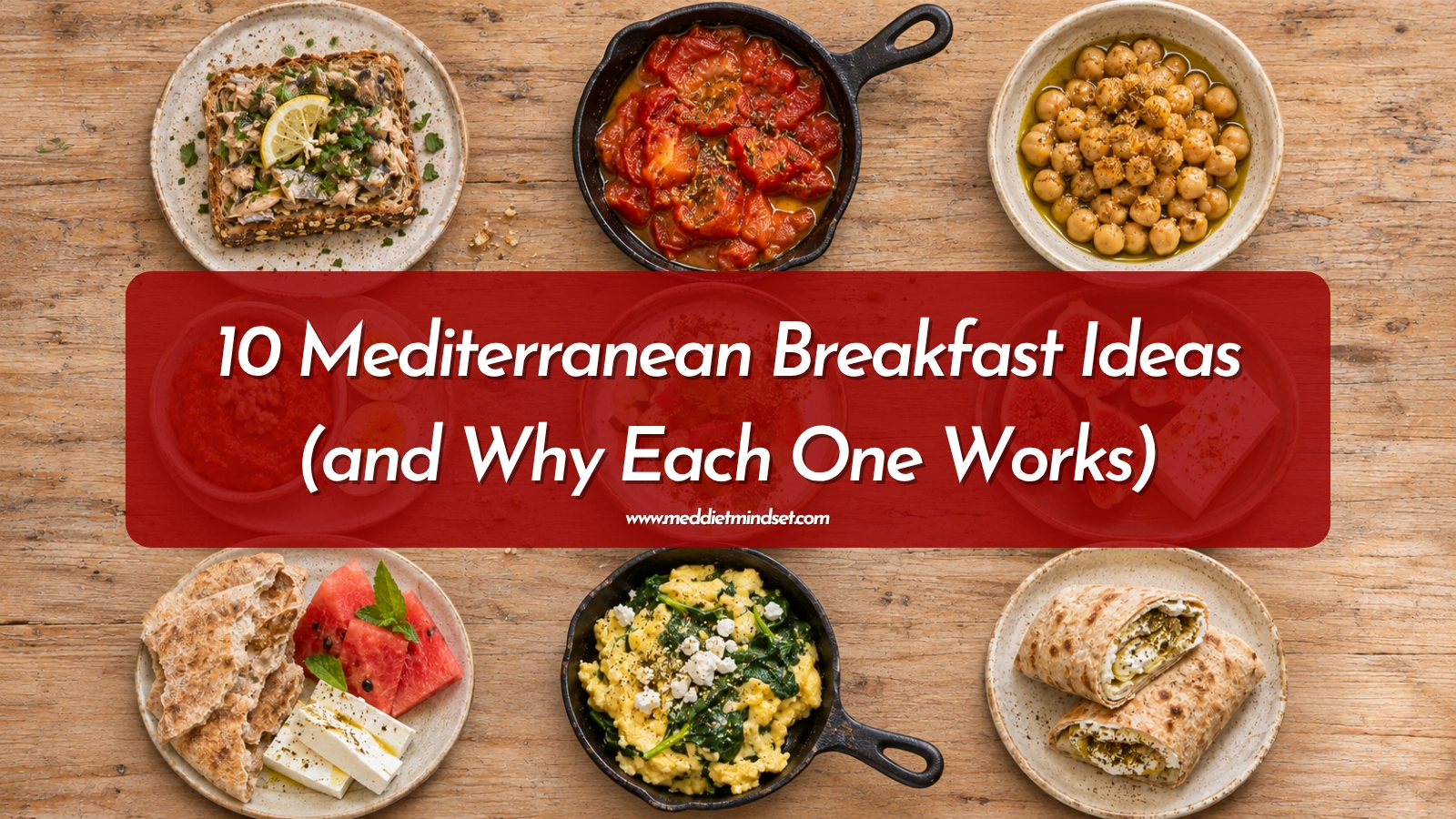
For ready-made combinations, see these Mediterranean breakfast ideas. If you have PCOS, there’s a separate guide to building a Mediterranean breakfast for PCOS.
The Rest of Your Mediterranean Morning Routine
A Mediterranean morning routine doesn’t need to be long. Breakfast is the main part. Two small habits around it make the whole morning easier to repeat. The order is simple: water first, coffee if you drink it, then breakfast.
Drink a glass of water first
Before coffee or breakfast, drink a glass of water. That’s the whole habit.
It isn’t there because water burns fat. It’s there because it’s easy. Simple actions like drinking water become automatic faster than more involved ones. That makes water a good anchor for the rest of your morning. Leave a glass next to the coffee pot so it’s the first thing you see.
Coffee: keep it, and watch what goes in it
Yes, coffee has a place in a Mediterranean morning routine. Have your water first, then your coffee as usual.
The part worth a look is what goes into the cup. Sugar, flavored syrups and sweetened creamers can turn coffee into something closer to dessert, especially across a few cups a day. If you take sugar, cut back a little at a time rather than all at once.
If your morning allows it, a short walk is worth adding too, even just around the block. It isn’t required. It’s simply one more easy way to move a bit more.
Do You Need Breakfast to Lose Weight?
No. Eating breakfast doesn’t speed up weight loss, and skipping it isn’t a mistake.
In short studies, people asked to eat breakfast ate more over the whole day, not less. Their bodies didn’t burn more energy either. Those studies were short and mostly not high quality. So the honest answer is that breakfast itself is neutral.
If you aren’t hungry in the morning, or you simply prefer a later first meal, that’s fine. You can still follow a Mediterranean morning routine. Use the same four parts for whichever meal comes first.
Some people skip breakfast on purpose, as part of intermittent fasting. Fasting changes when you eat, while the Mediterranean diet focuses on what you eat. Intermittent fasting leads to about the same weight loss as cutting calories in other ways, and the differences between fasting methods are small. It suits some people and not others. Here’s a fuller comparison of intermittent fasting vs the Mediterranean diet.
Either way, one meal doesn’t decide your weight. Your eating pattern across the whole day and week matters far more. Here’s more on how the Mediterranean diet supports weight loss.
Related Strategies
- 30-day Mediterranean diet challenge: eight small habits over four weeks, starting with water and breakfast in week 1.
- Mediterranean meal plan rules: how to plan your breakfasts, lunches and dinners across a whole week.
F.A.Q.
Eat a breakfast with a protein, a fiber-rich carb, vegetables or fruit, and some healthy fat. Eggs or Greek yogurt with whole-grain bread or oats, plus tomato, fruit or olive oil, all fit. This is the base of a Mediterranean morning routine, and it works with foods you probably already buy.
Yes. Breakfast doesn’t speed up weight loss on its own. If you’d rather eat later, your Mediterranean morning routine simply moves the four-part build to your first meal of the day.
Yes. Choose whole-grain bread when you can, and pair it with a protein such as eggs, labneh, cheese or hummus. Bread works best as one part of the plate, not the whole breakfast.
Yes. Have a glass of water first, then your coffee. Keep an eye on sugar and syrups, which add up quickly over a few cups a day.
Drink a glass of water, then eat a breakfast built from the four parts. On busy days, keep it simple: Greek yogurt with fruit and a few nuts, or hummus on whole-grain toast with a tomato. A Mediterranean morning routine works best when it’s easy enough to repeat.