Table of Contents
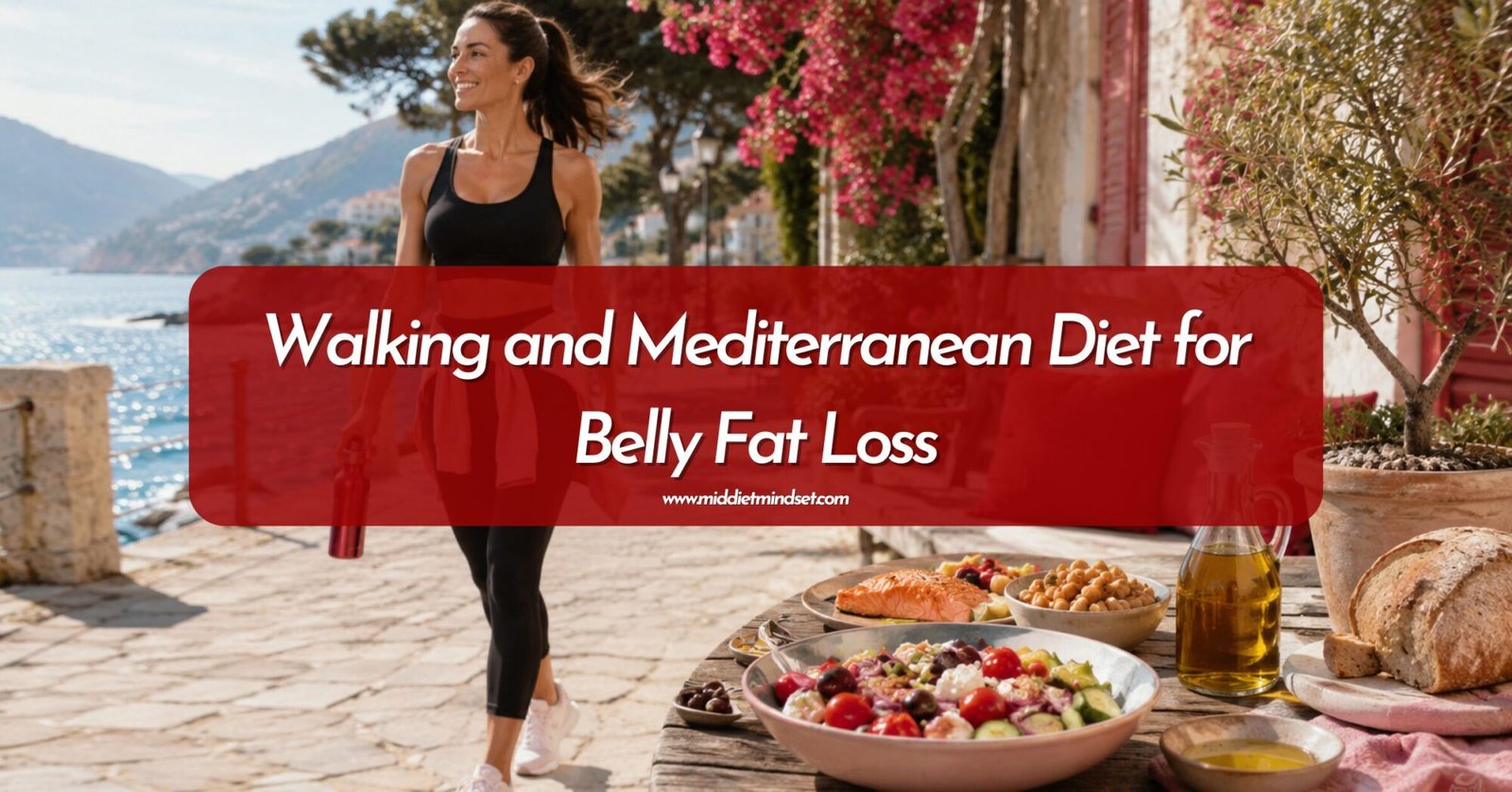
ToggleMediterranean diet belly fat advice can be confusing, because walking and the Mediterranean diet can support belly fat loss — but probably not in the way most people expect.
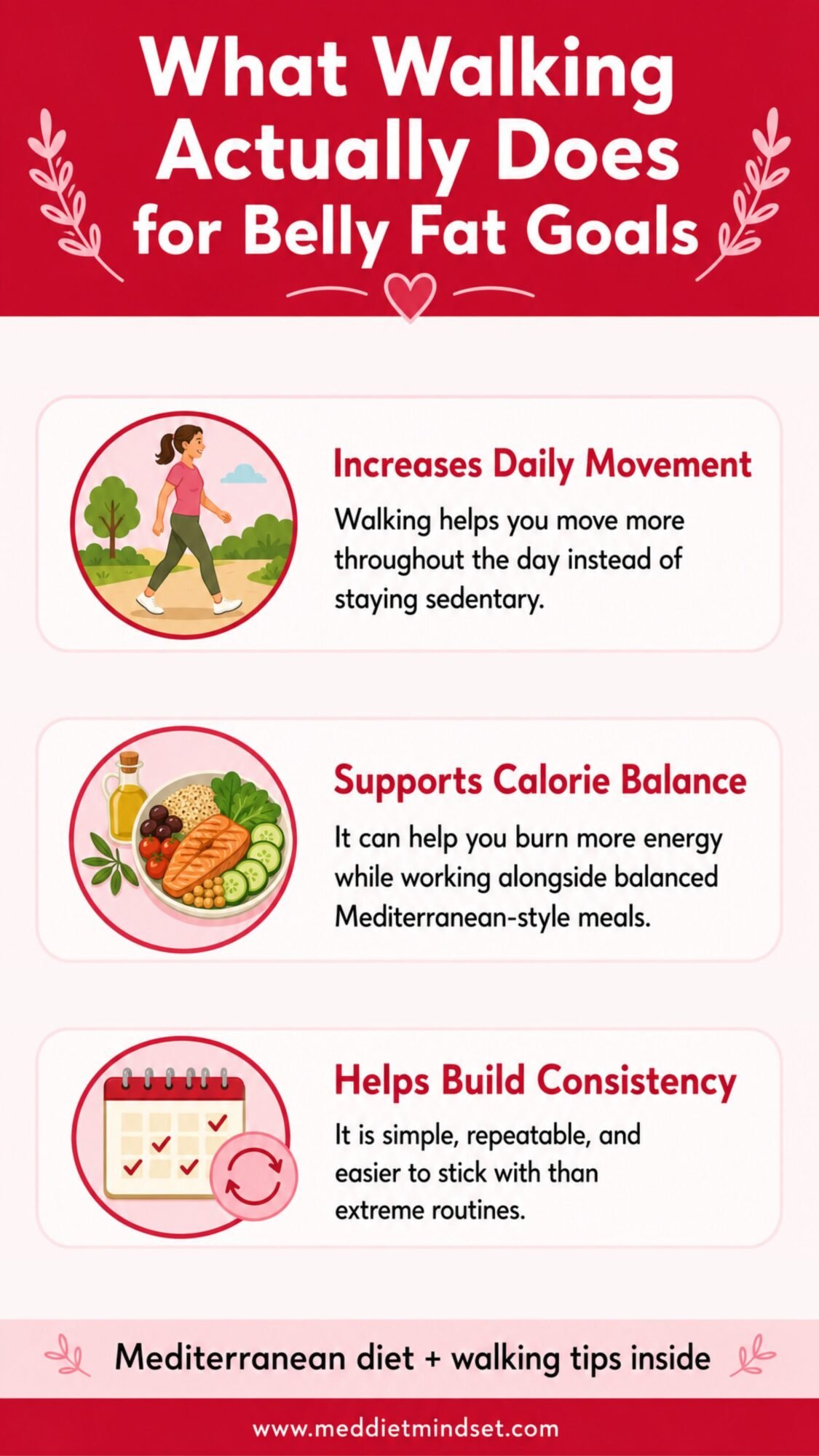
Walking can support belly fat loss, but not because it burns fat from your waist specifically. It helps by increasing your overall movement and supporting the bigger fat-loss picture: healthy eating, calorie balance, and consistency over time.
If you came here searching for Mediterranean diet belly fat advice, you’re probably wondering whether walking and Mediterranean-style eating can actually help. The answer is yes — but only when they work together as part of a routine you can repeat. The better question is: how do you walk, eat, and stay consistent without turning the whole thing into another exhausting “reset”?
That is where this approach becomes useful. Walking gives you a simple way to move more, while Mediterranean-style eating can help you build balanced, satisfying meals without turning fat loss into a punishment plan. In this guide, you’ll learn how walking supports belly fat loss, how to pair it with Mediterranean-style eating, which habits make walking more effective, and which common mistakes can make the process harder than it needs to be.
How Walking Supports Mediterranean Diet Belly Fat Loss
Walking supports belly fat goals by helping you move more in a way that feels realistic to repeat. The more consistently you walk, the more it can contribute to your overall activity, calorie burning, and long-term weight-management routine.
Walking Increases Daily Movement Without Feeling Overly Intense
Walking is useful for Mediterranean diet belly fat goals because it adds movement without making exercise feel like a huge project. You do not need to start with intense workouts for movement to count.
A moderate walk can still help your body use more energy, especially when your pace makes you slightly breathless but still able to speak in full sentences. That is a realistic level for many people, especially if you are trying to build a routine you can actually repeat.
Walking helps with belly fat loss by supporting overall fat loss, not by pulling fat from one exact area. So instead of thinking of walking as a “waist-melting” exercise, think of it as a simple way to increase movement, support calorie balance, and make fat loss more realistic over time.
Walking May Help Improve Consistency With Healthy Habits
Walking is simple, and that is exactly why it can be powerful.
You do not need a gym, a complicated routine, or a dramatic fitness plan. You can start with a short walk and build from there. This makes walking easier to repeat, which matters because Mediterranean diet belly fat goals depend on what you do consistently, not what you do perfectly for three days.
If you miss one walk, that does not ruin anything. The better move is to return to the next walk instead of turning one missed day into a full restart.
Walking Supports a More Sustainable Calorie Deficit Over Time
Fat loss happens when your body uses more energy than it takes in over time. Walking can help by increasing the calories you burn during the day.
Brisk walking may be especially helpful because pace, duration, and frequency all affect how much energy you use. Mayo Clinic notes that adding 30 minutes of brisk walking to your day may burn about 150 extra calories, although the exact number can vary depending on body size, pace, terrain, fitness level, and walking intensity.
So walking can help, but it works best when your eating habits support the same goal. If food intake stays higher than your body needs, walking alone may not be enough.
Walking Can Fit More Easily Into Daily Routines Than Aggressive Exercise Plans
A walking routine can start small and grow slowly. That makes it easier to maintain than a plan that asks you to suddenly become a completely different person by Monday morning.
Beginners can start with 5–10 minutes or a comfortable 15-minute walk, then slowly increase walking time, pace, distance, or challenge.
This gradual approach matters because doing too much too soon can lead to soreness, burnout, or injury risk. The goal is not to create the most intense walking plan. The goal is to create one you can continue.
Why the Mediterranean Diet Works Well With Walking for Belly Fat Loss
For Mediterranean diet belly fat goals, walking and Mediterranean-style eating work well together because both support realistic lifestyle habits. Walking supports movement, while Mediterranean-style eating supports balanced meals, fullness, and long-term consistency.
Mediterranean Meals Help Support Fullness and Appetite Control
Mediterranean-style eating can support fat loss because it is built around balanced meals, fiber-rich foods, healthy fats, and sustainable eating habits. If you’re still new to this eating pattern, start with this beginner guide to the Mediterranean diet before making changes.
This matters because walking can help you burn more energy, but your meals still influence whether your body is able to lose fat over time.
The goal is not to eat as little as possible. The goal is to build meals that help you feel satisfied enough to stay consistent. Because let’s be honest, a plan that leaves you hungry and annoyed is usually not a long-term plan. It is a countdown to quitting.
Fiber-Rich Foods Can Help Reduce Overeating Later in the Day
Fiber-rich foods can support fullness as part of balanced meals. That can make it easier to manage appetite and reduce the chance of overeating later.
This does not mean fiber is magic. It simply means that meals built around filling foods can make your fat-loss routine feel more manageable.
For Mediterranean diet belly fat goals, this is where the eating pattern becomes helpful: it supports the daily food choices that make walking more effective.
Balanced Meals May Help Support Energy Levels for Daily Movement
If your meals feel balanced and satisfying, walking becomes easier to include in your day.
Balanced meals can make walking feel more manageable because they support a steadier routine. There is no one perfect Mediterranean plate for belly fat loss. What matters more is building meals that feel satisfying enough to repeat while walking helps you stay active.
Walking supports movement. Balanced meals support consistency. Together, they make the routine feel less like punishment and more like something you can live with.
The Mediterranean Diet Is Easier to Maintain Long Term Than Highly Restrictive Eating Patterns
Highly restrictive plans may seem tempting because they promise fast results, but they are often harder to maintain.
Mediterranean-style eating fits better with sustainable fat loss because it focuses on a dietary pattern, not extreme rules. That matters because long-term weight management depends on adherence.
In real life, the best plan is not the strictest one. It is the one you can keep returning to without feeling like you failed every time life happens.
Habits That Help You Benefit More From Walking
Walking is helpful, but the habits around walking decide how useful it becomes. Duration, pace, consistency, food intake, and gradual progress all matter.
Walking Consistently Matters More Than Walking Perfectly
You do not need the perfect walk. You need a repeatable one.
A comfortable walk you do several times a week is more useful for Mediterranean diet belly fat goals than an intense plan that disappears after a few days. Walking speed is not a magic switch. Total movement, consistency, time, and diet all influence the result.
So instead of asking, “What is the hardest walk I can do?” ask, “What walk can I repeat this week?”
Building Movement Into Normal Daily Routines Can Improve Adherence
Walking becomes easier when it has a place in your routine.
You can support consistency by choosing a regular walking time, tracking your progress, changing your route, walking with someone, or listening to something you enjoy.
Short walks can count too. Several shorter walking sessions during the day can still contribute to your movement and health benefits.
The point is not to make walking complicated. The point is to make it easier to repeat.
Pairing Walks With Regular Meal Timing May Help Create Structure
You do not need a strict schedule. You just need enough structure to make your habits easier to repeat. Think of walking and meals as two anchors. One helps you move more. The other helps your eating pattern stay more balanced. Together, they make the process feel less random.
Sleep, Stress Management, and Consistency Still Matter for Mediterranean Diet Belly Fat Goals
Belly fat management is not only about walking and food. Lifestyle habits matter too.
Sleep, stress, movement, and eating habits can all influence how realistic your routine feels. Gentle activities that help you calm down — such as stretching, yoga, tai chi, breathing exercises, light mobility work, or an easy outdoor walk — may support the routine indirectly when stress affects your food choices.
This does not mean stress management replaces walking or nutrition. It simply means your routine works better when it supports your real life, not just your calorie math.
A Realistic Walking Routine Is Usually More Sustainable Than an Extreme One
More is not always better if it leads to burnout.
A realistic walking routine starts where you are and builds gradually. As your fitness improves, you can increase your pace, walking time, distance, hills, terrain difficulty, or total weekly movement.
For Mediterranean diet belly fat goals, your routine should feel challenging enough to help, but realistic enough to continue.
How to Combine Walking and the Mediterranean Diet Realistically
Walking and Mediterranean-style eating work best when they support each other. Walking helps increase energy use, while Mediterranean-style meals can support fullness, balance, and consistency.
Start With Manageable Walking Goals Instead of All-or-Nothing Plans
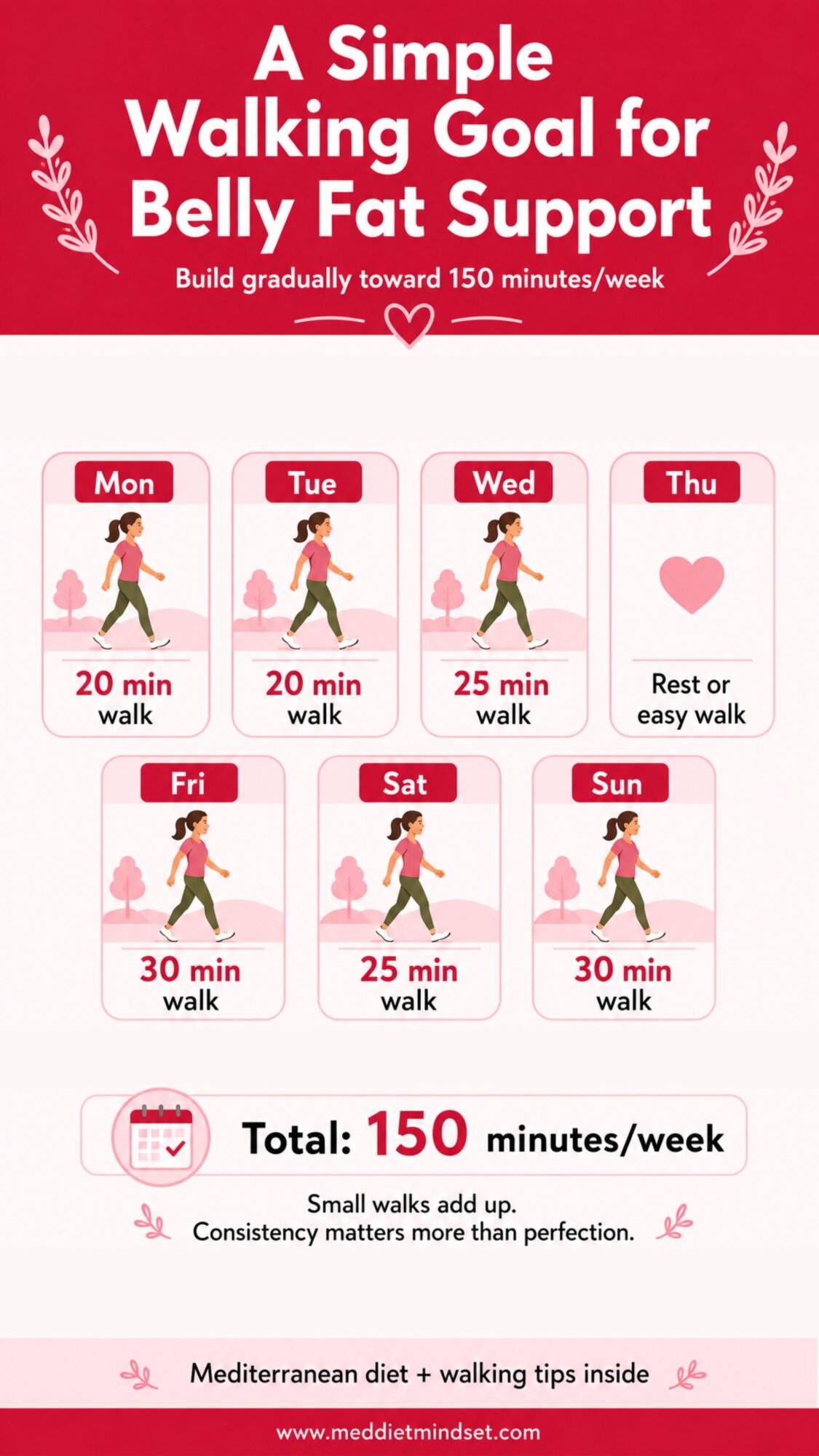
Start with a walking goal that feels doable. If you are new to walking, that may mean 5–10 minutes or a comfortable 15-minute walk.
From there, build gradually.
A helpful general target is at least 150 minutes per week of moderate aerobic activity. For extra health benefits, weight loss, or long-term weight management, 300 minutes per week or more may be useful when built slowly.
But do not jump to the highest number if it makes the routine impossible. Start with what you can repeat, then progress.
Focus on Simple Mediterranean-Style Meals You Can Repeat Consistently
Keep your meals realistic. The Mediterranean diet does not need to become complicated to be useful.
For Mediterranean diet belly fat goals, your aim is to build meals that help you stay consistent while walking supports your movement. This is not about creating the perfect meal plan. It is about creating a pattern you can actually follow.
Use Meals and Walks to Create Routines Rather Than Temporary Challenges
Walking and Mediterranean-style eating should not feel like another short-term reset.
For Mediterranean diet belly fat goals, they work better when they become part of your normal lifestyle. This matters because regular physical activity is also important after weight loss, helping support long-term weight maintenance and lowering the risk of weight regain.
So instead of treating walking as something you do only when you are “back on track,” make it part of the track.
Allow Flexibility Instead of Trying to Follow a Perfect Plan
Flexibility protects consistency.
If you miss a walk, return to the next one. If one meal is not ideal, continue with the next balanced meal. One imperfect moment does not cancel the whole routine.
For Mediterranean diet belly fat goals, the best plan is not the one that demands perfection. It is the one that helps you keep going without turning every small slip into a full restart.
How to Know Your Mediterranean Diet Belly Fat Routine Is Working
When working on Mediterranean diet belly fat goals, progress is not only about fast scale changes. A better sign is whether your walking, meals, and daily habits are becoming easier to repeat
Signs Your Routine Is Becoming More Sustainable
A sustainable routine feels repeatable. It does not need to feel perfect, exciting, or dramatic every day.
- Your daily habits start feeling easier to repeat. Walking and balanced meals become normal parts of your week instead of something you need to mentally negotiate every time.
- Walking begins to have a regular place in your schedule. It feels less random, and tracking time, steps, or distance helps you notice progress without making the routine stressful.
- Your meals feel more balanced and satisfying. Healthy eating becomes easier to continue because Mediterranean-style meals feel more realistic than restriction.
- Progress may feel slower, but it also feels more realistic to maintain. Waist circumference can help you track changes, but it is only an estimate, so it is better to measure consistently and watch the trend instead of judging everything from one number.
Common Mistakes That Make the Process Harder
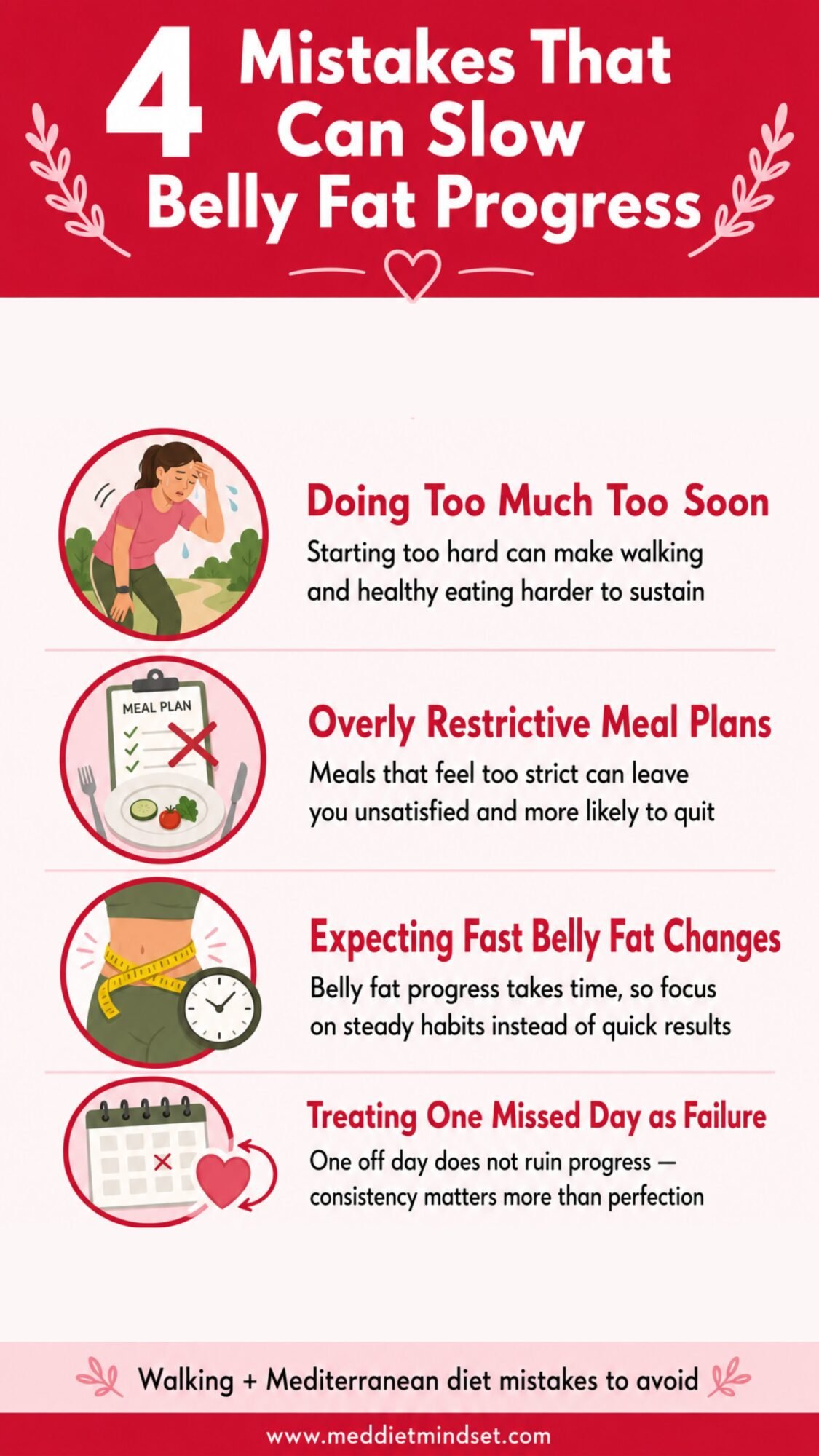
Most mistakes come from trying to force fast results instead of building a repeatable routine.
- Trying to increase walking too aggressively can make the routine harder to maintain. Doing too much too soon may lead to soreness, injury risk, or burnout, so it is better to build slowly and increase your walking time, pace, or challenge when your body is ready.
- Following overly restrictive meal plans can work against consistency. Walking works best with healthy eating, but that does not mean extreme restriction. A Mediterranean-style pattern should support steady habits, not make food feel like a punishment system.
- Expecting rapid belly fat changes in a short time can make you feel discouraged too early. Walking can support fat loss and waist changes, but it should not be treated like a quick belly-fat trick. The more realistic goal is steady progress through repeated habits.
- Treating one missed day as failure can turn a small pause into a full restart. One missed walk is not failure, and one imperfect meal is not failure. The real skill is returning without drama, because that is what makes the routine sustainable.
Walking and Mediterranean-style eating work best when they become part of a realistic lifestyle instead of a temporary “fix.” If you want to keep building a sustainable routine, read more Mediterranean diet weight loss tips next.
For Mediterranean diet belly fat goals, the realistic message is simple: do not chase spot reduction. Build a routine that supports overall fat loss through walking, healthy eating, and consistency.
F.A.Q.s
Walking can support belly fat loss by increasing daily movement and helping create a sustainable calorie deficit, especially when combined with supportive eating habits.
For Mediterranean diet belly fat goals, walking alone may help, but results depend on diet, duration, intensity, pace, and consistency.
Consistency matters more than perfection. A realistic walking routine that fits your schedule is usually easier to maintain long term.
For Mediterranean diet belly fat goals, start with what you can repeat, then gradually build toward regular moderate walking. A helpful target is at least 150 minutes per week of moderate aerobic activity. For extra health benefits and long-term weight management, working up toward 300 minutes per week or more may be useful when done gradually.
The Mediterranean diet may support belly fat loss because it focuses on balanced meals, fiber-rich foods, healthy fats, and sustainable eating habits that are easier to follow consistently.
For Mediterranean diet belly fat goals, the strongest message is that this eating pattern supports healthy habits and weight management, not that it directly targets belly fat.